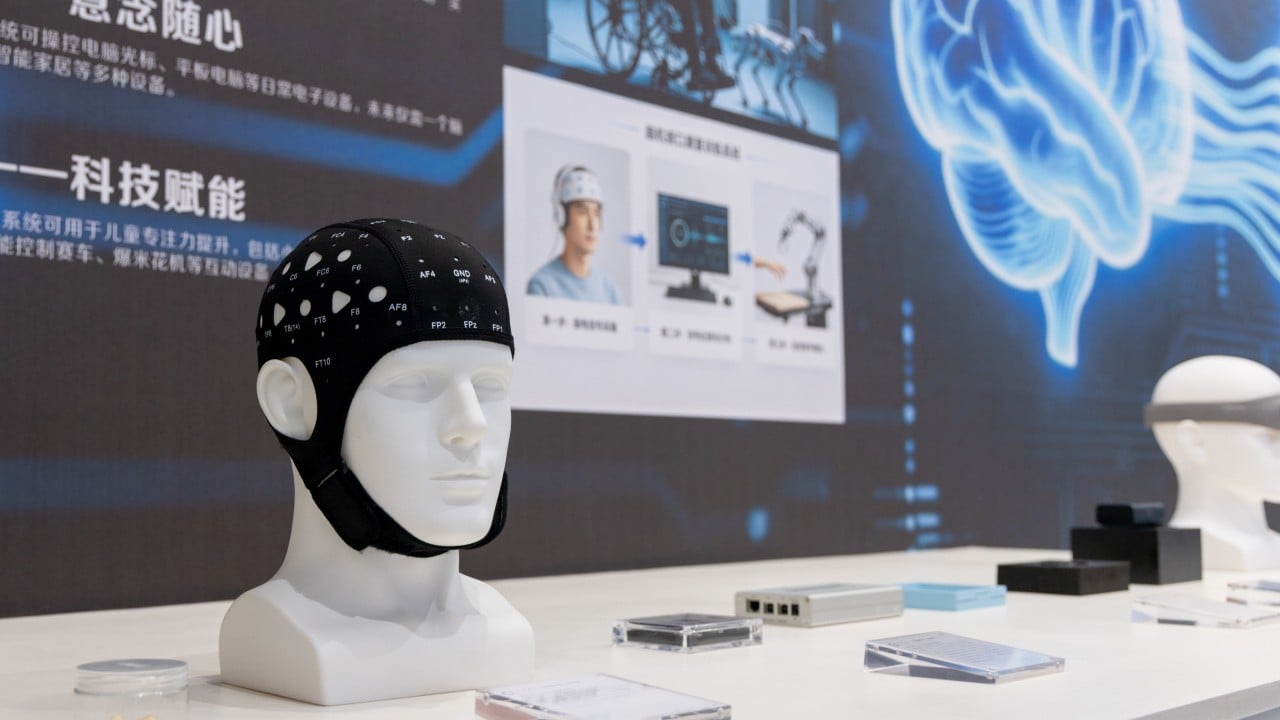
Every time Beijing stamps approval on a fresh batch of neural interface hardware, Silicon Valley collectively panics. The mainstream tech press runs the exact same tired headline by morning. They frame it as an aggressive geopolitical sprint. They scream that America is losing a high-stakes footrace to leapfrog Neuralink. They treat neurotechnology like a localized arms race where whoever implants the most electrodes into the highest number of skulls wins the century.
It is a completely bankrupt framing.
I have watched venture capitalists and government contractors flush billions of dollars down this exact toilet. They are building flashy hardware demos for a market that does not actually exist yet, driven entirely by the exhausting compulsion to beat Elon Musk to a milestone that only matters on a PowerPoint slide. The lazy consensus says that whoever commercializes high-channel-count invasive chips first wins the entire sector.
That logic belongs in a comic book.
Real engineering is messy. Biological tissue does not care about your valuation, your press releases, or your state-backed subsidies. When you shove a bunch of rigid micro-threads or rigid silicon arrays into organic gray matter, you start a war with an immune system that treats foreign objects like invaders. The human brain views your hyper-optimized, high-bandwidth miracle chip as a splinter. It tries to isolate it, scar it over, and choke it out.
Chasing higher channel counts while ignoring the foreign body response is like building a Ferrari engine and mounting it inside a wooden canoe. You can brag about raw horsepower all day long, but you are still going to sink.
The Bandwidth Fallacy
We need to stop pretending that throughput is the ultimate metric of human-computer interaction. The standard industry narrative insists that we need tens of thousands of simultaneous channels to achieve true telepathy or seamless prosthetic control. This is pure technocratic vanity.
The human central nervous system is remarkably efficient. You do not need to record from every single neuron in the motor cortex to decode an intended movement. Single-unit recordings are noisy, drift over time, and require constant recalibration because individual neurons shift position relative to the electrode tip. Chasing more electrodes on a dying substrate just gives you more noise to filter.
What the cheerleaders of the hardware race consistently miss is that the brain is an adaptive learning machine, not a static motherboard. You do not dump terabytes of raw data into it; you establish a stable communication protocol that the neuroplasticity of the user can learn to exploit.
I have seen animal studies where researchers achieved astonishingly precise prosthetic control with a tiny fraction of the electrodes boasted by current headline-grabbers, simply because the signal stability was rock solid for years, not weeks. Reliability beats raw channel count every single day of the week. If your implant degrades inside twelve months because the micro-motion of the skull shreds the surrounding neural architecture, your initial channel count is nothing more than a statistical monument to hubris.
The Regulatory Mirage
The recent flurry of Chinese regulatory approvals for brain-computer interface components is being misread by Western analysts as a signal of reckless safety deregulation. The opposite is happening. State-backed programs are methodically carving out clinical pipelines for stroke rehabilitation, locked-in syndrome, and degenerative motor diseases. They are aiming at medical utility first, consumer telepathy second.
Silicon Valley, by contrast, suffers from a terminal case of consumer brain rot. Every startup founder with a soldering iron and a seed round wants to bypass the grueling, unglamorous reality of medical device clearance and jump straight to selling telepathic texting to teenagers.
Let me be brutally clear about what happens when you try to fast-track invasive electronics into human skulls for consumer lifestyle applications. You get catastrophic failures. You get infections, tissue necrosis, and regulatory crackdowns that will freeze the entire sector for a decade.
The companies treating this like a consumer electronics play are playing Russian roulette with human neurobiology. A phone battery catches fire, you throw it away. A neural implant undergoes chronic encapsulation or triggers a focal seizure, and your patient's life is permanently altered. The regulatory hurdles are not bureaucratic speed bumps standing in the way of progress; they are the literal guardrails keeping this industry from committing mass corporate suicide.
Non-Invasive Is Not Dead
While the venture capital echo chamber obsesses over brain surgery, the most scalable breakthroughs are quietly happening on the outside looking in.
The obsession with invasive micro-arrays has blinded the market to the immense potential of high-density surface electrophysiology and advanced acoustic or optical interrogation methods. Sure, skull bone acts as a phenomenal low-pass filter, smearing electrical signals before they hit the scalp. But signal processing algorithms, machine learning priors, and clever sensor geometries have advanced lightyears beyond the rudimentary EEG caps of twenty years ago.
Imagine a scenario where a non-invasive headband achieves ninety percent of the functional utility of an invasive subdural grid, without requiring a neurosurgeon to drill a hole in your skull.
The market response to that possibility tells you everything you need to know about the current state of investor psychology. They do not want the sensible, scalable solution. They want the cyborg fantasy. They want the dramatic surgical video for their pitch decks. They want to beat the guy tweeting about Mars.
The Real Battleground
The coming decade will not be decided by who puts a thousand-channel chip into a human brain first. It will be decided by whoever figures out chronic biocompatibility, power harvesting that does not cook surrounding tissue, and software decoders that can adapt to the shifting noise floor of a living brain over decades.
Stop worrying about whether Beijing or Austin is winning the PR war for neural integration. They are both running too fast toward the wrong cliff.
The next time an industry analyst tells you that a new wave of hardware approvals means we are six months away from telepathic consumer gadgets, ask them how the encapsulation tissue looks at month twenty-four. Watch how fast the conversation changes.