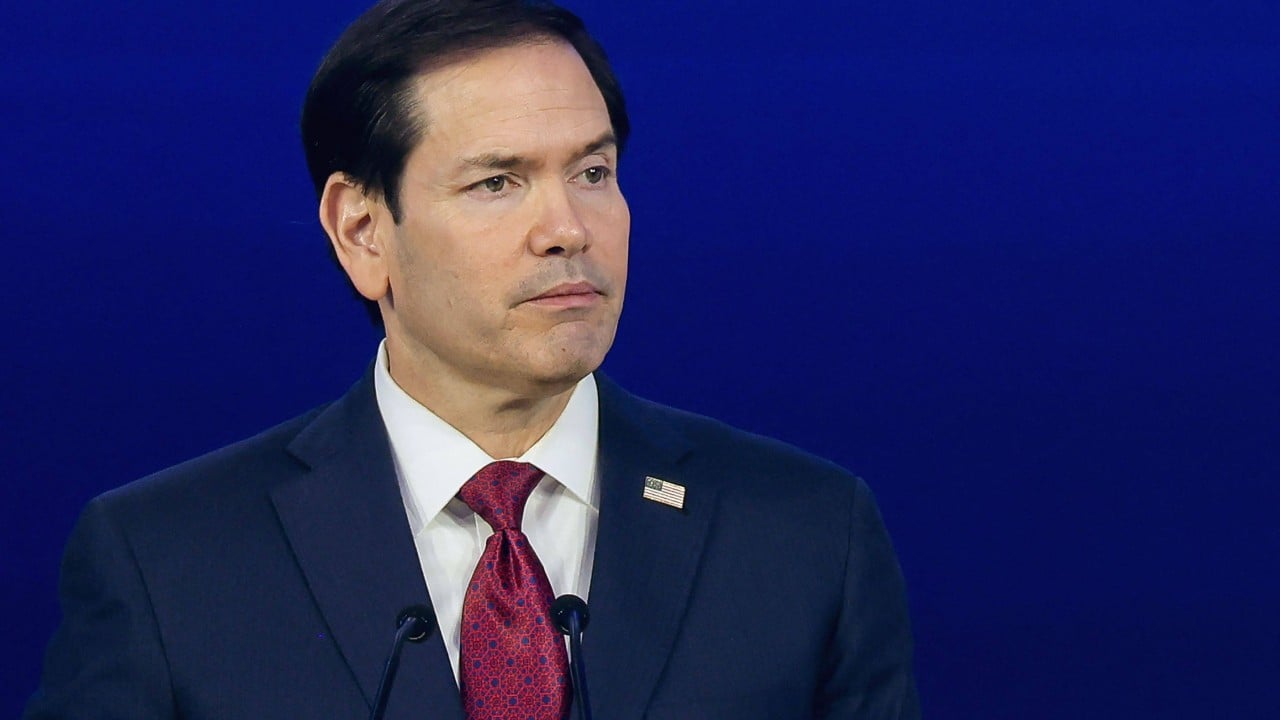
Pitching American commercial engagement in Central Asia while insisting that regional ties with China need not suffer is not diplomatic optimism; it is an acknowledgment of geographic asymmetry and multi-homing economics. When U.S. Secretary of State Marco Rubio met Central Asian officials in Samarkand for C5+1 talks in October 2026, the core strategic question was simple: how does Washington attract capital and supply-chain partnerships across Kazakhstan, Kyrgyzstan, Tajikistan, Turkmenistan, and Uzbekistan without forcing capitals in Astana, Tashkent, or Bishkek into an all-or-nothing choice against Beijing? A rigorous analysis of that pitch requires separating headline deal announcements from structural unit economics, mapping where American and Chinese incentives collide or overlap, and identifying the operational bottlenecks that actually govern execution.
Mapping the Competitor Logic and Its Blind Spots
Conventional reporting on the Samarkand push frames the visit as a binary tug-of-war: Washington arrives with commercial proposals and critical-minerals rhetoric, while Beijing sits next door with entrenched rail, pipeline, and trade networks. That framing treats Central Asia as a passive prize rather than an active strategic hedger.
In platform and market economics, multi-homing occurs when buyers, suppliers, or sovereign states maintain parallel relationships across competing ecosystems to lower switching costs and avoid single-point dependency. Central Asian governments already multi-home across Russia, China, the European Union, Turkey, Gulf states, and the United States. Telling them they need not sever ties with China aligns directly with their survival calculus: landlocked economies with shared borders and legacy infrastructure cannot afford abrupt ruptures with adjacent trading partners.
What standard coverage misses is the sequence of mechanisms behind that pitch:
- Proximity versus Differentiation: Beijing holds an insurmountable physical advantage in land transport distance, contiguous border crossings, and industrial scale in neighboring Xinjiang. Washington cannot win on freight miles alone; it must compete on capital depth, specialized processing technology, Western offtake standards, and diversification premiums.
- Headline Announcements versus Bankable Cash Flows: Summit packages—such as the $12 billion in agreements highlighted around Uzbekistan's engagements during the visit—mix firm contracts, memoranda of understanding, aspirational project pipelines, and long-horizon frameworks. Only a fraction converts into disbursed capital expenditure on a predictable schedule.
- Commercial Pitch versus Trade Friction: A diplomatic message welcoming American companies runs headlong into legacy statutory barriers and compliance regimes, including unresolved permanent normal trade relations status tied to the Jackson-Vanik framework and sanctions-compliance checks on cross-border trade.
The Three Pillars of Non-Zero-Sum Engagement
For U.S.-Central Asia commercial ties to expand without triggering a zero-sum reaction from Beijing—or forcing Central Asian states into unmanageable retaliation—the relationship rests on three structural pillars.
1. Supply-Chain Diversification Rather Than Total Displacement
Washington's push into critical minerals, energy cooperation, and industrial inputs is driven by supply-chain resilience: reducing single-country bottlenecks in upstream extraction, midstream processing, and downstream manufacturing. Central Asia holds substantial deposits of uranium, copper, rare earths, and other industrial metals, alongside growing domestic ambitions to move up the value chain from raw ore export to domestic processing.
China's commercial footprint in the region is massive, yet it is also concentrated in specific corridors, financing models, and commodity channels. Adding Western technical partners, project finance, or alternative processing routes does not erase Chinese trade overnight. Instead, it introduces redundancy: mines, refineries, and logistics hubs can sell to multiple industrial buyers or route cargo along multiple corridors depending on pricing, insurance, and risk tolerances.
2. Corridor Optionality Along the Trans-Caspian Route
Landlocked geography imposes a persistent logistics tax on Central Asian exporters. Every extra transshipment point, customs delay, or gauge transfer raises landed cost per ton and lengthens working-capital cycles.
Backing alternatives such as the Trans-Caspian International Transport Route (often called the Middle Corridor) improves regional bargaining power. When an exporter or importer has two viable routes instead of one, the monopoly rent of any single transit corridor compresses. Crucially, expanding corridor capacity is not inherently anti-China; overland trade flows between East Asia and Europe benefit when bottlenecks clear, provided transit rules, port throughput, and customs digitization scale alongside rail and maritime links.
3. Transactional Alignment Over Governance Conditionality
A major shift highlighted in regional analysis of the 2026 push is Washington's sharper emphasis on commercial deals, market access, and sovereign prosperity over political or governance lectures. From a purely transactional standpoint, lowering ideological friction speeds up initial deal-making with state-linked enterprises and central ministries.
The second-order consequence is a trade-off between speed of entry and long-term contract durability. Without transparent procurement rules, independent dispute resolution, and predictable regulatory enforcement, commercial wins negotiated at the executive level still face friction at the project level—whether from local permitting, tariff shifts, or shifting state priorities.
The Cost Function of Playing Both Sides
Saying China ties need not suffer is easy at a podium; executing that balance carries a real cost function for both Central Asian states and foreign investors. Every strategic hedge carries explicit and implicit costs.
First comes compliance and secondary-risk exposure. Global banking, export controls, and sanctions enforcement mean cross-border transactions involving sensitive dual-use goods, energy flows, or sanctioned counterparties face heightened due diligence. Even when a deal is commercially attractive, compliance overhead raises legal, insurance, and financing costs.
Second comes capital-structure mismatch. Chinese state-backed financing has historically paired long-dated infrastructure lending with equipment and engineering packages, whereas U.S. corporate participation leans toward commercial return hurdles, political-risk insurance, and clear off-take economics. Bridging that gap requires blended finance, export-credit support, or risk-sharing instruments that match project cash flows to investor risk appetite.
Third comes domestic industrial absorption. Central Asian economies—led in population and recent rapid growth by Uzbekistan, alongside resource-heavy Kazakhstan—want technology transfer, local jobs, and higher domestic value-add rather than pure resource extraction. If foreign projects remain isolated enclaves with minimal local supplier integration, political support for them stays brittle.
Known Facts Versus Educated Hypotheses
Separating verified realities from analytical projections keeps strategy grounded:
- Known Facts: U.S. Secretary of State Marco Rubio traveled to Uzbekistan in October 2026 for C5+1 ministerial talks and bilateral meetings, pitching expanded trade, energy cooperation, and critical-mineral supply chains while stating that deeper U.S. engagement does not require ending ties with other partners. Bilateral agreements—including a high-profile package announced around Uzbekistan—and regional initiatives around critical minerals and trade connectivity were highlighted during the visit, while permanent normal trade relations status with the U.S. still depends on congressional action.
- Educated Hypotheses: Central Asian capitals will likely absorb U.S. capital and technical partnerships selectively in sectors where Western technology or market access adds clear value—such as specialized mineral processing, aviation, digital/space cooperation, and alternative transit—while keeping China as a primary trade and infrastructure anchor. Over the medium term, commercial competition between U.S. and Chinese firms in the region is more likely to produce segmented specialization by sector and risk profile than a wholesale displacement of Beijing.
Tactical Playbook for Commercial and Policy Execution
Turning diplomatic goodwill into durable commercial outcomes requires disciplined sequencing rather than broad declarations.
- Tier the Deal Pipeline by Bankability: Separate signed declarations and MOUs from funded projects with clear sponsors, off-take agreements, and regulatory approvals. Track conversion rates quarter by quarter instead of treating headline totals as realized foreign direct investment.
- Anchor on High-Margin Bottlenecks First: Prioritize projects where Central Asia has natural endowment or strategic position—such as midstream processing of critical minerals, grid and energy efficiency upgrades, or logistics nodes—where local value-add aligns with buyer supply-chain goals.
- Price Compliance and Transit Risk Upfront: Build sanctions screening, customs predictability, and multi-route logistics contingencies into financial models before breaking ground. Treat corridor optionality as insurance against single-route disruptions rather than a silver bullet that eliminates transit costs overnight.
- Enforce Operational Milestones After the Summit: High-level summits open doors, but project execution happens in licensing offices, customs posts, and commercial banks. Tie follow-on commitments to concrete milestones such as joint action plans, local supplier standards, and transparent dispute mechanisms.
Limitations and Failure Modes
No commercial strategy in Central Asia is immune to structural friction. Parliamentary gridlock in Washington over trade status, shifting geopolitical waivers, currency volatility, state-owned enterprise dominance, and slow regulatory reform can stall projects even when diplomatic tone is warm. Furthermore, if Beijing perceives Western commercial moves as an encirclement play rather than market competition, it can retaliate through border friction, customs slowdowns, or competing commercial terms—raising the cost of multi-homing for regional hosts.
The sharpest strategic move for decision-makers evaluating Central Asia is to underwrite projects on standalone unit economics and multi-corridor resilience while assuming permanent geopolitical multi-homing. Do not bet on Central Asia severing ties with China to prove U.S. influence, and do not assume diplomatic summits automatically solve trade barriers or project risk; back specific, bankable assets that create durable local value across multiple trade routes.
Rubio Asked About Competition With China In Central Asia
This video directly captures Rubio's remarks in Uzbekistan addressing U.S. commercial competition with China across the C5+1 countries.