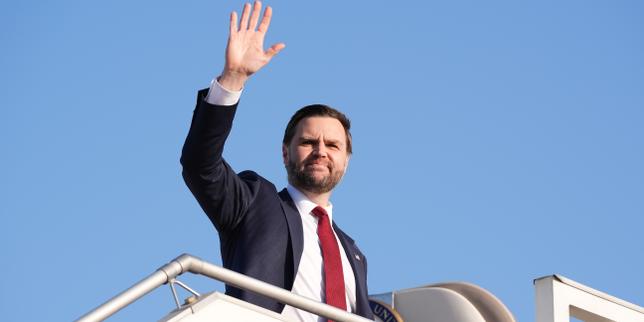
J.D. Vance stands at a podium, announces the collapse of negotiations, and the world collectively gasps. Pakistan pleads for "restraint." The media churns out headlines about the "brink of catastrophe." It is a scripted play, and you are falling for the opening act.
The standard narrative suggests we are witnessing a diplomatic failure. That is a lie. What we are seeing is a calculated calibration. In the corridors of power from D.C. to Tehran, "peace" is a marketing term used to manage public anxiety, while the real objective is a managed, permanent state of friction. Building on this idea, you can also read: The Islamabad Deadlock and the Brutal Truth of the Persian Gulf Standoff.
The Myth of the Failed Negotiation
Mainstream reporting treats the end of these talks as a tragedy. It assumes both sides entered the room with the goal of ending the conflict. If you believe that, you understand nothing about the military-industrial incentives driving the 2026 geopolitical climate.
Negotiations don't "fail" because of a lack of communication. They fail when the status quo is more profitable than a resolution. Currently, the U.S. is testing high-endurance autonomous systems in live environments, and Iran is stress-testing its asymmetric drone swarms. A ceasefire stops the data flow. A ceasefire kills the R&D cycle. Analysts at TIME have also weighed in on this trend.
When Vance says negotiations have collapsed, he isn't admitting defeat. He is signaling a pivot to the next phase of kinetic testing. The "failed" talks are merely a reset button to keep the tension at a level that justifies massive defense spending without triggering a total nuclear exchange.
Pakistan’s Performative Plea
Pakistan’s exhortation for both sides to "respect their commitment" is the peak of diplomatic theater. Islamabad knows exactly how this works. They are playing the role of the "concerned neighbor" because it buys them leverage with both the IMF and Beijing.
By calling for a ceasefire they know won't happen, Pakistan positions itself as the rational actor in a room full of radicals. It is a brilliant, cynical move to keep the aid flowing while staying out of the direct line of fire. They aren't worried about a regional war; they are worried about being left out of the post-conflict reconstruction contracts.
The Logistics of a Forever Skirmish
Modern warfare in 2026 has moved past the "total war" models of the 20th century. We are in the era of the Threshold Conflict.
A Threshold Conflict is a war designed to never be won. Victory is actually a liability because victory requires occupation, and occupation is a budgetary black hole. Instead, the goal is to maintain a high-tech, low-casualty (for the West) exchange that validates new tech stacks.
- Directed Energy Weapons (DEWs): You can't test a land-based laser system against a mock target and get the same data as firing it at a real Iranian Shahed-400.
- AI Command Structures: The Pentagon is currently iterating on LLM-driven tactical advice. They need real-time, unpredictable enemy movements to train these models.
- Energy Market Manipulation: A "war" that never quite explodes keeps oil prices in a predictable band of volatility. This is the sweet spot for hedge funds and state-owned energy giants.
Why a Ceasefire is Actually Dangerous
The "lazy consensus" screams for a ceasefire because they think it brings stability. They are wrong. A ceasefire in the current Middle Eastern climate is a pressure cooker with a taped-down valve.
Imagine a scenario where Washington and Tehran actually signed a binding, long-term peace treaty tomorrow.
- Domestic Collapse: Both regimes rely on the "External Enemy" to suppress internal dissent. Without the threat of the Great Satan or the Islamic Republic, the internal structural failures of both nations become the only story.
- Technological Stagnation: The rapid advancement in cyber-warfare and EW (Electronic Warfare) seen in the last eighteen months would drop to a crawl.
- The Vacuum Effect: A sudden withdrawal of U.S. presence or Iranian proxy support creates a power vacuum that smaller, less predictable actors—who don't care about "thresholds"—would fill immediately.
We don't want peace. We want a predictable enemy.
The Drone Economy is the New Oil
The competitor's article focuses on the "human cost" and "diplomatic fallout." They are looking at the wrong ledger. Look at the shipping manifests. Look at the semiconductor flow.
Iran has effectively turned into a laboratory for low-cost, high-impact attrition warfare. They have demystified—wait, strike that—they have stripped away the prestige of Western air superiority using $20,000 plastic drones. Washington isn't trying to "stop" this; they are trying to replicate and counter it.
This isn't a war over ideology or religion. It’s a war over the future of autonomous logistics. Every time a missile is fired near the Strait of Hormuz, the stock prices of the companies building the sensors for those missiles fluctuate in a way that generates more wealth than the entire GDP of the regions being fought over.
Stop Asking for Peace
The most common question in the "People Also Ask" boxes is: "When will the war in Iran end?"
The honest, brutal answer is: Never. It won't end because it has become a fundamental component of the global economy. It is a feature, not a bug. To "end" the war would be to disrupt the supply chains of the most powerful entities on earth.
If you want to understand what is actually happening, stop reading the transcripts of press briefings. Start looking at the defense procurement cycles. J.D. Vance isn't telling you that the world is ending; he's telling you that the subscription for the current conflict has just been renewed for another season.
The tragedy isn't that diplomacy failed. The tragedy is that diplomacy was never invited to the table in the first place. The table was built for the exchange of lead, data, and capital.
Buy the defense ETFs. Ignore the humanitarian appeals. Watch the drones, not the diplomats.