Those thin white streaks behind commercial airliners are doing a lot more than just looking pretty against a blue sky. They trap heat, and scientific estimates show that contrails account for roughly one-third of aviation's total climate warming footprint. That is a massive chunk of environmental impact that burning jet fuel gets blamed for, completely separate from standard carbon dioxide emissions.
Fixing this problem has always felt like an impossible logistics puzzle. Until now.
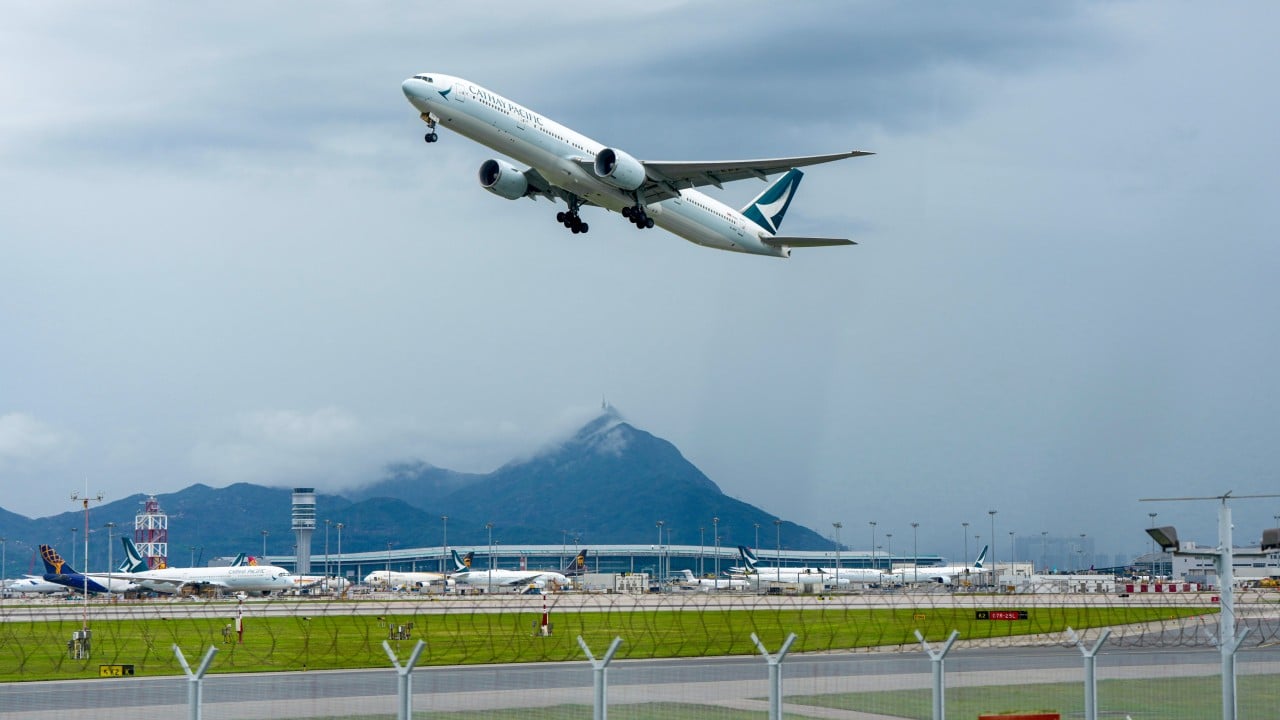
Cathay Pacific and Google are scaling up an ambitious artificial intelligence test designed to help pilots dodge the exact atmospheric zones where heat-trapping contrails form. It is a pragmatic shift in how airlines tackle sustainability, moving away from expensive, decades-away aircraft redesigns and focusing entirely on smarter flight paths today.
How the AI Contrail Avoidance Tech Actually Works
You don't need a brand-new fleet of electric airplanes to fix contrails. You just need better data.
Google built a contrail mitigation system that pulls together heavy-duty artificial intelligence predictive models, satellite imagery detection tools, and complex meteorological intelligence. This system predicts precisely where moisture and temperature conditions will cause an aircraft engine exhaust plume to freeze into a persistent, lingering cloud of ice crystals.
During recent operational trials, Cathay Pacific integrated these forecasts directly into flight planning. Pilots received dynamic contrail guidance through their electronic flight folders and in-flight connectivity tools. When the system flags a high-risk zone, the flight crew adjusts the plane's altitude by a few thousand feet—up or down—just like steering around a patch of rough turbulence.
Minor altitude changes prevent the ice crystals from forming in the first place. The plane burns a negligible amount of extra fuel, passengers feel nothing, and a major source of atmospheric warming disappears.
The Real Numbers Behind the Asia-Pacific Trials
The partnership marks Google’s first commercial airline collaboration in the Asia-Pacific region, making it a crucial testbed for ultra-long-haul routes.
In the first phase of the trial, over 80 flights successfully adjusted their flight paths based on AI recommendations. According to Google's satellite imagery analysis, those flights achieved an estimated 40 percent reduction in contrail warming impact.
One specific corridor stood out during the data analysis: the heavily traveled route between Hong Kong and Singapore. Because that airspace frequently features atmospheric conditions ripe for persistent contrail creation, minor tweaks on this single route accounted for more than half of the total climate impact reduction across the entire trial.
These results point toward a hard truth. You don't always need massive infrastructure overhauls to make an industry greener. Sometimes you just need to stop flying blind into moisture-laden air masses.
Why the Aviation Industry Is Watching Closely
Airlines operate on razor-thin profit margins. Any green initiative that requires buying unproven alternative fuels or retrofitting expensive engine hardware faces an uphill battle in the boardroom.
This AI approach changes the economics of sustainability. It uses existing aircraft, existing fuel, and existing flight management tools. The primary investment is software intelligence and cross-departmental coordination between flight dispatchers and cockpit crews.
However, scaling these solutions isn't entirely frictionless. Economic realities like fluctuating jet fuel prices can occasionally force major carriers to pause or recalibrate experimental flight routes to protect their bottom line. Maintaining momentum requires proof that these minor altitude changes do not create unexpected fuel penalties that outweigh the climate benefits.
To iron out these operational variables, Cathay Pacific and Google are preparing a much larger second-phase trial. This expansion will cover a wider web of Asian and trans-Pacific routes while collaborating with the nonprofit organization Contrails.org to build an open, standardized operational database.
By opening up the data and proving the concept across diverse airspaces, the partnership aims to transform contrail avoidance from a localized experiment into a standard global procedure for commercial aviation. If the next wave of data matches the early success, predicting and dodging white streaks in the sky will become as routine as checking the weather radar before pushback.