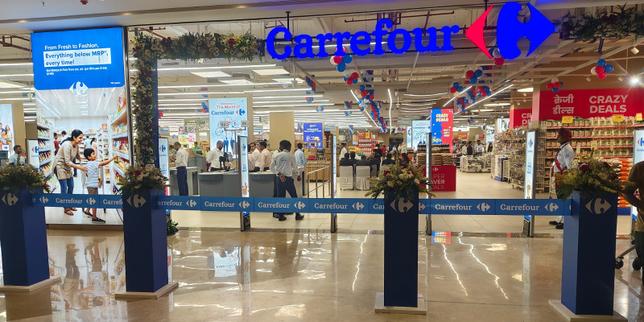
Retail giants don't usually get a second chance in emerging markets. When you pack your bags and leave a country after a high-profile failure, consumers and competitors tend to remember. Yet Carrefour is walking right back into the Indian subcontinent twelve long years after shuttering its wholesale operations.
Most analysts are looking at this through the wrong lens. They think it is just another multinational chasing a billion-plus population. It is actually a completely different play. The Indian retail environment transformed beyond recognition over the past decade. Digital payments run the country, logistics networks span remote pin codes, and local conglomerates hold massive sway.
If you want to understand why French retail executives are losing sleep over this new venture, you have to look past the corporate press releases. You have to look at what actually went wrong the first time and why the ground rules shifted.
The Ghost of Retails Past
Back in 2014, Carrefour pulled out of India completely. At the time, they operated wholesale cash-and-carry stores under a partnership with local firms. The regulatory framework was a nightmare. Direct foreign investment in multi-brand retail was practically locked down, and the domestic market wasn't digital enough to make backend supply chains profitable.
They miscalculated the pace of local adoption. They treated India as a monolithic export market rather than a patchwork of distinct regional economies. Local competitors like Reliance Retail and Tata owned the neighborhood grocery channels while homegrown e-commerce startups burned billions to capture urban eyeballs.
Carrefour realized they were bleeding cash without a clear path to dominating the storefront. So they walked away.
Fast forward to today, and the landscape bears zero resemblance to that era.
What Changed in the Subcontinent
India is not a developing market anymore in the traditional sense. It is a digital-first powerhouse. UPI handles billions of transactions every single month. Quick-commerce startups deliver milk and eggs in under ten minutes across major metropolitan areas.
Consumers demand speed, variety, and deep discounts. More importantly, regulatory tweaks and the explosion of organized retail created loopholes and pathways for international players to license their brands without owning every single physical square foot of inventory.
Carrefour is not coming back with massive brick-and-mortar hypermarkets right out of the gate. They are partnering with local heavyweights to establish a footprint through cash-and-carry supply networks and franchise agreements. This minimizes their capital risk while maximizing their distribution reach.
They learned that you cannot win India by imposing a rigid European blueprint. You win by plugging into existing local infrastructure.
The Local Competition is Relentless
Let's be completely honest. Walking into India right now means stepping into a cage match.
Mukesh Ambani’s Reliance Retail is an absolute juggernaut. They control thousands of stores, dominate neighborhood grocery delivery through JioMart, and own the supply chain from farm gate to digital checkout. Tata runs massive retail chains alongside aggressive e-commerce plays. Then you have international rivals like Walmart, which doubled down on Flipkart and its own cash-and-carry subsidiary, Best Price.
Carrefour is late to the party. The prime real estate is spoken for. The top-tier supply chain partnerships are locked down.
To carve out market share, Carrefour has to offer something unique. They are banking on their private-label expertise, global sourcing networks, and specialized supply chain software. If they can supply mom-and-pop stores—known locally as kirana stores—with better margins and more reliable inventory than domestic wholesalers, they might actually survive.
The Strategy Behind the Franchise Model
You don't see foreign executives talking much about risk mitigation in public, but that is the real story here. By relying on local partners for daily operations, Carrefour avoids the bureaucratic friction that sank their first attempt.
They provide the brand name, the global procurement standards, and the inventory management framework. The local partner handles the regulatory headaches, real estate negotiations, and regional distribution nuances.
It is a smart, low-exposure bet. If it works, they capture a slice of the fastest-growing retail market on earth. If it stumbles, they can pull back without taking a catastrophic balance-sheet hit.
What This Means for Global Retail
The return of Carrefour to India signals a broader shift in how multinational brands view emerging markets. The era of the arrogant western corporation dropping a standardized store model into a foreign city and expecting instant success is dead.
Localization is no longer just a buzzword. It is a survival requirement.
Watch how this partnership unfolds over the next twenty-four months. If Carrefour manages to crack the code on Indian supply chain margins, other hesitant European brands will follow them right through the door. If they stumble again, it proves that some markets are simply too entrenched for outsiders to conquer.
Keep your eyes on the supply lines, not the storefronts. That is where this game will actually be won or lost.