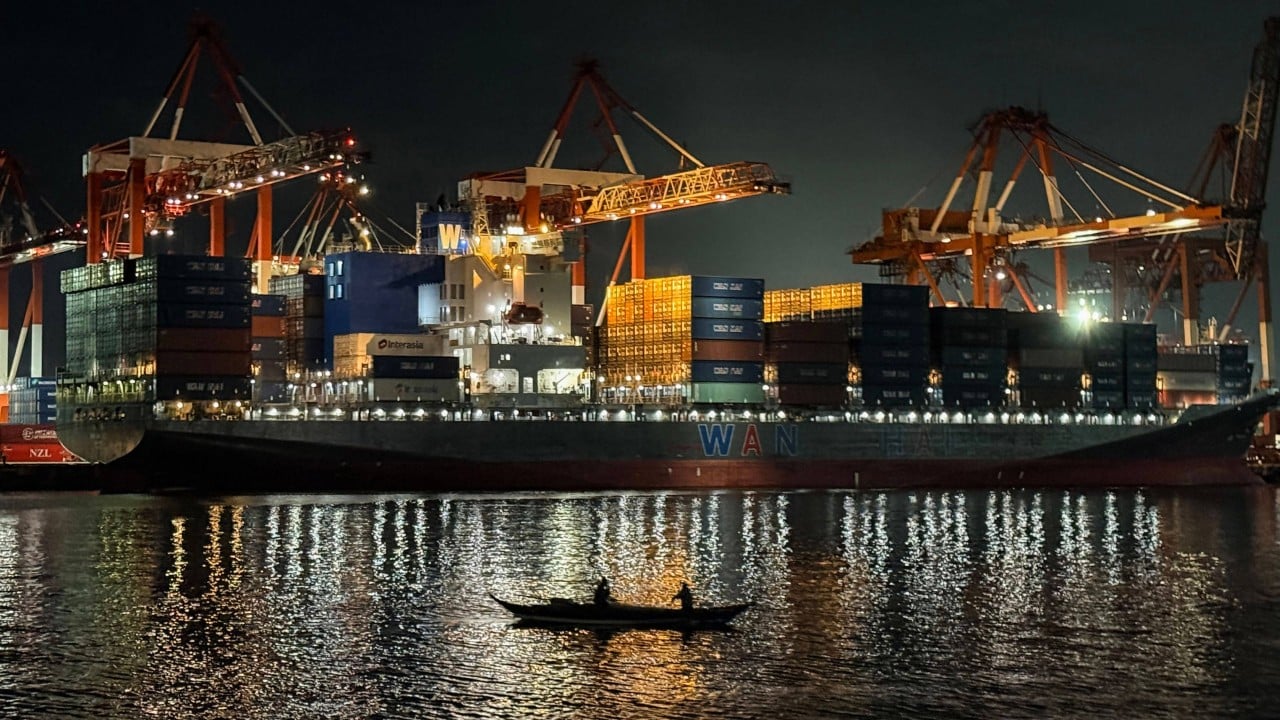
The global reallocation of supply chains has triggered an unprecedented capital influx into Southeast Asia, yet the macroeconomic benefits are distributing highly unequally. While Vietnam secures semiconductor fabrication facilities and Malaysia expands its advanced packaging ecosystems, foreign direct investment (FDI) net inflows into the Philippines declined to $7.791 billion. This divergence cannot be dismissed as a minor fluctuation or an generalized reflection of global financial tightening. Instead, it exposes a structural failure to meet the baseline operational requirements of high-value manufacturing.
When multinational firms evaluate capital allocation across the Association of Southeast Asian Nations (ASEAN), they optimize for total cost of operations and regulatory predictability. The Philippines fails to convert its strong macroeconomic fundamentals—such as an investment-grade sovereign credit rating and a growing gross national income per capita—into realized industrial assets. To understand this structural deficit, we must analyze the economic mechanisms that drive foreign capital away from Manila and toward regional competitors.
The Industrial Input Cost Function
The primary economic friction penalizing the Philippines is the uncompetitive cost of industrial utilities, specifically electric power. High-value manufacturing sectors, including advanced electronics, precision engineering, and data processing, operate with highly energy-intensive capital setups.
The industrial power pricing mechanism in the Philippines generates a severe cost penalty. Industrial electricity rates consistently hover near $0.21 to $0.23 per kilowatt-hour (kWh), the highest among major ASEAN developing economies and trailing only Singapore, a high-income city-state. The root causes of this pricing structure are structural rather than accidental:
- The Unsubsidized Generation Metric: Unlike Malaysia, Indonesia, and Thailand, where state apparatuses heavily subsidize electricity or control domestic fuel pricing networks to shield industrial users, the Philippines operates a fully liberalized, unsubsidized market. Capital expenditures and fuel price fluctuations pass directly to the end consumer.
- Imported Fuel Exposure: The domestic generation mix depends on imported coal and liquefied natural gas (LNG) for over 50% of its base-load capacity. This configuration subjects industrial operators to a compounding risk equation: global commodity price shifts multiplied by foreign exchange volatility. When the Philippine peso weakens against the US dollar, industrial power tariffs automatically escalate.
- Geographic Fragmentation Costs: Power transmission requires a complex infrastructure of submarine cables and localized grids across an archipelago. The resulting transmission wheeling charges and system losses are structurally higher than those of contiguous landmass peers like Vietnam or Thailand.
For a multinational electronic component manufacturer, the utility cost variance scales exponentially. If an industrial plant requires 10,000 megawatt-hours (MWh) of electricity monthly, the operational cost differential between operating in Vietnam (at an estimated $0.08 to $0.10 per kWh) versus the Philippines represents an annual penalty exceeding $1.3 million per facility. This input cost discrepancy neutralizes any nominal advantages the country offers in terms of labor metrics.
Regulatory Velocity and Bureaucratic Frictions
Foreign capital treats bureaucratic delay as a hidden tax on equity. The concept of regulatory velocity—the speed at which a foreign entity can transition from capital commitment to operational cash flow—explains why competitive capital favors peer markets.
The administrative pathway to deploy an industrial asset in the Philippines features significant institutional friction. Deploying large infrastructure projects or power generation assets requires navigating a decentralized regulatory network. A new entrant must secure up to 104 distinct administrative approvals and signatures across local government units, agrarian reform offices, environmental bureaus, and national regulatory bodies. This process frequently introduces an asset deployment lag of three to five years before ground-breaking can commence.
In contrast, regional competitors have engineered single-window investment clearance frameworks. Vietnam’s provincial industrial zone management boards wield centralized authority to issue investment certificates, environmental clearances, and building permits concurrently, often compressing the regulatory timeline to under 90 days.
While the Philippines enacted the Public Services Act amendments to permit 100% foreign equity ownership in previously restricted sectors like telecommunications and shipping, the operational execution remains bogged down by administrative inertia. The core issue has shifted from statutory exclusion to procedural delay.
The Logistical Friction Coefficient
Infrastructure efficiency acts as a multiplier or a tax on supply chain velocity. High-value manufacturing relies on Just-In-Time (JIT) logistics networks where inventory holding costs are minimized. The physical reality of the Philippine logistics network introduces a high friction coefficient that disrupts integrated supply chains.
The infrastructure deficit manifests through clear operational bottlenecks:
[Domestic Supply Chain Node] ---> (Urban Gridlock / Port Congestion)
                             ---> [Archipelagic Shipping Transit]
                             ---> (International Gateway) = Compounded Lead Time Risk
Port infrastructure and urban transit bottlenecks around the primary international gateways in Manila create unpredictable lead times. For advanced technology components, a delay of 24 hours can invalidate downstream assembly schedules in global value chains. While the state allocates 5% to 6% of GDP to infrastructure via public investment programs, the current capital stock remains insufficient to overcome decades of underinvestment.
Furthermore, shipping a container from an industrial enclave in Luzon to international markets involves higher domestic transit tariffs and freight handling steps than transporting a container via rail or contiguous highway networks from a Vietnamese industrial zone directly to regional shipping hubs. This logistics tax increases the total cost of landed goods, depressing export competitiveness.
The Skill-Mismatch Paradox in Human Capital
The traditional investment thesis for the Philippines relies heavily on its demographic profile: a young, English-proficient population. However, an analysis of foreign investment patterns reveals a structural mismatch between the output of the domestic educational pipeline and the technical requirements of advanced industries.
The domestic service economy successfully absorbs large volumes of talent through the Business Process Outsourcing (BPO) sector, which capitalizes on verbal and administrative fluencies. However, the FDI boom in Southeast Asia is currently driven by hard tech sectors, capital-intensive manufacturing, and advanced engineering fields.
Philippine Talent Pool (High Verbal/Admin Capacity) ---> Absorbed by Service/BPO Sector
ASEAN FDI Inflow Demand (Hard Engineering/Technical) <--- Deficit in Domestic Specialized Skills
The country exhibits a deficit in specialized technical skills, specifically in metallurgy, chemical engineering, automated systems design, and precision tool-and-die operations. When a semiconductor firm looks to establish an outsourced assembly and test (OSAT) facility, the talent requirement focuses heavily on engineering density rather than generalized literacy.
Vietnam and Malaysia systematically aligned their technical vocational institutes and university engineering curricula with the operational roadmaps of global multinational corporations. The lack of a scaled technical workforce in the Philippines forces foreign industrial operators to price in high internal training costs and talent poaching risks, creating a clear disincentive for large-scale industrial relocations.
Asset Deployment Framework
To reverse this capital flight, economic policy must shift from generalized investment promotion toward localized structural reform. The optimal framework requires targeting the specific nodes where capital is blocked.
Utility Cost De-risking
- Establish dedicated industrial enclaves with ring-fenced, off-grid renewable energy infrastructure (microgrids) to bypass the high cost of the national transmission network.
- Incentivize long-term, dollar-denominated power purchase agreements (PPAs) for industrial zones to eliminate foreign exchange pass-through risks for multinational manufacturers.
Regulatory Acceleration
- Consolidate all 100+ administrative clearances for capital investments exceeding a designated threshold into a single national body, removing local government veto and delay power over projects of strategic economic importance.
- Implement a statutory "deemed approved" rule: if an agency fails to issue a permit within 14 business days, the approval renders automatically granted.
Human Capital Alignment
- Co-fund specialized technical training centers directly inside economic zones, managed by the private sector, to shift the educational output toward industrial automation, precision manufacturing, and hard engineering disciplines.