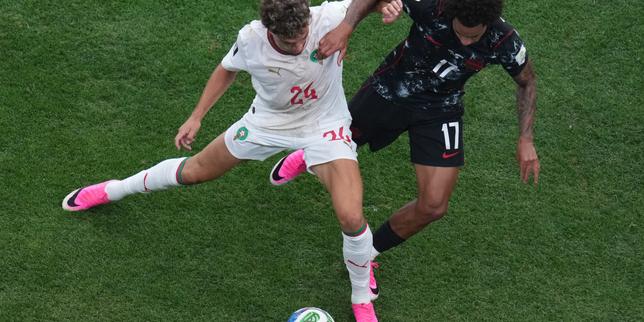
Small nations aren't supposed to push the world champions to the absolute limit. They aren't supposed to stand toe-to-toe with Lionel Messi in his 30th World Cup appearance and refuse to blink. But on a sweltering Friday night at Miami Stadium, Cape Verde didn't just break the traditional football script. They tore it to shreds.
The scoreboard says Argentina won 3-2 after extra time. It says the reigning world champions are moving on to the round of 16 to face Egypt. But if you think that tells the whole story, you missed one of the most stunning spectacles in modern football history. This round of 32 clash wasn't a routine victory for La Albiceleste. It was a tactical and emotional war where the Blue Sharks proved that heart, organization, and a massive diaspora can shake the global order.
Go look at the streets of Praia or São Vicente today. Step inside the Maassilo venue in Rotterdam, where hundreds of fans packed the halls to scream themselves hoarse. There are no tears. There is only a fierce, unyielding pride. Cape Verde bow out of their first-ever World Cup without a single technical victory on paper, yet they leave the tournament as the ultimate winners of the world's respect.
The Magic of the Blue Sharks
Nobody expected this. Cape Verde is an island nation of roughly 600,000 people. Yet, their recruitment and football identity stretch far beyond the Atlantic coast. This squad is built on a massive global network. Take a look at the roster. Five of the players on that pitch were born right in Rotterdam. Another six were born in other parts of the Netherlands.
When coach Bubista set up his team to face Lionel Scaloni's heavyweight squad, he didn't build a low block designed to park the bus and pray. He trusted his players. He trusted their technical roots developed in European academies and the relentless energy that has defined this historic campaign. They already survived a brutal group stage, picking up massive draws against former world champions Spain and Uruguay, plus a vital point against Saudi Arabia. They knew they belonged here.
The global football community often patronizes smaller teams. Analysts talk about "plucky underdogs" and "fairytale runs." Let's be completely honest. Cape Verde didn't survive on luck. They survived because they played incredibly smart football. They closed down spaces, trusted their passing channels, and relied on a legendary 40-year-old goalkeeper who chose the biggest night of his life to become completely superhuman.
How the Holders Almost Crumbled in Miami
The atmosphere in South Florida was overwhelmingly pro-Argentina. It felt like a home match for Messi and his crew. For the first twenty-five minutes, Argentina looked like they would cruise. Messi tested the waters early, dragging an effort wide in the 15th minute and then stinging the gloves of Vozinha with a trademark 25-yard free-kick.
Then came the 29th minute. It was a moment of pure genius that we've seen a hundred times before. Lisandro Martinez launched an exquisite, looping long punt from deep in his own half. Messi timed his run perfectly, escaping behind the Cape Verde defense. He took it down with a sublime first touch and lifted his finish past an oncoming Vozinha at the near post. 1-0. It was Messi's 20th career World Cup goal, scoring in his eighth consecutive tournament match. It felt like the beginning of the end for the islands.
But Cape Verde don't drop their heads. That is what Argentina got wrong.
Instead of collapsing under the weight of the moment, the Blue Sharks grew bolder. They started winning the second balls. Deroy Duarte and Laros Duarte began asserting themselves in the center of the park, making life miserable for Alexis Mac Allister and Rodrigo De Paul. By the time the halftime whistle blew, Argentina looked laboured. They looked tired.
Squeezing the World Champions Until They Gasped
The second half was a masterclass in fearless football. Cape Verde pushed their wingers higher up the pitch. Ryan Mendes and Jovane Cabral began asking serious questions of the Argentine fullbacks. The equalizer in the 59th minute wasn't a fluke. It was a beautifully constructed team move.
Deroy Duarte picked up the ball, drove directly at the heart of the Argentine defense, and fired a low, pinpoint strike past both Lisandro Martinez and the despairing dive of Emiliano Martinez. The ball squeezed into the far corner. Miami Stadium went completely silent, save for a tiny, roaring pocket of blue-clad fans.
Suddenly, the pressure shifted. Lionel Scaloni, managing his 100th game for Argentina, looked frantic on the touchline. He threw on Julian Alvarez and Nicolas Gonzalez to find a spark. But they kept running into a wall named Vozinha. The veteran keeper ended up making ten massive saves throughout the match, five of them directly denying Messi from point-blank range. He didn't just catch balls. He commanded his box like a general. Argentina tried everything to end it in normal time, but the Blue Sharks dragged them into deep water. Extra time beckoned.
A Rollercoaster for the Ages
Extra time in a knockout match tests your soul. Argentina struck first, showing why they are the holders. Just two minutes into the first extra period, Lisandro Martinez found himself free in the box and smashed a vicious strike high into the roof of the net. 2-1. Most teams would be done. The physical toll of chasing Messi and Enzo Fernandez for 90 minutes should have drained Cape Verde's legs.
What happened next will be talked about as long as the World Cup exists.
In the 103rd minute, Sidny Lopes Cabral collected the ball on the left side of the penalty area. He faced up his defender, cut slightly inside, and unleashed an impossible, curling right-footed strike. The ball flew through the air, completely out of the reach of Emiliano Martinez, and nestled into the top right corner. It was a goal of the tournament contender. Honestly, it might be one of the greatest goals ever scored on this stage considering the stakes. 2-2. The entire footballing world was left speechless.
Ultimately, football can be incredibly cruel. In the 111th minute, Messi whipped in a dangerous corner. Cristian Romero rose above the crowd to flick a header toward goal. The ball took a wicked deflection off the luckless Cape Verde defender Diney Borges, completely wrong-footing Vozinha. It went down as an own goal. It was the strike that finally broke the resistance. Cape Verde threw everyone forward in the dying seconds. Dailon Livramento blazed an effort over the bar, and Emi Martinez had to make a frantic clawing save to deny Gilson Benchimol. When the final whistle blew, the world champions breathed the biggest sigh of relief of their lives.
What This Campaign Actually Means For African Football
Let's stop treating African football nations as secondary stories. Cape Verde just proved that the gap between the elite elite and the rest of the world has shrunk to a razor-thin margin. You don't need a population of 40 million or a billion-dollar domestic league to build a squad capable of terrorizing the best team on the planet.
You need a distinct identity. You need a federation that knows how to connect with its global diaspora without losing its soul. The bond between the fans in the Netherlands, the communities in New England, and the residents of the islands created an insane wave of collective energy.
When the match ended, Bubista and his players stayed on the pitch for a long time. Some players were crying, others were staring at the sky. But the fans didn't let them feel like losers. They applauded every single effort. They chanted the players' names. They recognized that taking the world champions to a 3-2 extra-time thriller in a World Cup knockout match is an foundational victory.
The Next Steps for the Blue Sharks
The tournament is over for Cape Verde, but the work doesn't stop. To ensure this historic run isn't a one-off moment in history, the path forward requires immediate execution.
- Keep cementing the diaspora pipeline by expanding scouting networks in France, Portugal, and the Netherlands to integrate young academy talents early.
- Invest the World Cup prize money directly into grassroots facilities in Praia and Mindelo so local talent can train on quality pitches.
- Set up high-profile international friendlies during the upcoming FIFA windows to maintain this elite competitive edge instead of retreating into isolation.
Don't look at the final score as a failure. Look at it as a blueprint. Cape Verde entered this tournament as an unknown quantity to casual fans, and they leave it as the team that almost pulled off the biggest upset the sport has ever seen.