The May humidity of New York does not care about the architecture of haute couture. It settles over the Metropolitan Museum of Art like a damp, heavy curtain, wilting silk and fogging the lenses of a thousand frantic photographers. Standing at the base of the grand staircase, the air is thick with the scent of hairspray, ozone from flashing strobes, and the collective, breathless anticipation of a crowd waiting for the impossible to walk up the stone steps.
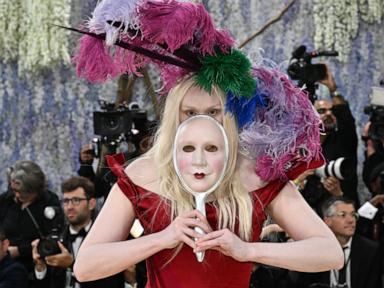
When we look at the photographs from the 2026 Met Gala, we see the frozen, polished reflections of a single evening. We see celebrities draped in fabric that mimics brushstrokes or structured into surrealist silhouettes. We see the glitz. We see the headlines claiming that stars embraced art-inspired fashion. But what those glossy, perfect images fail to capture is the agonizing, beautiful vulnerability required to wear a piece of history on your back.
The cameras miss the silent, trembling hands of the assistants holding the hems so they do not graze the concrete. They miss the months of grueling, quiet labor that happen far away from the blinding light of the press line.
To understand what happened on that Monday evening, we have to look past the surface of the garments. We have to look at the intersection of human skin and inanimate art.
Consider what happens when a masterpiece leaves the climate-controlled silence of a museum and wraps itself around a living, breathing human being. The static charge changes. The fabric warms up. The colors react to the natural light. It is an act of resurrection.
For Clara, an artisan whose fingers have been calloused by decades of embroidery, the 2026 Met Gala began not in May, but in the bleak cold of a January morning in a quiet Parisian atelier. Clara spent five hundred hours hand-stitching tiny, iridescent beads onto a silk tulle gown. The pattern was not designed by a sketchpad alone. It was derived from the swirling, turbulent skies of a classic impressionist canvas.
Every bead Clara attached represented a brushstroke. A fleck of gold represented the moon; a thread of cobalt blue represented the wind. Clara’s hands ached. Her eyes strained under the harsh fluorescent lights of the workroom.
This is the reality of the Met Gala that the red carpet interviews never reveal. Behind every dramatic silhouette is a human story of endurance. The garment becomes a living archive of human labor and artistic devotion.
When the gown was finally finished, it was packed in a temperature-controlled crate, flown across the Atlantic, and delivered to the suite of a young, rising actress. The actress was only twenty-four, unaccustomed to the crushing weight of global attention. When she first slipped the dress over her shoulders, the transformation was not merely visual; it was psychological.
The weight of the beads dragged slightly at her collarbones, grounding her in the physical reality of the moment. The fabric was cold at first, then matched the temperature of her skin.
She looked in the mirror and realized she was no longer wearing an outfit. She was carrying a legacy. She was wearing a piece of art that had survived wars, theft, and the shifting tastes of centuries.
This intersection between fine art and high fashion is not a modern invention. It is a dialogue that has lasted for over a century.
In the 1930s, Elsa Schiaparelli collaborated with Salvador Dalí to create the Lobster Dress. It was a shocking, surrealist piece that challenged the boundaries of what could be worn in polite society. The dress was not meant to blend in. It was meant to provoke a visceral reaction. It forced the wearer to become a walking canvas, a provocative statement in a world that was rapidly descending into political turmoil.
Decades later, in 1965, Yves Saint Laurent introduced his Mondrian collection. The dresses took the geometric, primary-colored grids of Piet Mondrian’s paintings and translated them onto wool jersey. It was a brilliant, democratic approach to art. It stripped art from the exclusive walls of galleries and placed it onto the bodies of women walking down the street. The wearer became a moving masterpiece, a vibrant celebration of modernism.
The 2026 Met Gala was a continuation of this dialogue, but with a heightened sense of urgency. In a world dominated by digital screens and ephemeral content, the desire for tangible, physical craftsmanship has become intense.
The 2026 theme challenged designers to look at the fragility of garments that have been lost to time, and to reawaken them through contemporary interpretation. The result was an explosion of texture, color, and emotional resonance on the steps of the Metropolitan Museum.
Let us look closely at the garments that defined the evening.
Consider the gown worn by a prominent pop star, a dress that appeared to be made of shattered, crystalline glass, catching the flashbulbs like a prism. The dress was an homage to cubism. The designer explained that it took three months to assemble the acrylic and silver-leaf panels. Each panel was individually cut and linked together by fine silver wire.
The dress was loud. It clinked softly with every step the star took. The sound was hypnotic. It was the sound of a canvas shattering and reforming in real-time.
When the star walked up the steps, the dress caught the light, creating a fragmented, kaleidoscopic reflection of the museum's façade. For a fleeting moment, the star was not just a person; she was an installation. She was a moving, breathing sculpture that demanded the viewer's complete attention.
But the most compelling aspect of the evening was the vulnerability of the stars themselves.
On the red carpet, a celebrity is expected to project an image of absolute confidence. They must smile, pose, and look flawless. But underneath the expensive makeup and the perfectly styled hair, there are beating hearts. There is anxiety.
When another actor, a veteran of the screen, walked up the steps wearing a suit entirely hand-painted with Renaissance floral motifs, the vulnerability was palpable. He moved slowly. He was terrified of smudging the paint or tearing the delicate silk lining.
He stopped at the top of the stairs, turned to the cameras, and took a deep, shaky breath. You could see the tension in his jaw. He was not just showing off a designer's work; he was carrying the immense pressure of living up to the art he represented. The floral motifs on his jacket were inspired by a seventeenth-century Dutch still life. The painting celebrated the impermanence of beauty, the fleeting nature of life, and the inevitability of decay.
Wearing that suit was an act of bravery. It was an acknowledgment that beauty is fragile and temporary.
The audience looking at the photos on their phones the next morning does not see this anxiety. They see a perfect, well-lit portrait. They see a celebrity looking glamorous.
But the story of the Met Gala lies in the tension between the perfection of the image and the human struggle behind it. The garments act as emotional armor.
When we examine the craftsmanship of the 2026 Met Gala, we realize that fashion is more than just clothing. It is an archive of human emotion and cultural memory.
Think about the materials used in the dresses. Silk, velvet, tulle, metal, glass, plastic, and thread. These are simple, earthly materials. Yet, when combined with the creative vision of a designer and the emotional labor of artisans like Clara, they transcend their physical form. They become stories. They become vessels for the things we cannot easily express with words.
When a celebrity wears an art-inspired gown, they are engaging in a silent conversation with the artist who created the original work. They are asking the artist a question: What does it mean to be human in a world that is constantly changing?
The answer is found in the way the fabric drapes over the body. It is found in the way the light hits the sequins. It is found in the tiny imperfections that prove the dress was made by human hands, not by a machine.
Consider the surrealist corset worn by an icon of modern cinema. This piece was inspired by the works of René Magritte and the dreamlike worlds of surrealism. The corset was constructed from molded leather, painted by hand with a hyper-realistic depiction of a cloudy sky. The bodice featured a delicate, gold-leaf window that seemed to open into the sky itself.
The designer, a young visionary from Tokyo, explained that the corset was designed to feel like a cage that one could escape from. The leather was molded over a mannequin for three weeks to ensure it hugged the wearer's torso perfectly. It was uncomfortable. It restricted breathing.
But the actress who wore it embraced the discomfort. She said that the physical restriction made her acutely aware of her own body in a way that modern, loose-fitting clothing never could. She felt exposed, yet invincible.
When she stepped onto the red carpet, the photographers went wild. The flashes reflected off the gold-leaf window, creating a halo of light around her head. She did not just look beautiful; she looked like a monument to the human imagination.
The unseen cost of this craftsmanship is often overlooked. It takes hours of physical labor, physical pain, and emotional exhaustion to bring these creations to life. The artisans who make them do not receive the same headlines as the celebrities who wear them, yet they are the true heroes of the evening.
The Cubist suit, worn by a legendary musician, was a masterclass in tailoring and geometry. The fabric was a heavy wool, woven in a pattern that mirrored the fragmented planes of a cubist painting. The suit was not cut in the traditional, symmetrical style of menswear. Instead, the lapels were asymmetrical, and the jacket was constructed from dozens of distinct geometric panels.
The musician spoke about the process of fittings. He had to stand for hours while the tailor pinned the fabric directly to his body, adjusting every single seam so that the geometric patterns aligned perfectly. It was a tedious, painstaking process.
When he walked up the steps, the suit appeared to shift and change with every movement. It was a visual representation of how art can deconstruct the familiar and show us a new way of seeing the world.
The history of wearable art is a story of resistance. When the traditional art world tried to keep art confined to the gallery, designers and artists rebelled. They looked at the human body as the ultimate canvas. They realized that a painting hanging on a wall is static, but a dress worn on the body is dynamic. It interacts with the environment. It catches the wind. It moves with the rhythm of the heart.
In the early 1920s, the Russian Constructivists created functional clothing for the working class. They believed that art should be integrated into everyday life. They designed geometric, utilitarian garments that were both beautiful and practical. This philosophy laid the groundwork for the idea that fashion is an art form.
When the 2026 Met Gala adopted the theme of reawakening fashion through art, it was not just a tribute to historical garments. It was a call to action. It asked designers to look at the materials they were using and the stories they were telling.
The 2026 Met Gala reminded us that art is not something that belongs only in a museum, locked away behind glass. Art is alive. It breathes. It moves with us through the crowded, humid streets of the city.
As the last star climbed the steps and disappeared through the grand doors of the museum, the crowd at the bottom of the stairs slowly began to disperse. The flashes stopped. The sound of the crowd faded. The humid night air settled back over the stone steps, cool and silent.
The photographs would remain on the internet forever, a permanent record of the night. But the true power of the evening lingered in the air, a reminder of the quiet, beautiful labor that keeps our shared cultural history alive.