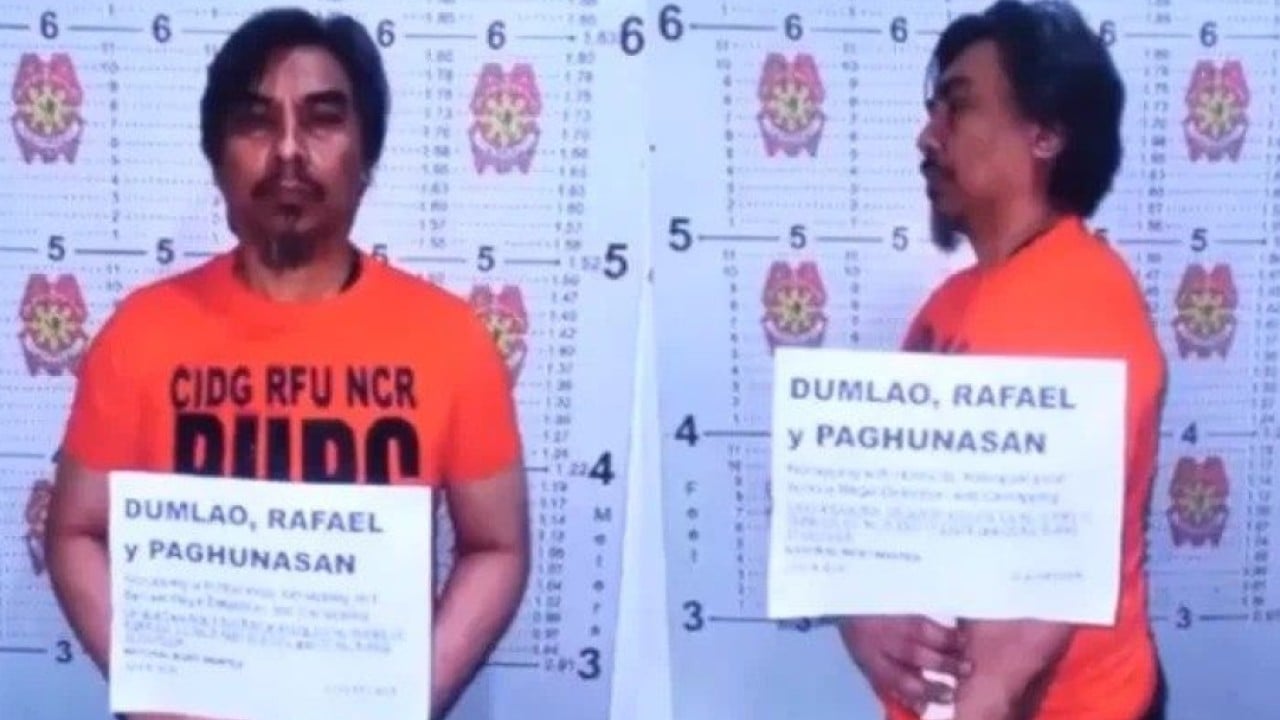
You can't make this up. A man gets kidnapped from his own home by active-duty police officers, driven straight into the national police headquarters of the Philippines, and strangled to death right outside the top chief's office. Then, his body is taken to a funeral home, cremated under a fake name, and his ashes are literally flushed down a toilet.
It sounds like a bad movie script, but it's the exact nightmare that happened to South Korean pharmaceutical executive Jee Ick-joo in October 2016.
The case shook diplomatic relations between Manila and Seoul. It exposed a rotten core within law enforcement during the height of the Duterte administration's war on drugs. For years, the alleged mastermind behind this operation dodged ultimate accountability. But on June 9, 2026, the run finally ended.
Elite operatives from the Philippine National Police-Criminal Investigation and Detection Group (PNP-CIDG) broke down the door of a heavily concealed safehouse in Barangay Pasong Tamo, Quezon City. Inside, they found dismissed Police Lieutenant Colonel Rafael Dumlao III asleep. A 9mm Taurus pistol sat right by his side. He didn't even have time to reach for it.
The arrest caps off a nearly two-year game of hide-and-seek that began when an appellate court realized a lower court had botched his initial acquittal. If you think this is just another standard fugitive arrest, you're missing the bigger picture.
The Fatal Mistake on Facebook Live
How do you catch a former high-ranking anti-narcotics chief who knows every single trick in the surveillance playbook? You wait for a human moment.
Dumlao had been hiding behind high concrete walls and dense vegetation in an upscale property. He was a ghost. He didn't use public phones, he didn't travel, and he certainly didn't show his face in public. But a few days before his arrest, his daughter got married.
The tactical teams knew Dumlao couldn't resist watching. They heavily monitored family activities and digital footprints surrounding the event. Dumlao didn't risk attending the ceremony in person. Instead, he logged on to watch the wedding via Facebook Live from his hideout. That digital slip, combined with hard human intelligence from an informant who spotted movement on the property, gave the CIDG the precise location they needed.
Interior and Local Government Secretary Jonvic Remulla confirmed that three weeks of intense, round-the-clock surveillance followed that livestream lead. When the tactical team moved in at 5:00 a.m. on Tuesday, the operation was flawless. No shots fired. No procedural violations. Just a quiet end to a loud scandal.
A tipster is now P1.09 million richer, and Dumlao is headed straight to a prison cell to serve out a sentence of reclusion perpetua—life imprisonment without the possibility of parole.
When Tokhang Became a License to Kidnap
To understand why Dumlao's arrest matters so much, we have to look back at the terrifying environment of 2016. The government had launched "Oplan Tokhang," a massive, aggressive campaign against illegal drugs. The problem? It gave rogue police officers a perfect shield.
On October 18, 2016, a group of armed men knocked on Jee Ick-joo’s door in Angeles City, Pampanga. They claimed they were conducting an official anti-drug raid. It was a complete lie. It was a kidnapping for ransom operation masquerading as state-sanctioned justice.
The rogue cops stole jewelry and passports from the home. They took Jee and his house helper, Marisa Morquicho. While Morquicho was eventually released, Jee was brought directly into Camp Crame—the very heart of the Philippine National Police.
Think about the sheer audacity. They parked the vehicle right inside the national headquarters. While the country's top police officials slept a few hundred meters away, Senior Police Officer 3 Ricky Sta. Isabel wrapped his hands around Jee’s neck and strangled him to death.
Even after Jee was dead, the kidnappers kept up the charade. They contacted Jee's frantic wife, Choi Kyung-jin, demanding an 8 million peso ransom. She actually paid 5 million pesos, praying for her husband's safe return, completely unaware that his ashes had already been destroyed at a Caloocan funeral home.
The Judicial Mess That Almost Let a Mastermind Walk
The legal battle that followed was an absolute circus. It dragged on for years, highlighting structural flaws in the local justice system.
In June 2023, an Angeles City Regional Trial Court dropped a bombshell ruling. It convicted the foot soldiers—SPO3 Ricky Sta. Isabel and National Bureau of Investigation (NBI) informant Jerry Omlang—sending them away for life. But the court completely acquitted Lieutenant Colonel Rafael Dumlao III. The judge claimed the prosecution failed to prove his guilt as the mastermind. Dumlao walked out of the courtroom a free man.
The public was furious. South Korean diplomats were stunned.
State prosecutors refused to let it go. They took a massive legal gamble by filing a petition for certiorari with the Court of Appeals, arguing that the trial court committed a "grave abuse of discretion."
Now, normally, you can't appeal an acquittal because of the constitutional right against double jeopardy. You get one shot to prove someone guilty, and if you fail, you can't try again. But there's a strict, narrow exception: if the original trial was a complete sham or a mockery of justice, the acquittal is considered null and void.
In July 2024, the Court of Appeals dropped its own hammer. They ruled that the lower court had ignored massive amounts of circumstantial evidence. They declared the original acquittal void, found Dumlao guilty as the mastermind, and sentenced him to life in prison plus an additional 30 to 35 years for carnapping Jee's vehicle.
By the time the police went to execute the new arrest warrant, Dumlao had vanished. He exploited the legal window between his release and the appellate court's reversal, launching a two-year run as a fugitive. The Philippine Supreme Court slammed the door shut for good in June 2025, denying his final appeals.
What Happens Next
The arrest of Dumlao isn't just about putting one man behind bars. It's an exercise in institutional damage control. The current administration has used this moment to send a direct message to the ranks. No matter how much former authority or rank you held, the institution will not protect you if you cross the line.
Right now, investigators aren't wrapping up the file just yet. The PNP is actively pivoting to a secondary investigation targeting Dumlao’s support network. They are currently analyzing his seized cellphone and laptop to answer a few critical questions:
- Who owned the Quezon City safehouse with the high walls where he hid?
- Who registered the 9mm Taurus pistol found next to his bed?
- Which active or former law enforcement officers were funneling cash or intelligence to him to keep him off the grid for two years?
If you're tracking the fallout of this case, expect a wave of obstruction of justice charges against the people who helped him run. For Jee Ick-joo's widow and the South Korean community, a ten-year wait for justice has finally cleared its biggest hurdle. The focus now shifts from chasing a fugitive to ensuring he serves every single day of his life sentence behind bars.


