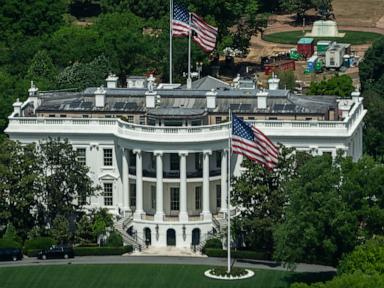
The obsession with the Presidential Emergency Operations Center (PEOC) tells you everything you need to know about how little the public understands about modern power. Every time a legal case touches on Mar-a-Lago or a protest flares up outside the White House gates, the media trots out the same tired "brief history of the bunker." They paint a picture of a subterranean fortress—a concrete womb where the Commander-in-Chief hides from the world.
It is a lie.
The bunker isn't a shield. It is an evolutionary dead end. If you think the safety of the executive branch depends on a reinforced basement designed in the 1940s, you are looking at the world through a periscope while the rest of us are using satellites.
The Fortress Fallacy
Journalists love to wax poetic about the Harry Truman era or the upgrades post-9/11. They talk about the PEOC as if it’s the ultimate expression of security. In reality, the bunker is a logistical nightmare masquerading as a sanctuary.
I’ve spent years analyzing high-stakes infrastructure, and the pattern is always the same: we overvalue what we can see (or imagine) and undervalue the invisible networks that actually matter. The PEOC was built for a world of gravity bombs and analog radio. Today, it’s a gilded cage.
Think about the physics. A static location is a target. In the age of hypersonic missiles and bunker-busting thermobaric warheads, being stationary is a death sentence. The "security" of the White House bunker is largely psychological—it’s there to make the staff feel like they have a plan, not because the plan is actually the best option available.
Mobility Beats Mass Every Single Time
The media fixates on the "ballroom legal cases" and the physical proximity of records to bunkers because it’s easy to film. It’s tangible. But real survival in the 21st century isn't about how much concrete is over your head. It’s about how fast you can move.
The most important "bunker" the President has isn't under the East Wing. It’s a Boeing 747-200B.
Air Force One isn't just a plane; it’s a mobile command center that solves the primary weakness of the PEOC: fixed coordinates. If a kinetic strike is inbound, I’d rather be at 35,000 feet moving at Mach 0.85 than trapped in a hole in the ground that hasn't moved since the Cold War.
We see this same mistake in corporate security and data management. Companies spend millions on "on-site" security protocols and physical vaults while their cloud credentials are being fished by a teenager in a bedroom halfway across the world. They protect the ballroom; they lose the data.
The Continuity of Government Grift
"Continuity of Government" (COG) is the buzzword used to justify the billions poured into these holes. The logic is that the bunker preserves the "soul" of the administration.
Wrong.
The bunker preserves the bureaucracy, not the capability. If a catastrophic event actually forced the President into the PEOC for an extended period, the very thing that makes the Executive Branch powerful—its ability to communicate, project force, and manage the economy—would be throttled by the limitations of the bunker’s own shielding.
Imagine a scenario where the President is safe 100 feet underground, but the fiber optic lines feeding the bunker are severed by the very blast he’s hiding from. He’s the King of nothing. He’s a prisoner with a direct line to a dead world.
Digital Bunkers and the Misdirection of Records
The recent legal firestorms regarding classified documents and White House basements miss the technical reality of how information actually survives. We are arguing over boxes in bathrooms and folders in bunkers while the real battlefield is digital sovereignty.
The "history of the bunker" usually ignores the most critical upgrade: the transition from physical survival to data persistence. A bunker that protects a person but loses the encryption keys to the nation’s defense grid is a failure.
We have become a society that worships the relic. We care more about the physical "White House" as a symbol than the functional "Executive Office" as a node in a global network. When the press focuses on the history of Truman’s renovations, they are distracting you from the fact that the most sensitive "bunkers" today are distributed server farms and encrypted satellite constellations.
The Cost of the "Secure" Illusion
I have seen organizations collapse because they relied on a "secure" physical location while ignoring their operational rot. The White House bunker is the ultimate version of this. It creates a false sense of finality.
- Maintenance Bloat: Millions are spent keeping a 1940s structure "modern" when that money should be going into decentralized, AI-driven early warning systems.
- Operational Friction: Moving a principal to a bunker takes time—time that is better spent in a high-speed extraction to a mobile platform.
- Optics over Utility: The bunker exists so the President can say they are "at the helm" during a crisis, even if the helm is disconnected from the ship.
Why the Public is Asking the Wrong Questions
People ask: "How deep is the bunker?" or "How long can they stay down there?"
These are the wrong questions. You should be asking: "Who controls the uplink?" and "What is the latency of the decision-making loop inside a shielded environment?"
The physical bunker is a legacy system. It’s the "Internet Explorer" of national security. It’s slow, it’s clunky, and it only exists because it’s too expensive and politically sensitive to admit it’s obsolete.
The Brutal Reality of Modern Siege
If you want to dismantle the "lazy consensus" of the bunker article, you have to accept that we are living in an era of the "transparent battlefield." There is no such thing as a secret location anymore. Commercial satellite imagery, thermal mapping, and acoustic sensors mean that the "secret" history of the bunker is about as secret as a neon sign in a dark alley.
The obsession with the bunker’s history is a comfort blanket for people who want to believe that the world is still governed by thick walls and brave men in rooms. It isn’t. It’s governed by signals, and signals don't like 10-foot thick reinforced concrete.
Stop looking at the floorboards of the White House. Start looking at the sky.
The bunker isn't a symbol of American strength. It’s a monument to the fear of a world we can no longer control with concrete.
The next time you hear a story about the "ballroom legal case" or the "history of the bunker," remember that the most dangerous place to be in a 21st-century conflict is exactly where your enemy expects you to be.
Hide in a hole, and you’ve already lost.


