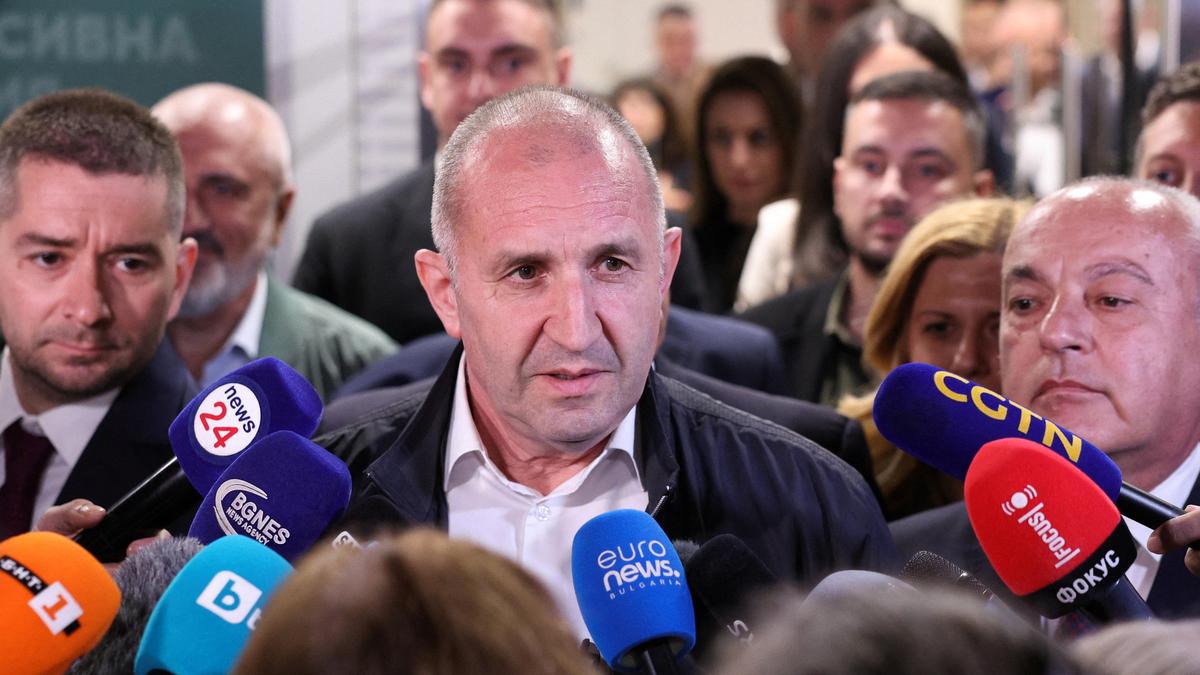
Bulgarians are done waiting. After years of revolving-door governments and political paralysis that felt like a bad movie on repeat, the voters just sent a massive, unmistakable message. By handing the former President a convincing mandate, they aren't just picking a leader. They're trying to blow up a system that hasn't worked for them in a generation. It’s a desperate, calculated move for stability in a region that's currently anything but stable.
You can feel the exhaustion in Sofia. Since 2021, the country has struggled through more elections than most nations see in a decade. Each one promised a "new beginning" but delivered the same bickering, the same corruption allegations, and the same stalled reforms. This time, the margins suggest people stopped voting for their favorite party and started voting against the chaos itself.
The Breaking Point for Bulgarian Voters
The numbers don't lie. Turnout wasn't just about civic duty; it was about survival. For the average person in Plovdiv or Varna, the geopolitical drama of the European Union or NATO takes a backseat to the price of bread and the heating bill. Bulgaria remains the poorest member of the EU. When inflation hit, it didn't just pinch—it bit hard.
The previous fragmented parliaments couldn't pass a budget without a fistfight. Infrastructure projects sat half-finished. Foreign investors looked at the legislative gridlock and took their money elsewhere. The ex-President stepped into this vacuum with a message of "order." It’s a word that carries weight when you haven't seen any for three years. He didn't win because of some magical charisma. He won because he looked like the only adult in the room who knew how to keep the lights on.
Why the Mandate for Change is Different This Time
A "mandate" in Bulgarian politics usually lasts about six months before the coalition starts leaking. But this victory feels heavier. There’s a distinct shift in how the electorate is behaving. They’ve moved past the "protest vote" phase and into the "deliver or else" phase.
- Unified Executive Power: By backing a figure with deep ties to the presidency and a clear legislative majority, voters are intentionally removing the excuses. No more blaming "obstructionist partners."
- The Tired Factor: Political fatigue is a real metric. People are so burnt out that they're willing to overlook past grievances if it means they don't have to go back to the polls in four months.
- Geopolitical Anxiety: With a war next door in Ukraine and energy prices fluctuating, the desire for a "strong hand" at the helm has eclipsed the desire for ideological purity.
The former President’s return isn't just a comeback story. It’s a symptom of a failed parliamentary experiment. For years, Bulgaria tried to mimic the multi-party nuances of Western Europe, but without the institutional guardrails to keep it from turning into a circus. The voters just hit the reset button. Hard.
Addressing the Corruption Elephant in the Room
Let's be real. Every Bulgarian election since the fall of communism has been framed as a fight against corruption. It’s the standard campaign song. But the "mandate for change" won’t mean a thing if the judicial system stays stuck in the 1990s.
Critics argue that a return to a more centralized, "convincing" leadership style risks backsliding into the very cronyism that sparked the 2020 protests. They aren't wrong to worry. Power in Bulgaria has a habit of pooling in very few pockets. The challenge for the new administration isn't just passing laws; it’s convincing a cynical public that the "change" isn't just a change of who gets the kickbacks.
The European Commission has been watching Sofia with a raised eyebrow for years. Billions in EU recovery funds are essentially held hostage by the requirement for judicial reform. If the new government wants to keep their "convincing mandate" for more than a year, they have to unlock that money. To do that, they have to actually prosecute people who are likely their friends. It’s a tall order.
The Economic Reality Check
Bulgaria’s entry into the Eurozone has been a moving target. Some see it as the ultimate anchor for stability; others fear it'll make life even more expensive. The new mandate gives the government the political capital to finally push this through, but it’s a gamble.
If they join and prices spike, that mandate will evaporate faster than a summer mist. If they stay out, they remain an outlier in an increasingly integrated Europe. The ex-President knows this. His rhetoric has shifted toward a pragmatic, "Bulgaria first" approach that tries to balance EU obligations with local anxieties. It’s a tightrope walk over a pit of jagged rocks.
Small businesses are the ones truly hurting. You talk to shop owners in the capital, and they don’t care about "high-level mandates." They care about the fact that they can't predict their tax liability from one month to the next because the laws keep changing. The new government’s first job isn't some grand social engineering project. It’s providing a boring, predictable business environment. Boring is good. Boring is what Bulgaria needs right now.
Breaking the Cycle of Interim Cabinets
One of the biggest drivers of this mandate was the sheer weirdness of the "interim cabinet" system. For long stretches, Bulgaria was governed by people appointed by the President, not elected by the people. It created a weird, unaccountable ghost government.
Voters realized that if they didn't give someone a clear majority, they’d be stuck in this twilight zone forever. The "mandate for change" is, in many ways, a vote for accountability. People want someone they can actually fire if things go south. You can't fire an interim cabinet. You can fire a Prime Minister with a majority.
This shift back to a dominant party or a stable coalition marks the end of the "protest era" and the start of a "governance era." Whether that's a good thing depends entirely on whether the new leadership remembers who put them there.
What This Means for the Rest of the Balkans
Bulgaria isn't an island. What happens in Sofia ripples through North Macedonia, Serbia, and beyond. A stable Bulgaria is a bulwark against Russian influence and a key player in Balkan integration. A chaotic Bulgaria is a weak link.
The convincing nature of this win sends a signal to Moscow and Brussels alike. Bulgaria is trying to get its house in order. If the new government can actually provide the stability they promised, they’ll become the regional leader by default. If they fail, the vacuum will be filled by even more radical elements.
We've seen this play out before in neighboring countries. When the center fails to hold, the fringes get loud. This mandate is the last best hope for the Bulgarian center-right and center-left to prove they can actually run a modern state.
Next Steps for the New Government
The honeymoon will be incredibly short. To turn this mandate into actual progress, the new administration needs to move immediately on three fronts. First, they must finalize the 2026 budget with clear incentives for the tech sector, which is one of the few bright spots in the local economy. Second, they need to sign off on the delayed energy transition projects to lower costs for manufacturing. Third, and most importantly, they have to appoint a truly independent prosecutor who isn't afraid to look at the government’s own ranks.
If you’re watching this from the outside, don’t be fooled by the "mandate" label. It’s a leash, not a crown. Bulgarians gave the ex-President power because they’re tired, not because they’re obsessed. The moment the old patterns of gridlock or graft reappear, that mandate will vanish. For now, the country has a chance to breathe. Use it wisely.