Paving over a flood shield while the city beneath it sinks is a bold gamble. Honestly, it feels backward.
Ho Chi Minh City sits on low-lying delta ground where roughly 80% of the area is flood-prone, according to a 2026 study cited by the Associated Press. Standing between that metropolis of around 10 million people and the open sea is the Can Gio Mangrove Biosphere Reserve, a 75,740-hectare coastal buffer that became Vietnam's first UNESCO biosphere reserve in 2000. Right now, massive coastal construction projects in Can Gio—including Vingroup's 2,870-hectare Green Paradise reclamation urban area, a multi-billion-dollar deep-water port, and new road, rail, and sea-crossing links—are reshaping the shoreline and putting pressure on the water flows that keep those mangroves alive. Meanwhile, you can find similar events here: Why Macron Blaming Ultra-Left Groups for Seditious Acts Is a Dangerous Gamble.
If the mangroves lose their hydrological breathing room, Ho Chi Minh City risks trading a living storm buffer for harder, costlier flood walls at the exact moment tides and downpours are getting worse.
Why the Can Gio Mangrove Forest Matters So Much
Mangroves aren't just pretty trees standing in mud. They're a working defense system. To understand the complete picture, check out the detailed analysis by NPR.
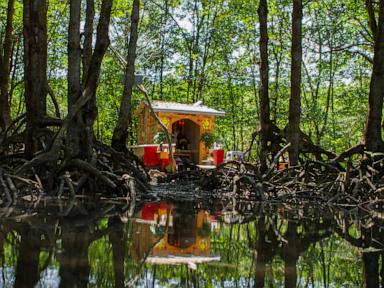
Down in the waterlogged sediment, tangled root networks slow incoming waves, trap river sediment, and hold the shoreline together. Above ground, dense trunks and branches break up wave energy before surges hit inland communities and farms. Think of them as a shock absorber made of wood and silt rather than a brittle concrete wall that reflects waves or cracks under pressure.
They do heavy lifting on carbon, too. Coastal mangrove ecosystems store massive amounts of carbon in both their biomass and deep, oxygen-poor soils, making conservation central to climate goals as well as local flood control. Globally, the U.N. Food and Agriculture Organization reported a net loss of 284,000 hectares of mangrove forest between 2000 and 2020.
What makes Can Gio extra meaningful is its comeback story. Chemical defoliants during the Vietnam War nearly wiped out the forest, yet communities and workers replanted vast stretches starting in the late 1970s. Watch the forest thrive again after near-destruction, and you see why locals call it a lifeline. Throwing away a hard-won natural barrier is a steep price to pay for real estate.
What Mega-Projects Are Changing on the Coast
Vietnam isn't building in Can Gio by accident. Authorities want to turn the district into a maritime logistics hub and coastal tourism magnet, linking it more tightly to Ho Chi Minh City and neighboring provinces.
Vingroup's Green Paradise reclamation project spans 2,870 hectares and is designed to house hundreds of thousands of residents and visitors alongside resorts, entertainment zones, and major infrastructure. Paired with plans for the Can Gio International Transshipment Port, a metro link, expressways, and a sea crossing toward Vung Tau, the footprint is huge.
Officials point out that the core biosphere zone is separate from the reclaimed footprint, and authorities in September 2026 sought approval to clear 4.57 hectares of mangrove in the buffer zone for the metro link rather than carving up the strictest core area. They also say sand for concrete will come from an artificial lake instead of dredging the already stressed Mekong River.
That's a fair distinction to keep in mind. Clearing 4.57 hectares isn't the same as bulldozing the entire reserve. Yet coastal ecologists warn that mangroves die not only when chainsaws hit them, but when seawalls, embankments, bridges, and causeways alter how freshwater and saltwater mix and drain. Look at Colombia's Ciénaga Grande, where roads and dikes disrupted water exchange from the 1950s onward and triggered massive mangrove die-offs. Once hydrology breaks, recovery gets slow and messy.
The Squeeze Between Growth, Flooding, and Livelihoods
Ho Chi Minh City already feels the squeeze of water. Rising seawater costs the city an estimated $57 million a year, record rains and high tides have flooded streets and homes, and land subsidence—sinking ground—compounds the threat.
Meanwhile, life in Can Gio is splitting along generational and economic lines. Younger residents may welcome new jobs, retail, and faster transit links into the city. Older fishers and oyster farmers told the Associated Press that construction, blocked drainage, and polluted water have pushed fish farther offshore and hurt local aquaculture. I've seen coastal towns across the region promise "eco-urban" harmony while pushing small-scale fishers out of shallow waters—kinda hard to call that balance when the people who know the tides best lose their catch.
There's also a financial angle experts highlight. Analysts such as Le Hong Hiep of the ISEAS-Yusof Ishak Institute have pointed to the high financial stakes for Vingroup in taking on massive capital-intensive builds, while UNESCO monitors how the biosphere reserve fares alongside development. Even with ESG pledges and green branding, building a dense seaside city on reclaimed land where flood risks already run high leaves almost zero margin for engineering shortcuts.
Practical Ways to Judge and Track What Happens Next
If you're following Ho Chi Minh City's coastal expansion—whether as an investor, policymaker, researcher, or resident—don't rely on glossy renders alone. Check the water first.
- Track hydrological impact studies, not just tree counts: Ask whether embankment and bridge designs preserve tidal flushing, sediment movement, and natural drainage channels around adjacent mangrove stands.
- Watch buffer-zone approvals and cumulative footprints: Small clearings like a few hectares for transit can add up when paired with access roads, dredging, runoff, and port traffic.
- Monitor UNESCO reviews and independent flood data: Look for updates from UNESCO's Can Gio Mangrove Biosphere Reserve profile alongside peer-reviewed flood and subsidence assessments for southern Vietnam.
- Look for real community transition support: Check whether displaced fishers and aquaculture workers get fair compensation, retraining, or sustainable co-management roles rather than one-off payouts.
Economic growth and climate resilience don't have to be enemies, but pretending a concrete seawall automatically replaces a living mangrove forest is a bet Ho Chi Minh City can't afford to lose.