The Smoke Over Grangemouth
A chimney does not speak. It breathes. For generations, the industrial heartlands of Britain exhaled a steady, rhythmic plume of gray smoke that signaled life, wages, and a quiet, stubborn pride. Men walked shift work with steel-toe boots scuffing the pavement, their lunchboxes dented by decades of routine. They believed in a simple social contract: you give your sweat to the soil, and the soil sustains your children.
Today, that smoke is thinning. The boilers are cooling.
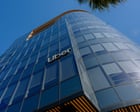
When a billionaire stands atop a modern glass tower and declares that faith in a homeland has evaporated, the headlines flash across financial terminals for a brief, breathless hour. Stocks twitch. Pundits argue over tax brackets and regulatory red tape. But down on the ground, where the concrete is cracked and the pubs close early on Tuesday nights, the loss feels entirely different. It feels personal. It feels like an eviction notice delivered in a language no one quite understands.
Sir Jim Ratcliffe did not become one of Britain's richest men by dreaming in soft focus. He built an empire on chemicals, oil, and heavy industry—sectors defined by friction, heat, and uncompromising reality. When he announced that his confidence in the United Kingdom had fractured, it was not merely the grumbling of a dissatisfied taxpayer. It was the sound of an anchor cutting its own cable.
Consider what happens when capital loses its patience.
Money is remarkably cowardly, yet intensely practical. It flows toward predictability like water finding a drain. For decades, British industry operated under a comforting illusion: that historical prestige would forever compensate for crumbling infrastructure, erratic energy policies, and a tax regime that shifts with every electoral cycle. Founders and titans assumed that the romantic pull of British football clubs, historic country estates, and centuries-old legal traditions would outweigh the daily operational friction of doing business on the island.
They were wrong.
The Architecture of Frustration
Walk through the corridors of any major industrial plant in the north of England or central Scotland, and you can smell the age. You can touch the rust on pipes laid down when Harold Macmillan was prime minister. Modernization requires permits, environmental reviews, consultations, appeals, and endless committees.
To an entrepreneur who measures time in milliseconds and global market shifts, the British administrative machine often resembles a museum curator guarding a damp castle. Every gate has a lock. Every lock has a different keyholder.
Ratcliffe’s frustration with the United Kingdom is a case study in modern bureaucratic exhaustion. Here is a man who poured billions into Manchester United, a living cathedral of sporting heritage, while simultaneously watching his chemical operations face some of the highest energy costs in the developed world. He watched factories struggle against carbon taxes that penalize domestic production before foreign competitors are held to the same standard. He watched ambition get bogged down in endless planning inquiries.
When a state makes it extraordinarily difficult to build, manufacture, and expand, builders eventually stop trying. They pack their blueprints and look across oceans where governments roll out red carpets instead of hazard tape.
This is not just about one billionaire’s ledger. It is about a structural malaise that has settled over an entire nation. Britain has become remarkably efficient at regulating decline while struggling profoundly to generate momentum.
The Anatomy of Disillusionment
Let us look at Arthur.
Arthur is not a real person, but he stands for ten thousand men who are very real. Arthur is sixty-one years old. He has spent forty of those years inside a petrochemical refinery near the North Sea. He knows the hum of every turbine by heart. He can tell by the vibration in the floorboards whether a compressor is running lean or choking on heavy crude.
Arthur remembers when Britain still made things. Not just financial derivatives or digital applications, but heavy, tangible things that left grease under fingernails and loaded cargo ships down to their waterline.
When Arthur hears that the billionaire owner of Manchester United—a club whose red shirts he has worn since George Best was dancing down the wing—has lost faith in the country, Arthur does not consult a portfolio manager. He looks at his gas bill. He looks at the crumbling community center down the road where the youth club was canceled for lack of municipal funding. He looks at the potholes on the high street that have grown large enough to swallow a bicycle tire.
"They are leaving," Arthur tells his grandson over a cup of instant tea. "Not just with their money. They are leaving with their belief."
That is the true cost of lost confidence. It is not measured purely in billions of pounds vanishing into foreign accounts or tax havens like Monaco. It is measured in the quiet withdrawal of future vision. When those who hold the levers of massive economic power decide that a nation is no longer worth the struggle, the psychic damage is far deeper than any balance sheet can capture.
The Football Mirror
Football is the mirror that reveals the national soul.
When Ratcliffe acquired a stake in Manchester United, it was billed as a homecoming. A local boy made good, a billionaire fan stepping in to rescue a sleeping giant from the cold, corporate calculus of American debt-financing and glazer-era stagnation. Fans dared to dream of a return to the glory days of Sir Alex Ferguson, of thundering tackles in the rain, of old Trafford restored to its majestic best.
Yet, running a football club in modern Britain is a microcosm of running the country itself. You inherit a magnificent brand, a global following of millions, and a stadium that leaks when it rains. The roof drips because fixing it requires navigating layers of bureaucracy, heritage constraints, local council disputes, and astronomical material costs.
Every single decision is scrutinized by an army of television pundits, millions of online critics, and regulatory bodies wondering how to tax the enterprise.
You want to rebuild? Fine. But first, fill out the forms. Wait twelve months for an environmental assessment. Listen to local politicians debate whether a new stand will cast a shadow over a rookery. Meanwhile, competitors in Madrid, Paris, or Riyadh move at the speed of light, pouring capital into state-of-the-art facilities with the full backing of sovereign wealth funds.
Manchester United is a metaphor for the British economy: trapped between a glorious history it cannot live down and a sclerotic present it cannot escape.
The Myth of Law and Prestige
For centuries, Britain operated under the comforting myth of exceptionalism. The island was different. The rule of law was older, the banking system more refined, the cultural soft power an inexhaustible well. People would always want to live here, invest here, pay taxes here, simply because it was Britain.
That myth expired somewhere around the turn of the decade, though few were willing to sign the death certificate.
High taxation combined with low public service delivery creates a toxic alchemy for high-net-worth individuals. When a successful entrepreneur looks out their window and sees a healthcare system on the brink of collapse, roads that resemble obstacle courses, and a tax rate that claims half of every pound earned above a certain threshold—all while political leaders lecture them on social responsibility—the psychological switch flips.
It is no longer about greed. It is about dignity and logic.
Why risk capital in an environment where success is treated as a moral failing and failure is subsidized by endless government borrowing? Why keep your primary residence in a country where the social mood feels permanently sour, defensive, and litigious?
The billionaire walking away is not an anomaly. He is the canary in the coal mine. When the people who can afford to live anywhere decide to live somewhere else, it is time to stop arguing about the weather and start examining the foundations of the house.
What History Whispers
History is littered with empires that mistook administrative inertia for wisdom.
Venice did not lose its maritime dominance overnight; it lost it slowly, as merchants found safer ports and lower tariffs elsewhere, while the doges spent their time arguing over ceremonial protocols. The great industrial powerhouses of the nineteenth century did not collapse from sudden meteor strikes; they hollowed out from within as imagination gave way to maintenance, and maintenance gave way to neglect.
When leaders of industry express public disillusionment, they are rarely speaking out of spite. They are speaking out of data. They look at productivity metrics, educational attainment, energy grids, and regulatory friction. They run the numbers. The numbers do not care about national pride.
And once the numbers turn cold, no amount of nostalgic flag-waving can warm them back up.
The Quiet Aftermath
Back in the industrial town, the shift changes.
The whistle blows. Men and women stream out of the factory gates, blinking into the late afternoon sun. They talk about football, about weekend plans, about the rising cost of groceries. They do not talk about billionaire tax exiles or macroeconomic confidence indices.
Yet they live downstream from every decision made in the glass-walled boardrooms of London and Zurich.
When confidence dies at the top, it trickles down as uncertainty. It shows up in the hesitation of a small business owner deciding whether to hire an apprentice. It shows up in the quiet shelving of a factory expansion plan. It shows up in the eyes of a young graduate packing their bags for Toronto or Singapore because they cannot see a future where hard work buys a decent home on native soil.
The billionaire has already left the building. He has booked the flight, secured the residency, and turned his gaze toward horizons where the rules are simpler and the welcome is warmer.
The rest of us remain behind, staring at the chimney, wondering if anyone is ever going to stoke the fires again.