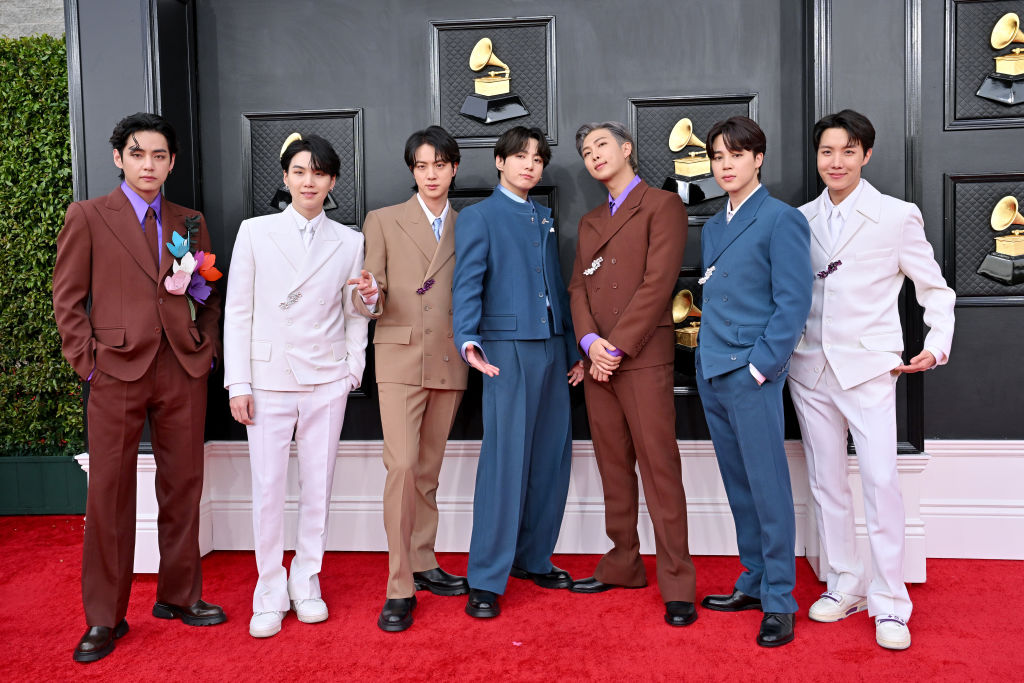
Every single awards season, a predictable ritual plays out across music journalism. A dominant act gets snubbed or sits out, and the narrative machine kicks into high gear. Fans soothe their collective anxiety with a comforting fiction. The narrative goes that the biggest group on the planet does not even care about a golden gramophone anymore. Pundits nod sagely. They argue that pop superstardom has outgrown institutional validation. They claim that streaming numbers and stadium sell-outs render traditional industry trophies obsolete.
It is a soothing lie. It is also complete nonsense. Don't forget to check out our recent coverage on this related article.
I have spent years watching artists and labels contort themselves to win favor with voting academies. I have seen management teams burn millions on campaign dinners, trade ads, and PR blitzes just to secure a nod from a shrinking, out-of-touch voting body. The idea that any commercially driven powerhouse willingly sneers at the highest traditional validation in Western music is an insult to basic economics.
BTS wants the Grammy. They want it badly. And pretending they are above it only masks the uncomfortable truth about how the Western music establishment still gates communities of global success. To read more about the context here, BBC provides an informative breakdown.
The Lazy Consensus of Artistic Transcendence
The lazy consensus argues that legacy institutions no longer matter because the global footprint of modern fandom exists entirely outside traditional gatekeepers. Look at the numbers, they say. Look at the Billboard charts, the sold-out stadium runs across continents, the cultural dominance that moves stock prices and national economies. Why would a juggernaut that generates billions need a chunk of molded zinc?
This argument confuses commercial scale with cultural permanence.
Commercial power and institutional validation are two entirely different currencies. BTS conquered the commercial sphere years ago. They rewrote the rules of physical album sales, broke touring records, and built a digital mobilization engine that makes Western pop acts look like amateurs. But the Grammy represents something else entirely. It is the historical record. It is the stamp placed by old guard insiders who control the canon taught in future music history classes.
When people claim the group is "above" the award, they are buying into a defensive coping mechanism. They want to protect themselves from the sting of recurring snubs by pretending the game was rigged from the start and therefore not worth playing.
The game is rigged, yes. But walking away or pretending you do not care does not change the rules. It just leaves the board to people who look nothing like the artists redefining modern pop.
The Mechanics of the Voting Body
To understand why the pursuit of this trophy matters, you have to look past the red carpet glamour and examine the mechanics of the Recording Academy.
The Academy is not a meritocracy. It is a trade organization made up of thousands of voting members, many of whom are legacy producers, session musicians, engineers, and songwriters who work within traditional Western pop idioms. For years, these voters suffered from a profound demographic inertia. They understood traditional rock, traditional pop, and traditional R and B. Anything outside those comfort zones—especially music sung in a language other than English—faced an uphill battle against institutional bias and sheer unfamiliarity.
Imagine a scenario where a veteran studio engineer who has not listened to a top 40 pop track since 1998 receives a ballot featuring tracks with dense Korean lyricism, complex genre-blending production, and hyper-modern arrangements. Without a massive, aggressive voter education campaign, that ballot goes to whatever feels familiar.
This is where the desire for the award intersects with strategy. Wanting a Grammy does not mean begging for approval from people who do not understand your art. It means recognizing that winning forces the institution to expand its definition of excellence. Every time a non-Western, non-traditional act breaks through that voting wall, the perimeter shifts.
When BTS members express a desire for validation from these institutions, they are not showing weakness. They are showing tactical ambition. They want to crack the vault from the inside.
The Cost of the Neutrality Myth
Let us dismantle another pillar of the counter-narrative: the idea that disengaging from legacy awards protects artistic integrity.
Integrity is a favorite buzzword for stans trying to rationalize industry rejection. If our favorites lose, it proves they are too alternative for the mainstream. If they do not submit, it proves they are too pure for commercial politics.
This is a dangerous trap. It allows lazy institutions off the hook. When massive international acts pretend they do not care about Western recognition, the Recording Academy quietly breathes a sigh of relief. It lets them maintain status quo voting patterns without facing real public pressure for structural modernization.
Indifference is not a weapon against the establishment. Indifference is what the establishment wants. It keeps the club exclusive. It ensures that the definition of "best music of the year" remains narrow, Anglo-centric, and safe.
I have seen labels use the "we are above it" defense to mask poor campaign strategies or failure to invest in crucial industry outreach. It is much easier to tell your base that the system is corrupt than to admit that your team botched the political ground game required to educate a notoriously conservative voting block.
Redefining the Real Question
The question driving this discourse is entirely wrong. People ask: "Why don't BTS want a Grammy this year?"
The question you should be asking is: "Why do we keep letting old guard institutions dictate what global cultural dominance looks like?"
The answer reveals a paradox. BTS does not need a Grammy to prove their cultural impact. That point is settled. The streaming data, the economic contribution to South Korea, the generational shift in how music is consumed globally—these things are irreversible.
Yet, they still want the win because symbols matter. Winning the category means forcing an insular American institution to acknowledge that the center of gravity in global pop has shifted permanently eastward. It changes the conversation for every young Asian artist, every non-English songwriter, and every global act who follows in their footsteps.
Pretending the award does not matter is a disservice to the very pioneers trying to break down the final doors of the old music industry.
Stop confusing tactical ambition with desperation. Stop pretending that ignoring a problem makes it disappear.
They want the gold. And they are entirely right to want it.