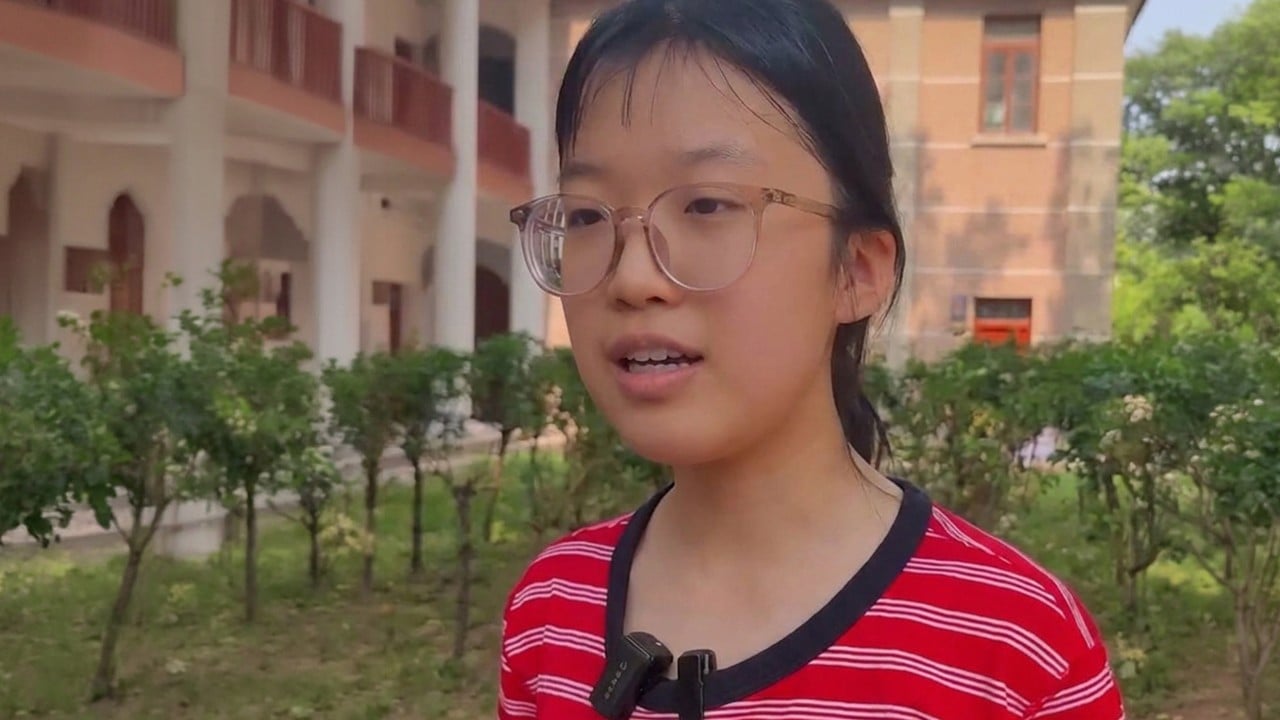
When news broke that a student from a modest background secured admission to a top-tier Chinese university without paying a single yuan for extra tutoring, social media erupted into widespread celebration. Commentators hailed the achievement as proof that the national college entrance examination, the Gaokao, remains a pure meritocracy. The narrative was simple and comforting. If you work hard enough, you can beat the odds.
The reality on the ground tells a radically different story.
Single success stories obscure a system where private test preparation, resource inequality, and structural advantages dictate who gets through the gates of elite higher education. While government crackdowns on the shadow education sector aimed to level the playing field, the actual mechanisms of academic selection have merely adapted, raising the floor for competition while hiding the true costs of entry.
The Illusion of Pure Meritocracy
For decades, standardized testing stood as the ultimate equalizer across Chinese society. A single test score determined whether a teenager from a remote mountain village or a wealthy neighborhood in Shanghai attended a prestigious institution like Tsinghua or Peking University.
That framework has frayed under the weight of resource concentration.
Top public high schools in major cities now function like elite prep institutions. They recruit candidates with state-of-the-art facilities, specialized teaching staff, and direct pipelines to university admissions committees through independent talent selection initiatives. A student attending a rural school receives a completely different tier of instruction, regardless of whether either child hires an outside tutor.
When an outlier breaks through without private coaching, public commentary treats the exception as the rule. Media outlets paint these individuals as proof that grit overcomes structural deficits. Yet, tracking historical admission trends reveals that acceptance rates for students from working-class backgrounds at top institutions have dropped steadily over the past thirty years. The lone success story is not evidence that the machine works. It is statistical noise in a trend line moving in the opposite direction.
How the Shadow Education Ban Altered the Playing Field
When regulators launched severe restrictions on private tutoring companies in 2021, the intent was clear. Policy makers wanted to ease financial pressure on families, boost declining birth rates, and reduce the grueling academic burden on young students.
The immediate result was the collapse of large commercial tutoring firms. Millions of test preparation businesses vanished overnight from urban high streets.
The underlying demand never left. It simply went underground.
Wealthy households shifted from organized commercial centers to private, high-cost home tutors masquerading as housekeepers or family friends. The price per hour soared, transforming supplementary education from an expensive consumer good into an exclusive luxury reserved for the top income bracket.
Meanwhile, families with middle and lower incomes lost access to affordable group classes that previously gave their children a fighting chance to close the gap. Instead of equalizing opportunity, the elimination of open commercial tutoring widened the divide between those who can afford secret, high-priced private instruction and those who must rely entirely on their local school's baseline curriculum.
The Hidden Complexity of Modern Entrance Exams
Standardized test questions no longer rely on simple rote memorization. Test designers have deliberately adjusted exam structures to evaluate critical thinking, multi-disciplinary synthesis, and real-world application.
Consider a hypothetical problem set in advanced physics. A traditional question might ask a student to calculate force vectors using a standard formula taught directly in public textbooks. A modern exam question presents a scenario involving satellite orbital adjustments, integrating advanced calculus techniques and requiring familiarity with recent scientific literature.
Students whose schools offer advanced electives, university-level prep modules, and specialized science laboratories navigate these complex questions easily. Those whose instruction strictly follows standard textbooks find themselves facing material that assumes exposure to topics outside the basic syllabus.
This shift disadvantages self-taught students. Without guidance on how to decode multi-layered test formats, pure effort yields diminishing returns. The test has evolved faster than the public school curricula in underdeveloped regions.
The Cultural Weight of Academic Perfection
Parents shoulder an immense psychological burden within this framework. In many communities, a child's performance on a single exam is seen as the primary vehicle for generational upward mobility.
Family savings are frequently drained long before a teenager reaches high school. Money flows into extracurricular training, olympiad competitions, and early childhood enrichment projects designed to secure placement in elite feeder middle schools. By the time a student reaches the college entrance exam, hundreds of thousands of yuan have often been spent behind the scenes.
This dynamic creates an intense pressure cooker. Teenagers spend up to sixteen hours a day studying under extreme stress. When public debate focuses on the rare student who succeeded without private spending, it creates an unrealistic benchmark for millions of families struggling under the emotional and financial weight of the process.
Structural Realities Beyond the Classroom
Focusing strictly on test prep misses the larger economic context driving this rivalry. The supply of high-paying, stable white-collar positions has not kept pace with the explosive growth of university graduates.
As corporate hiring standards stiffen, employers increasingly use top-tier university diplomas as an initial screening tool. A degree from a standard university no longer guarantees entry into professional career tracks. Consequently, the competition to enter top institutions has intensified, turning the admissions process into a high-stakes survival exercise.
This high-stakes environment means that families cannot afford to treat academic preparation as an open experiment in self-reliance. They pursue every possible advantage available to them, legally or otherwise.
A single student getting into a top school without tutoring makes for an inspiring headline, but it offers zero practical solutions for structural inequality. Until public education resources are distributed equally across rural and urban districts, and until the job market provides sustainable paths for graduates outside the top handful of institutions, families will continue chasing every marginal advantage they can buy.