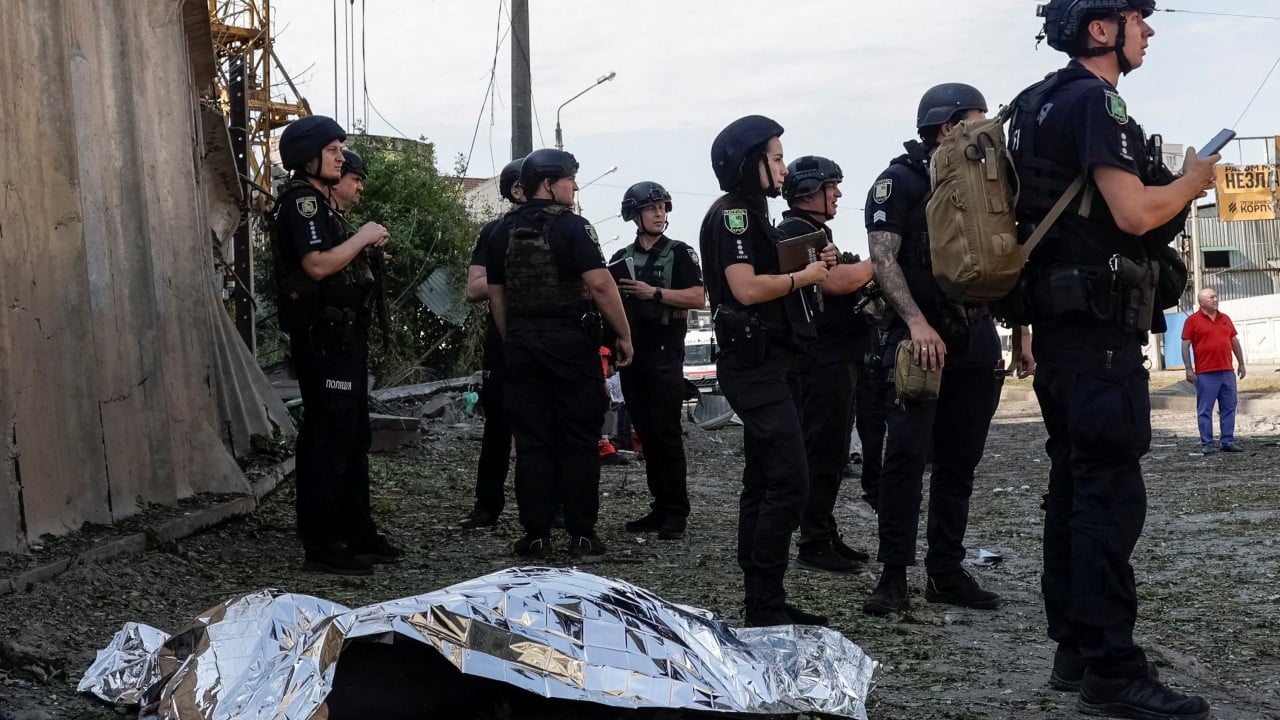
Russia has weaponized the weather. While conventional military strategy dictates moving troops and launching offensives during temperate seasonal windows, Moscow has inverted this logic. Recent coordinated missile and drone strikes across Ukraine have claimed at least 11 lives and left more than 40 citizens severely injured, but the casualty count tells only a fraction of the story. The true objective lies in the deliberate timing of these barrages, which deliberately coincided with a record-breaking heatwave. By striking thermal power plants, electricity substations, and water pumping stations when the thermometer cleared 40 degrees Celsius, the Kremlin sought to turn the ambient climate into a force multiplier for civilian misery.
This is not a accidental alignment of bad luck and bad weather. It is a calculated doctrine of asymmetric infrastructure warfare designed to break the psychological and physical resilience of the Ukrainian population.
The Engineering of a Kinetic Heat Trap
Military planners call it infrastructure degradation. For the millions of civilians trapped in high-rise apartments in Kyiv, Kharkiv, and Dnipro, it is an engineering nightmare. When a cruise missile destroys a high-voltage transformer during sub-zero winter temperatures, the primary threat is freezing. During a summer heatwave, the cascading failures are more complex, faster-moving, and harder to contain.
When the electrical grid fails under the strain of both air conditioning demand and missile damage, water treatment facilities lose power immediately. Pumps stop spinning. Water pressure drops to zero. Without water, municipal sewage systems begin to stagnate, creating immediate public health hazards in densely populated urban centers. At the same time, food preservation systems fail on a massive scale. Industrial cold storage facilities, commercial supermarkets, and domestic refrigerators all go dark simultaneously, spoiling thousands of tons of perishable goods within 48 hours.
The human body suffers a parallel breakdown. Without climate control, vulnerable demographics—specifically the elderly, newborns, and those with chronic cardiovascular conditions—cannot shed metabolic heat. Hospitals operating on backup diesel generators must make agonizing triage decisions, prioritizing surgical theaters and intensive care units over general wards that are rapidly turning into ovens.
Deconstructing the Front Line Supply Mirage
The targeting choices reveal a sophisticated understanding of Western aid bottlenecks. Moscow is no longer merely targeting symbolic political objectives or random civilian blocks; they are hunting the specific industrial machinery required to keep Ukraine functional.
- Autotransformers: These multi-ton, highly customized pieces of equipment take up to a year to manufacture and transport. Ukraine cannot simply buy replacements off the shelf.
- Gas Distribution Nodes: Striking these points during the summer prevents Ukraine from pumping reserves into subterranean storage facilities, guarantees a catastrophic deficit when winter arrives, and forces Kyiv to expend precious air defense munitions protecting empty pipes.
- Local Switching Stations: By cutting the links between regional generation hubs and local distribution networks, Russia isolates entire provinces from the national grid, preventing the government from sharing power from unaffected regions.
Western nations have responded with a steady stream of mobile generators and emergency funding, but this creates a false sense of security. A generator can keep a field hospital running or power a handful of water pumps. It cannot sustain a metallurgical plant, run a regional rail network, or keep the water flowing to the top floors of a twelve-story residential block. The scale of the destruction vastly outpaces the logistical capacity of international aid pipelines.
The Math of Air Defense Atrition
Ukraine faces a mathematical impossibility. A single Russian strike package might consist of cheap, Iranian-designed delta-wing drones, older Soviet-era cruise missiles, and advanced hypersonic projectiles. The drones cost a few thousand dollars to manufacture. The Western interceptors used to shoot them down, such as Patriot or NASAMS missiles, cost millions of dollars per unit.
By launching these mixed salvos during periods of extreme environmental stress, Russia forces Ukrainian commanders into a brutal calculus. Do they fire their last remaining high-altitude interceptors to protect an electricity substation that keeps the air conditioning running in a city of one million people, or do they save those missiles to defend a frontline military command post? Every choice is a losing proposition.
The Strategy of Forced Migration
There is a deeper, long-term geopolitical objective behind this environmental targeting. Moscow wants to make Ukraine unlivable. If urban environments cannot guarantee basic human needs like running water, predictable electricity, and functional sanitation during the summer or winter, populations will flee.
This creates a secondary crisis for Western Europe. A renewed wave of millions of Ukrainian refugees crossing the Polish, Slovakian, and Romanian borders puts immense economic and political strain on NATO allies. It fuels domestic political polarization within those countries, strengthens isolationist political factions, and weakens the collective international will to fund the Ukrainian defense. The missile that hits a power grid in central Ukraine is designed to trigger a political shockwave in Brussels, Berlin, and Washington.
The Limits of Resilience
Western media frequently praises the resilience of the Ukrainian people, highlighting the speed with which utility crews repair severed lines and the ingenuity of citizens who adapt to life under constant threat. This narrative, while rooted in real heroism, obscures a dangerous reality. Resilience is a finite resource.
Metal fatigues after repeated stress. Human psychology does the same. The continuous cycle of rebuilding a substation only to watch it burn again three weeks later creates a profound sense of exhaustion among technical workers. The constant threat of "double-tap" strikes—where a second missile is fired at the exact same location thirty minutes after the first to target emergency responders and repair crews—has made infrastructure maintenance one of the most dangerous professions in the country.
The international community must look past the immediate casualty figures of the latest strike. The death toll of 11 individuals is a tragedy, but the true metric of success for the Kremlin is the systemic erosion of Ukraine's viability as a modern state. Without a fundamental shift in how Western allies approach air defense supply chains and infrastructure protection, the combination of kinetic bombardment and climate extremes will continue to extract a toll that no society can sustain indefinitely.