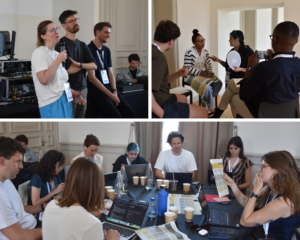
The European tech scene is currently obsessed with speed. At a recent gathering in Marseille, a cohort of regional founders reportedly generated 186 project ideas in a single 30-minute window. This rapid-fire ideation is being celebrated as a triumph of modern entrepreneurial spirit, a sign that the Mediterranean coast is ready to challenge Silicon Valley.
It is actually a warning sign. In similar updates, we also covered: Why Blaming Mark Zuckerberg For Child Safety Is Total Corporate Cowardice.
Generating six ideas per minute does not signal innovation. It signals a systemic failure to understand what it takes to build a viable technology company. In the current market, ideas are cheap, execution is difficult, and compute power is ruinously expensive. By focusing on the sheer volume of concepts rather than the grueling mechanics of implementation, these regional hubs risk creating an ecosystem of superficial prototypes that will collapse at the first sight of a balance sheet.
The Mirage of Volume
Silicon Valley built its empire on the myth of the garage startup. Europe is currently building its own myth on the hackathon. Gizmodo has analyzed this critical topic in great detail.
When groups of founders gather to brainstorm dozens of concepts in a single session, they are engaging in a form of corporate theater. The metrics of success in these workshops are entirely internal. Participants measure achievement by the number of sticky notes on a wall or the enthusiasm of a pitch deck.
This approach ignores the fundamental shift in how software is now built. In the previous generation of tech startups, a clever application layer could find a market through sheer utility. Today, building a business around artificial intelligence requires navigating a complex web of infrastructure costs, data privacy regulations, and shifting hardware availability.
An idea conceived in ten seconds rarely accounts for the reality that training a specialized model can cost hundreds of thousands of dollars in server fees alone. It does not address where the proprietary data will come from to make the system useful. It glosses over the fact that large language models are rapidly becoming utilities, meaning that any simple wrapper application can be duplicated by a competitor over a weekend.
The Economics of the Mediterranean Tech Hub
Marseille has genuine advantages as a developing technology ecosystem. The city sits at the termination point of major undersea data cables connecting Europe to Africa and Asia. It has access to relatively cheap nuclear energy from the French grid, which is essential for powering data centers.
Local politicians and venture funds want to turn these physical assets into a narrative of regional dominance. They point to events where hundreds of ideas are generated as proof of a thriving local culture.
The math tells a different story.
Capital in Europe is far more conservative than capital in the United States. A French founder cannot rely on the endless rounds of unbacked seed funding that were common in California five years ago. European investors demand a path to profitability much earlier in a company's lifecycle.
When a regional ecosystem prizes the quantity of ideas over technical depth, it misallocates its limited resources. The talent pool gets fragmented across fifty microscopic projects instead of concentrating around two or three genuinely viable enterprises. Engineers spend their time building proof-of-concept demonstrations for local pitch competitions rather than solving the hard engineering problems required to create defensible intellectual property.
The Infrastructure Trap
Every new software project faces an immediate infrastructure hurdle. To understand why fast ideation is dangerous, one must look at the physical reality of modern computing.
[Traditional Software Startup] -> High Margins -> Low Infrastructure Overhead
[Modern AI Startup]            -> Shrinking Margins -> Massive Cloud Infrastructure Costs
A startup cannot simply write code and deploy it to a cheap server anymore. If a project relies on fine-tuning existing open-source models, it requires access to specific graphics processing units that are currently under severe global supply constraints. Cloud providers charge premium rates for access to this hardware.
A team that invents an idea during a 30-minute session has not calculated the inference costs. They do not know if their proposed service will cost more to run per query than a user is willing to pay. They are essentially designing a car without checking if there is a global shortage of steel.
This creates a specific type of failure state. A company launches a beta version of a product, attracts a few thousand enthusiastic users, and then watches its cloud computing bill grow exponentially. The founders cannot afford to keep the servers running long enough to figure out a monetization strategy. They burn through their initial seed funding not on product development, but on paying infrastructure bills to American tech giants.
The Regulatory Wall
Europe has chosen a specific path regarding technology regulation. The enforcement of strict data governance laws means that any project touching user data faces immediate legal scrutiny.
A common idea generated at tech festivals involves using automated systems to analyze local government data, medical records, or corporate logistics. These concepts sound excellent in a three-minute pitch. In practice, they run directly into the wall of European compliance frameworks.
Securing the rights to use a dataset for training purposes requires months of legal negotiation. If the data contains any personally identifiable information, the technical architecture must be built from the ground up to allow for total erasure. A fast-moving team that does not embed regulatory compliance into its initial architecture is simply building a product that will be illegal to deploy.
The regional obsession with speed ignores this reality. True competitive advantage in the European market comes from understanding how to navigate these legal constraints, not from pretending they do not exist. A company that spends six months securing an exclusive, legally compliant data pipeline is infinitely more valuable than a company that spends six days building a flashy application using public data that anyone can access.
Moving Beyond the Hackathon Model
The tech industry needs to grow up. The era of cheap money is over, and the era of easy software wins is closing with it.
If regional hubs like Marseille want to compete on a global stage, they must abandon the metrics of the hype cycle. They need to stop measuring success by the number of attendees at a conference or the volume of ideas generated in an afternoon.
Success should be measured by the retention of senior engineering talent. It should be measured by the number of local companies that transition from grant funding to genuine commercial revenue. It should be measured by the development of proprietary, defensible technology that cannot be replicated by a simple software update from an industry incumbent.
This requires a cultural shift among founders and investors alike. It means favoring the quiet engineer who spends three months optimizing a model's efficiency over the charismatic presenter who pitches three new concepts a week. It requires recognizing that the most valuable ideas are often boring, highly technical solutions to specific industrial problems, rather than broad consumer applications.
The frantic pace of the Marseille workshop is an attempt to simulate momentum. True momentum is slower, heavier, and far more painful to achieve. It is found in the months of quiet work required to turn a single, solitary idea into a functional business that can survive in a ruthless global market.