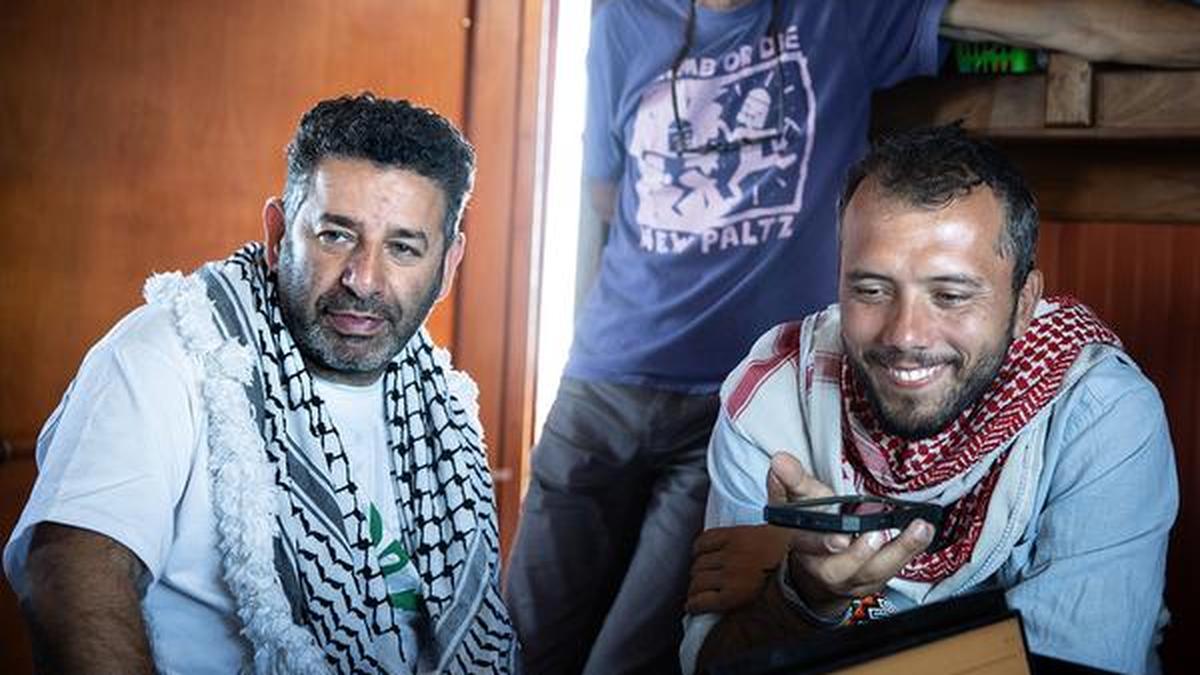
Israel has moved to release two high-profile activists from the Global Sumud Flotilla, ending a ten-day standoff that began in the international waters off Crete. Thiago Avila and Saif Abu Keshek, the faces of a mission intended to pierce the maritime blockade of Gaza, will be transferred from the Shikma detention facility to immigration authorities today, Saturday, May 9, 2026. Their release is not an acquittal but a prelude to forced deportation. While the immediate legal drama in an Ashkelon courtroom concludes, the incident reveals a hardening of Israeli maritime policy and a calculated use of anti-terrorism legislation to dismantle civilian-led aid missions before they reach the Mediterranean’s most volatile coastline.
The interception on April 30 was not a chance encounter. The Israeli Navy shadowed the Global Sumud Flotilla—a convoy of nearly 60 vessels—long before the command to board was given. While most activists were offloaded in Crete, Avila and Abu Keshek were singled out for extraction and transport to Israel. This was a surgical strike against the movement’s leadership. By bringing them onto Israeli soil, the state moved the conflict from the open sea into a legal arena where "security considerations" often override standard civil liberties. You might also find this connected coverage useful: Why Digital Migration Portals are a Gilded Cage for Global Labor.
The Interrogation Room and the Hunger Strike
Behind the walls of the Shikma facility, the narrative was not about aid delivery but about alleged links to the Popular Conference for Palestinians Abroad (PCPA). Israel and the United States claim the PCPA is a front for Hamas. The activists deny this, maintaining their mission was strictly humanitarian. To the Israeli security apparatus, the flotilla is a logistical Trojan horse; to the activists, it is a desperate necessity for 2.4 million people on the brink of famine.
The conditions of their detention were described by the legal group Adalah as "punitive." Isolated and facing intense questioning, Abu Keshek escalated his protest by refusing water on May 5. This kind of brinkmanship in a detention cell mirrors the tension on the water. When a detainee stops drinking, the clock starts ticking for the government. A death in custody would have transformed two activists into martyrs, potentially triggering a diplomatic wildfire that Israel’s Foreign Ministry was not prepared to fight. As reported in latest coverage by TIME, the results are worth noting.
Jurisdictional Overreach in International Waters
The detention of these men raises a fundamental question about the Law of the Sea. The interception occurred roughly 600 nautical miles from Gaza, near the Greek coast. Israel justifies these actions by citing the San Remo Manual on International Law Applicable to Armed Conflicts at Sea, which allows a belligerent to intercept vessels attempting to breach a blockade. However, the UN rights office has been vocal in its dissent.
Solidarity is not a crime. Delivering flour and medicine is not an act of war. Yet, by classifying the organizers as affiliates of a sanctioned group, Israel effectively bypassed the "humanitarian" label. This legal maneuver allowed the Shin Bet to hold the pair without charge for over a week, a tactic usually reserved for suspected militants, not foreign activists with passports from Brazil and Spain.
A Strategy of Exhaustion
This is the new reality for maritime activism. The goal of the Israeli security state is no longer just to stop the boats; it is to make the personal cost of participation too high to bear. By subjecting leaders to isolation, hunger strikes, and the threat of permanent entry bans, the state creates a deterrent that lasts long after the deportation flights take off.
- Financial Drain: Legal battles in Israeli district courts are expensive and time-consuming for NGOs.
- Physical Toll: The psychological impact of "total isolation" is designed to break the resolve of even seasoned activists.
- Diplomatic Pressure: Forcing nations like Brazil and Spain to intervene creates a friction point that many governments would rather avoid.
The Global Sumud Flotilla mission was built on the idea of strength in numbers. Sixty ships are harder to stop than one. But the state responded with a strategy of decapitation, removing the leaders and leaving the rest of the fleet scattered in Greek ports. It is a highly effective, if legally controversial, method of maintaining a blockade that has lasted nearly two decades.
The release of Avila and Abu Keshek today clears the cells, but it does nothing to clear the waters. As long as the blockade remains and the humanitarian situation in Gaza worsens, more ships will sail. And as long as those ships sail, the Israeli Navy will be waiting with a legal and military playbook that has become increasingly refined. The activists go home, but the precedent of seizing foreign nationals in international waters for "questioning" is now firmly etched into the regional security landscape.
The deportation will be swift. The political aftershocks will take much longer to subside.



