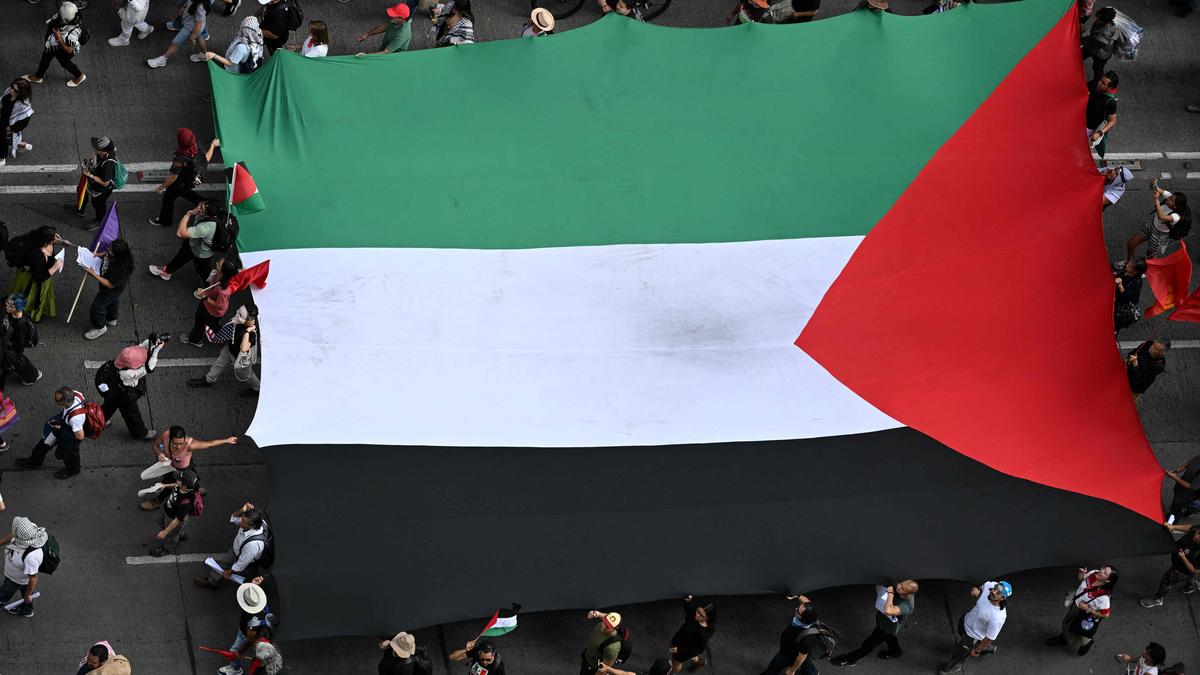
European nations are moving to recognize Palestine because the decades-old strategy of waiting for a Washington-mediated peace process has completely collapsed. By formally extending state recognition, capitals like Madrid, Dublin, Oslo, and Ljubljana are not just issuing a moral protest against the destruction of Gaza. They are executing a calculated diplomatic mutiny. They are breaking away from American diplomatic hegemony to preserve the fading possibility of a two-state outcome before expanding settlements and military campaigns render it physically impossible. This is statecraft born of desperation, domestic electoral pressure, and a profound collapse of trust in Western alignment.
The Collapse of the Washington Monopolized Peace Process
For over thirty years, Western Europe followed a predictable script. The consensus dictated that Palestinian statehood must only arrive at the end of bilateral negotiations between Israelis and Palestinians. This approach effectively handed an absolute veto to the Israeli government, which steadily expanded its presence in the West Bank.
By mid-2024, the coordination between Spain, Ireland, and Norway signaled that the old playbook was dead. European diplomats watched the United States repeatedly use its United Nations Security Council veto to shield Israel from international pressure. They recognized that waiting for Washington meant waiting forever. The decision to bypass American mediation reveals an underlying truth. The transatlantic consensus on Middle Eastern policy is fractured beyond immediate repair.
The shift is not merely rhetorical. European nations are beginning to view unilateral recognition as a form of diplomatic intervention to balance an asymmetric conflict. When Spanish Prime Minister Pedro Sánchez and Irish leader Simon Harris coordinated their announcements, they were responding to an immediate crisis. The strategy shifts the baseline. It changes the legal status of the occupied territories from disputed lands to a sovereign state under foreign occupation.
Shattering the Ghost of the Oslo Accords
Norway spearheaded this policy shift, which carries immense historical irony. Oslo was the birthplace of the 1993 accords that established the framework for the modern peace process. For three decades, the Norwegian government guarded that legacy with institutional pride.
The decision by Oslo to abandon its traditional neutrality is an explicit admission that the framework failed. The architecture of the Oslo Accords was intended to be transitional, a five-year bridge leading to a permanent settlement. Instead, it became a permanent holding pattern. It allowed the occupation to deepen while offering the illusion of a diplomatic track.
European intelligence assessments concluded that the current Israeli coalition government has no intention of ever permitting a sovereign Palestinian state. Prime Minister Benjamin Netanyahu confirmed this reality repeatedly. Faced with a partner that openly rejects the ultimate goal of Western policy, European leaders decided that maintaining the old posture was an act of political self-delusion.
Domestic Pressure and Constitutional Echoes
Foreign policy is rarely isolated from domestic survival. The leaders pushing for recognition are navigating intense political currents at home. In Spain, Pedro Sánchez leads a fragile left-wing coalition that relies on the support of smaller regional and progressive parties. These factions demanded strong action on Gaza as a condition for their ongoing political cooperation.
In Ireland, the motivation draws from a deep cultural history. The Irish political identity is rooted in its own historical struggle against colonial rule and partition. When Irish leaders speak about Palestine, they are using language that resonates powerfully with their domestic electorate. It is an easy political victory at a time when European governments are struggling with economic anxieties and immigration debates.
The political cost of doing nothing became higher than the diplomatic fallout of acting. This calculation became evident when Slovenia and other nations moved to follow suit. Electorates across Western Europe watched months of unrelenting bombardment in Gaza on social media. They demanded that their governments move past empty expressions of deep concern.
The Economic Realities and the Association Agreement
While recognition is an important legal statement, the real test of European policy lies in material leverage. Europe remains Israel's largest trading partner. This economic relationship is governed by the EU-Israel Association Agreement, an arrangement that grants Israel preferential market access.
Spain and Ireland pushed the European Commission to review this agreement. They cited the human rights clauses built into the foundational text of the treaty. This is where symbolic foreign policy clashes with hard economic interests. The European Union operates on consensus, and consensus on trade sanctions against Israel does not exist.
Germany, Austria, and several Central European nations remain staunchly opposed to any measures that resemble economic warfare against Tel Aviv. This internal division limits the actual impact of European recognition. Without unified economic consequences, declarations of statehood remain diplomatic gestures that do not alter the fiscal reality of the occupation.
EU Member Stances on Palestinian Recognition (Post-2024 Realignment)
────────────────────────────────────────────────────────────────────
Recognized / Moving Toward:  Spain, Ireland, Slovenia, Malta, Sweden
Firm Opposition / Hesitant:  Germany, Austria, Italy, Czech Republic
The Legal Transformation of the Conflict
By recognizing Palestine along the pre-1967 borders, European nations are altering their legal interactions with the region. This stance defines East Jerusalem as the occupied capital of a foreign state, rather than a municipal zone subject to Israeli annexation.
This change has immediate consequences for international legal bodies. It strengthens the jurisdiction of the International Criminal Court and the International Court of Justice when evaluating actions within those territories. European courts may face new legal challenges regarding arms export licenses and corporate operations inside settlements.
If a nation recognizes Palestine as a state, it must logically treat corporate activity in West Bank settlements as illegal exploitation of an occupied country's natural resources. This creates a legal environment that could force European pension funds and corporations to divest from Israeli banks and infrastructure projects, bypassing the need for official EU sanctions.
The Limits of Sovereign Symbolism
The tragic paradox of the European shift is that it occurs at a time when the physical reality of a Palestinian state is nearly gone. The West Bank is fragmented by hundreds of settlements, bypass roads, and military checkpoints. Gaza has been reduced to rubble, its population displaced, and its infrastructure systematically dismantled.
Recognizing a state that possesses no control over its borders, no unified government, and no independent economy highlights the limits of traditional diplomacy. The Palestinian Authority in Ramallah is weak, unpopular, and widely viewed by its own population as a subcontractor for the occupation. European recognition provides a boost to Palestinian officials, but it does not grant them the power to collect taxes, prevent settlement expansion, or stop military incursions.
This reality exposes the core weakness of the European strategy. It is an attempt to use diplomatic status to create facts on the ground, whereas international law usually recognizes facts that already exist. Without a fundamental change in the balance of power, or a willingness by Europe to enforce its borders through trade restrictions, recognition remains an architecture without a foundation.
The diplomatic map of Europe has changed. The old consensus that required obedience to the American diplomatic schedule is broken. European nations acted to salvage their own moral authority and appease their citizens, but they have entered a difficult terrain. They have recognized a state that exists on paper, while the land itself disappears by the day.