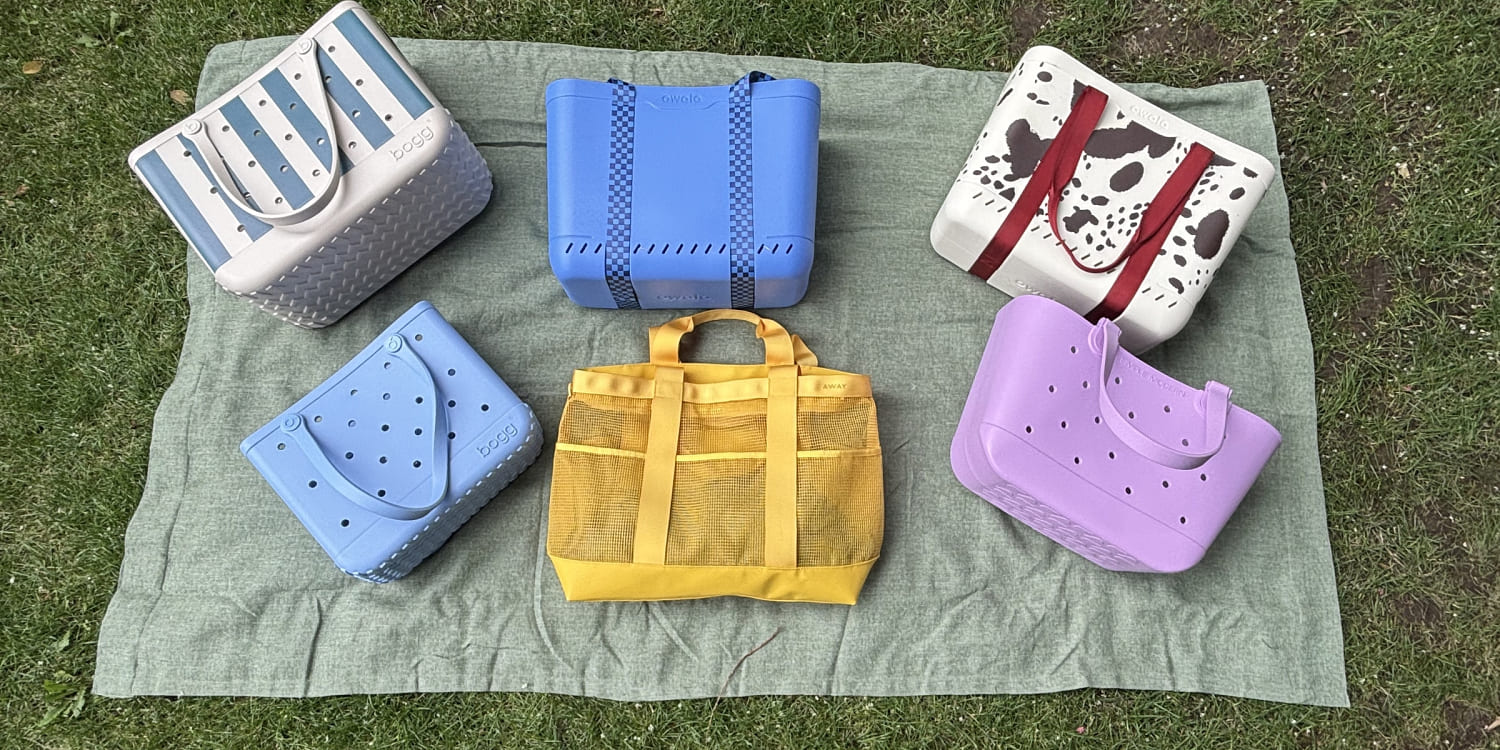
The modern beach bag has devolved into a performance theater. You see them everywhere: rigid, colorful, plastic-molded totes that promise salvation from sand and surf. Marketing departments lean heavily on terms like "rugged" and "adventure-ready," yet few consumers stop to evaluate the actual engineering behind the product. If your primary criteria for a bag is simply whether it holds a towel, you are overpaying for a piece of injection-molded ethylene vinyl acetate, or EVA.
The real question isn't which brand looks better on a social media feed. It is about material fatigue, load-bearing architecture, and the inevitable reality of environmental degradation. For another perspective, read: this related article.
The Engineering of the Rigid Tote
The dominance of the molded EVA tote, popularized by brands like Bogg Bag and imitated by Simple Modern and Owala, rests on a specific set of physical properties. EVA is a copolymer, meaning it is soft, flexible, and chemically resistant. From a manufacturing standpoint, it is a dream. It can be easily molded into a structure that stands upright, effectively creating a mobile crate for your gear.
However, the "durable" label is often conflated with "stiff." While these bags are certainly waterproof and easy to hose down—a massive upgrade over the sand-trapping cotton canvas bags of the nineties—they are not invincible. The most common point of failure for these rigid totes is the handle-to-body interface. When you load a bag with wet towels, insulated water bottles, and sunscreen, you are putting a tremendous amount of localized stress on the holes where the straps are threaded. Further insight on the subject has been provided by Cosmopolitan.
If you look closely at a well-used EVA tote, you will often see stress whitening or micro-tearing around these attachment points. Manufacturers know this. The fix is usually a thicker mold or a reinforced eyelet, but the physical reality remains: plastic fatigue is cumulative.
Comparing the Titans
The market has split into two distinct schools of design: the molded-plastic "crate" style and the soft-shell "carryall" style.
Brands like Yeti dominate the latter. Their Camino Carryall uses a thick, laminated nylon shell. This is fundamentally different from EVA. Because it is flexible, it doesn't suffer from the same structural brittleness as molded plastic. It absorbs impact rather than cracking under it. The trade-off is that it does not stand upright on its own quite as effortlessly as a rigid Bogg, unless the bag is packed with enough volume to tension the material.
The Yeti approach relies on heavy-duty webbing and reinforced stitching, which mimics the design logic of industrial gear rather than domestic kitchenware. If you are frequently carting heavy loads—think crates of drinks or large quantities of gear—this soft-shell construction is superior. It distributes weight across the entire weave of the fabric rather than concentrating it at a single attachment point.
The Hidden Cost of Convenience
Many consumers gravitate toward the Owala or Simple Modern variations because they address the inherent bulk of the original EVA designs. These iterations often include better strap geometry or more refined interior organization. Yet, the physics of a large, rigid bag does not change just because the branding is updated.
A large, open-top tote is a sail in the wind and a vacuum for debris. If you are using these for commuting or travel, the lack of a closure mechanism becomes a liability. While the Yeti utilizes a hook-and-loop closure to provide a modicum of security, most EVA totes remain wide open. In a crowded train or a bustling beach, that openness is a vulnerability.
Material Reality Check
If your goal is genuine longevity, you must choose your material based on your specific environment:
- EVA (Bogg, Simple Modern, Owala): Best for short-range utility where the ability to hose off salt and sand takes priority over weight distribution. They are perfect for family pool days but suffer when overloaded.
- Laminated Nylon/Tarpaulin (Yeti): The heavy hitter. These are built for abrasion resistance and long-term mechanical stress. If you are dragging your bag across rocks, concrete, or coarse sand, this is your only real choice.
- Canvas/Jute: Excellent for sustainability and breathability, but they are functionally obsolete for serious water-side use. They absorb moisture, retain sand, and are a nightmare to clean once they are stained.
What Nobody Mentions
The most overlooked factor in beach bag durability is UV degradation. Most synthetic materials, especially cheaper plastics, will eventually become brittle under the intense ultraviolet exposure of a summer beach season. When a brand claims a bag is "built for the sun," they are often referring to the color-fastness of the dye, not the structural integrity of the polymer.
Over time, the sun effectively sucks the plasticizers out of the EVA, leading to the cracking that usually signals the end of the product's life. If you want your bag to last more than two seasons, you should treat it like any other piece of gear. Keep it out of direct, high-heat sunlight when not in use. Hose it down with fresh water after salt exposure to prevent mineral crystallization in the pores of the material.
The search for the "most durable" bag is ultimately a search for which compromise you are most willing to make. The molded totes win on convenience and structure, while the soft-shell carries win on weight distribution and resilience. Choose the tool that fits the task, not the one that promises a lifestyle it cannot actually sustain.