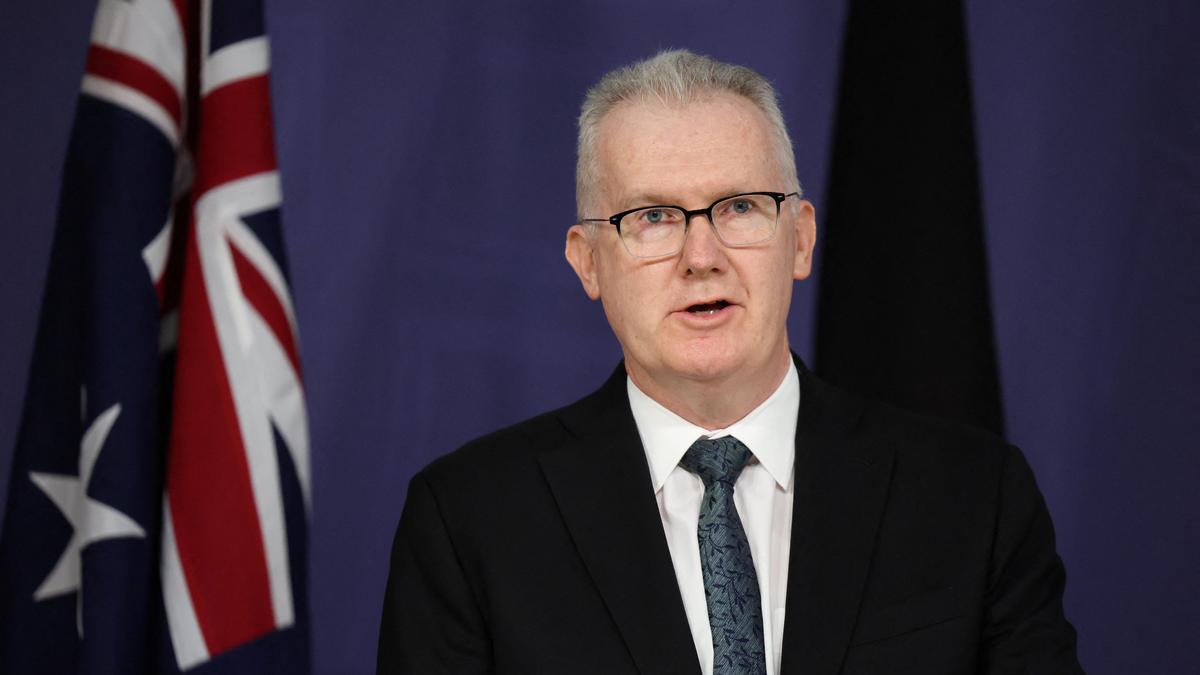
The Australian government finally moved to dismantle the National Socialist Network (NSN) this week, officially designating the neo-Nazi group a terrorist organization under upgraded federal hate crime laws. Home Affairs Minister Tony Burke signed the order on Friday, effectively ending the group's ability to operate legally under any alias, including their recent pivot to the "White Australia" moniker. This isn't just a administrative slap on the wrist. It is a total legal blackout that carries a 15-year prison sentence for anyone caught recruiting, funding, or even associating with the network.
While the headlines focus on the ban itself, the real story lies in why it took a mass casualty event to force the government’s hand. The legislation used to crush the NSN—the Criminal Code Amendment (Hate Crimes) Act 2025—was fast-tracked only after the December 2025 Bondi Beach Hanukkah attack, a tragedy that claimed 15 lives and exposed the lethal gaps in Australia’s previous counter-terrorism framework. For years, intelligence agencies treated these groups as "fringe" agitators. They were wrong.
The Failure of the Fringe Theory
For the better part of a decade, the prevailing wisdom within the Australian Security Intelligence Organisation (ASIO) was that neo-Nazi cells were too disorganized to pose a systemic threat. They were viewed as "lifestyle" extremists—men like Thomas Sewell who hiked in the Grampians and posted workout videos while shouting slogans.
The Bondi Beach massacre shattered that complacency. It proved that the transition from online vitriol to kinetic violence is not a slow burn, but a flashpoint.
The National Socialist Network didn't just emerge from a vacuum. It was the product of a merger between the Lads Society and Antipodean Resistance, designed specifically to professionalize hate. By the time the government moved to ban them, the NSN had already established a nationwide infrastructure. They weren't just "fringe." They were a recruitment machine targeting disillusioned young men, a demographic Sewell disturbingly labeled "Generation Zyklon."
The Legal Loophole That Stayed Open Too Long
Until the 2025 amendments, Australian law struggled to prosecute groups that didn't fit the traditional definition of a foreign-aligned terrorist cell. If you weren't sending money to ISIS or Al-Qaeda, you were largely a policing problem, not a national security one.
The new laws changed the calculus by:
- Lowering the threshold for what constitutes "advocating" violence.
- Criminalizing the association with proscribed hate groups, regardless of their international ties.
- Mandating minimum sentences of 12 months for the display of Nazi symbols, a move intended to drain the oxygen from their public demonstrations.
The Rebranding Myth
When news of the impending ban leaked in early 2026, the NSN attempted a classic insurgent maneuver. They "disbanded" on paper, only to resurface as the White Australia movement. It was a cynical attempt to wrap their ideology in the flag of the nation’s pre-1970s immigration policy, hoping the historical resonance would provide a layer of protection.
Minister Burke was blunt in his assessment on Friday. He noted that changing a name doesn't change the underlying DNA of the organization. The 2025 Act specifically includes "successor" clauses. If the personnel, the ideology, and the methods remain the same, the ban follows them like a shadow.
This creates a massive problem for the group’s leadership. Thomas Sewell, currently entangled in multiple legal battles including a recent arrest for an assault at "Camp Sovereignty," now finds himself the head of a ghost ship. Any attempt to command his followers now constitutes "directing a terrorist organization."
Why This Ban Might Not Be Enough
We have to be honest about the limitations of legislative bans. You can outlaw a logo, but you cannot outlaw a grievance.
There is a significant risk that the NSN will simply move further underground. By removing their ability to hold public rallies—like the infamous 2023 Melbourne protest or the Ballarat march—the government is forcing these individuals into encrypted silos.
"Banning the group is the easy part," says one former federal investigator who requested anonymity. "The hard part is monitoring the 300 individuals who just went from being loud-mouthed idiots on Telegram to clandestine actors with a martyr complex."
Furthermore, the ban focuses on the National Socialist Network and Hizb ut-Tahrir (which was proscribed in March). It does not address the broader ecosystem of "lone actor" radicalization. The Bondi Beach attacker was not a card-carrying member of a listed group at the time of the strike. He was a product of the digital environment these groups cultivate.
The Intelligence Blind Spot
The most damning takeaway from this week's announcement is the realization that Australia’s intelligence community is playing catch-up. For years, the focus was almost entirely on religiously motivated extremism. Right-wing extremism was treated as a secondary concern, often ignored to avoid political friction.
The December 2025 attack changed the political optics. Now, the Labor government is using the NSN ban to signal a "zero tolerance" era. But questions remain about whether the Australian Federal Police (AFP) have the resources to enforce these bans across every regional town where these cells have taken root.
What Happens Next for Members
The legal hammer is about to fall. Under the current declaration:
- Financial Freeze: Banks are required to flag and freeze any accounts linked to the NSN or its leadership.
- Digital Scrubbing: Social media platforms are under increased pressure to remove any content that facilitates recruitment for the "White Australia" network.
- Surveillance Escalation: Being a listed group allows for a much broader range of warrants, including intrusive signal intercepts that were previously difficult to justify.
A Nation at a Turning Point
Australia is finally naming the ghost it has lived with since Federation. By banning a group that calls itself "White Australia," the state is making a definitive statement about the modern identity of the country.
However, a 15-year prison sentence is a deterrent only if you can catch the perpetrators before they act. The NSN ban is a necessary surgical strike, but the underlying infection of radicalization remains untreated in the darker corners of the Australian web. The government has won the legal battle. Whether they can win the ideological war is a different matter entirely.
The move to proscribe the NSN marks the end of the "look the other way" era of Australian counter-terrorism.
Keep your eyes on the courtrooms in Melbourne and Sydney over the next six months. That is where the true efficacy of this ban will be tested. If the leadership can continue to communicate through intermediaries, the legislation is a paper tiger. If they end up in maximum security, the message will be sent.