Donald Trump’s shifting stance on Iran is not an unpredictable whim, but a calculated push for quick, transactional victories that collapse when confronted with deep-rooted regional realities. By declaring the June 2026 Islamabad Memorandum ceasefire effectively over after fresh clashes in the Strait of Hormuz, Trump revealed his core dilemma. He wants the immediate political credit for ending conflicts without committing the long-term American military footprint necessary to police the aftermath. This strategy has brought the White House to a dangerous crossroads where total war and diplomatic theater look identical.
The illusion of a quick victory dissipated in a matter of weeks. After launching Operation Epic Fury in February 2026 alongside Israel—a massive campaign that took out Supreme Leader Ali Khamenei—the administration assumed a severely weakened Iranian regime would capitulate permanently. The remote signing of the Islamabad Memorandum on June 17 was meant to be the crown jewel of Trump’s "peace through strength" doctrine. Instead, it has exposed a fundamental misunderstanding of how Tehran operates when cornered.
The Strait of Hormuz Trap
Washington miscalculated Iran’s willingness to absorb economic pain. The ink was barely dry on the June peace framework before Iranian naval assets began targeting commercial vessels in the Strait of Hormuz. Tehran did not explicitly tear up the agreement. They simply weaponized the fine print, demanding that international shipping use state-approved routes while attempting to collect transit fees under the guise of maritime safety.
When three commercial ships were hit in early July, the White House reacted with immediate military force. American Central Command launched heavy retaliatory bombardments against Iranian naval bases in Bandar Abbas and Bushehr, killing state military personnel and instantly vaporizing the ceasefire. Trump used his preferred megaphone, Truth Social, to declare the truce finished and threaten the total annihilation of the Islamic Republic if Iranian operatives succeeded in ongoing assassination plots against him.
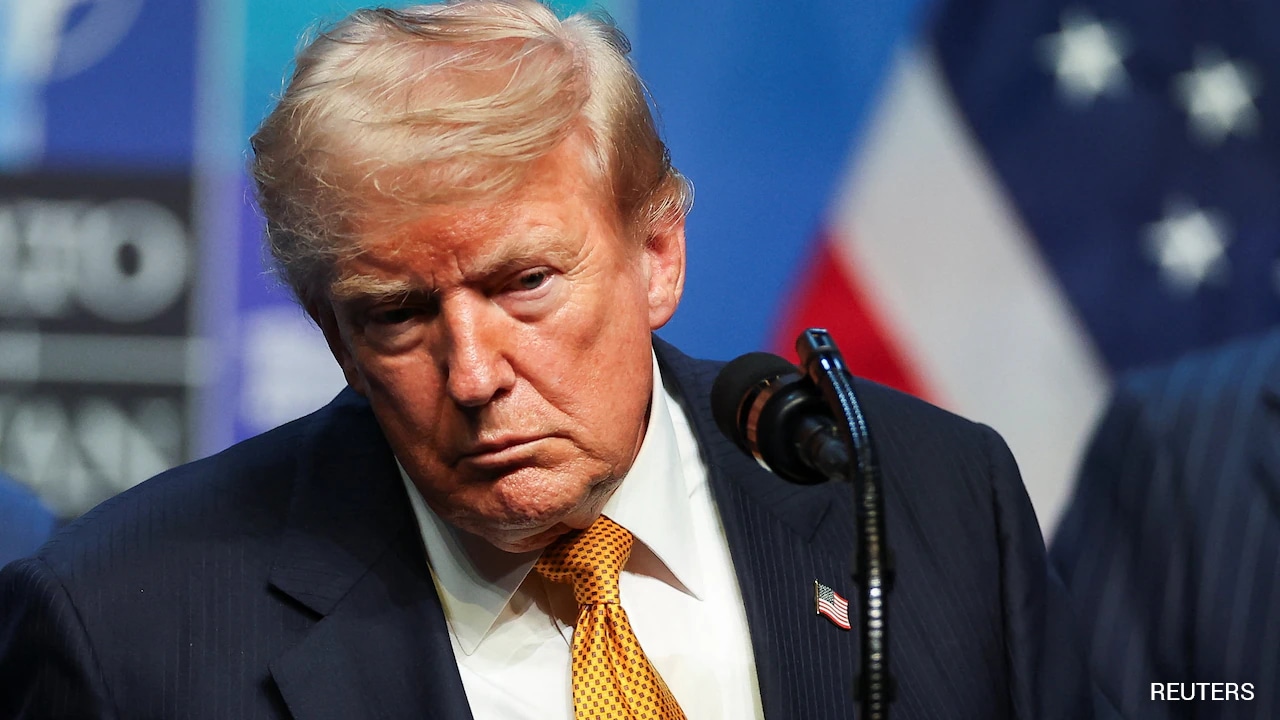
Yet, within twenty-four hours of these fiery proclamations, the president altered his tone during a NATO summit in Ankara, stating he expected the flare-up to resolve very quickly. This whiplash highlights a glaring structural flaw in the current administration's foreign policy. You cannot successfully execute a maximum-pressure campaign if the adversary knows you are desperate to avoid a prolonged occupation.
The Assassination Shadow and Domestic Politics
Behind the military maneuvers lies a deeply personal grievance that dictates the president's decisions. Iran has openly targeted Trump since the 2020 killing of Qassem Soleimani, a campaign that intensified following the death of Khamenei earlier this year. Federal indictments detailing thwarted plots against Trump, Vice President JD Vance, and tech billionaire Elon Musk have turned a geopolitical standoff into an existential security threat for the commander-in-chief.
This personal risk shapes the aggressive rhetoric, but domestic economic anxieties pull the policy in the opposite direction. Trump understands that a true, multi-year war in the Middle East would send global oil markets into a tailspin and devastate the American economy. His administration praised the initial June deal primarily because it promised to reopen shipping lanes and lower domestic fuel prices. The White House is trapped between a desire to inflict ultimate retribution and the absolute political necessity of protecting the American consumer's wallet.
The Myth of the Quick Fix
The administration's current approach relies on the flawed premise that rogue states behave like real estate developers. You cannot simply bomb a regime's leadership, sign a memorandum with the survivors, and expect a stable status quo to emerge overnight. Under the newly appointed Supreme Leader Mojtaba Khamenei, Iran’s hardline factions have every incentive to prove they have not been subdued by American Tomahawk missiles.
Qatar has already stepped in to mediate a fresh round of indirect talks in Tehran, a move Trump has quietly sanctioned despite his public declaration that the ceasefire is dead. This dual-track strategy of bombing infrastructure while keeping the backchannel open satisfies nobody. It signals to regional allies like Israel that Washington lacks the stomach to finish the job, while signaling to Iran that tactical aggression will always force America back to the negotiating table.
Empty threats of total decimation lose their edge when followed immediately by invitations to talk. The administration must realize that real peace is not achieved by theatrical summits or short-term ceasefires that mask a boiling conflict. If the White House continues to treat geopolitical brinkmanship as a series of transient business deals, the United States will find itself dragged into the very long-term war Trump has spent his entire political career trying to avoid.