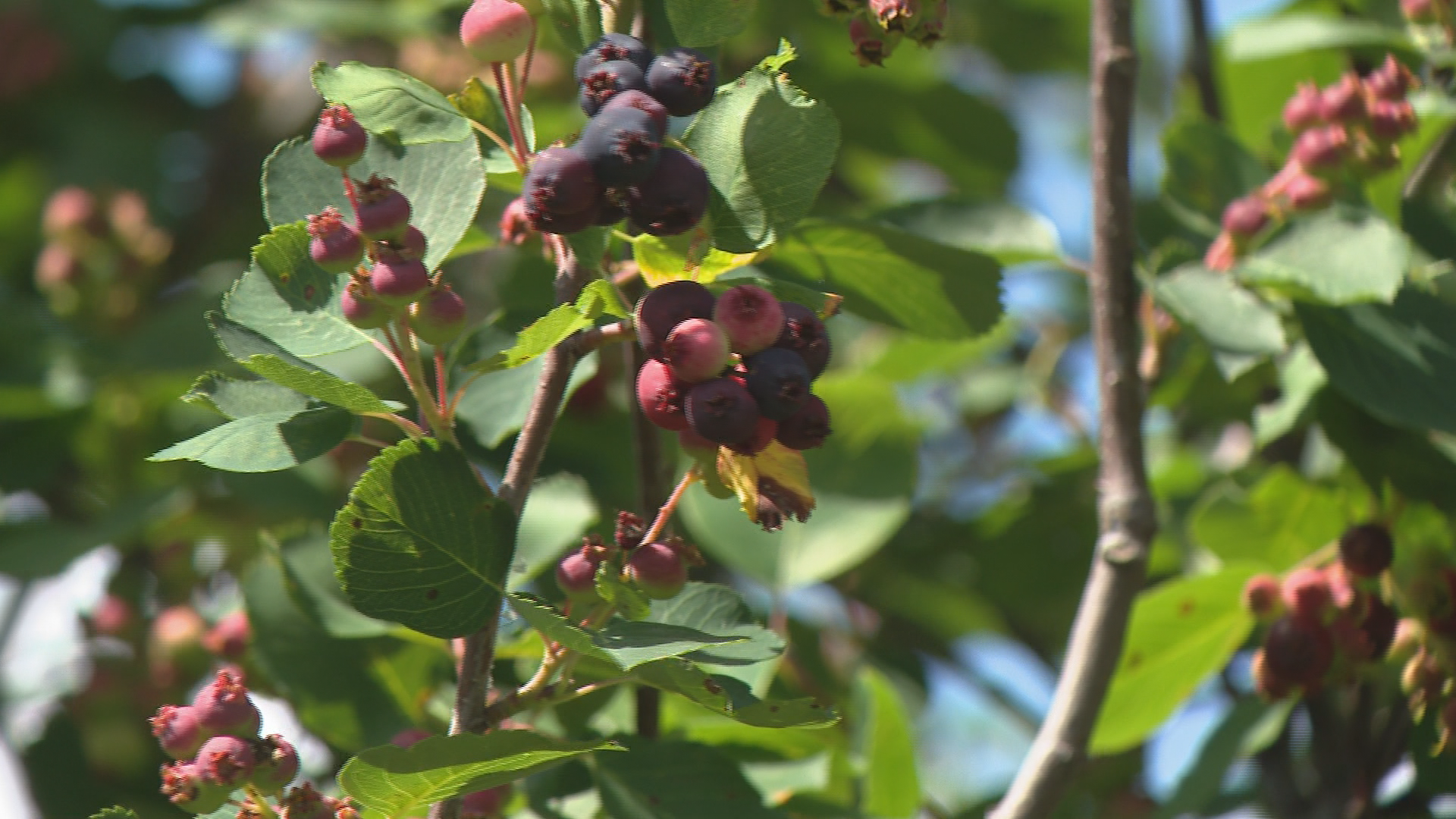
A saturated, unusually cold June across Saskatchewan has shattered the traditional timeline of the Prairie fruit harvest, triggering an unprecedented split in crop performance that exposes the financial fragility of regional orchard operations. For decades, the provincial berry industry has relied on the predictable mid-summer emergence of the Saskatoon berry as its primary economic anchor. This year, relentless rain and erratic temperature swings have pushed the native crop into a defensive evolutionary standstill, delaying the harvest by weeks and jeopardizing peak agritourism windows. Conversely, the same hostile moisture has triggered a massive production surge in haskaps, an introduced fruit whose ancient northern genetic history makes it uniquely capable of capitalizing on an oversaturated ecosystem.
This stark divergence is not merely a temporary inconvenience for pickers. It represents a deeper, structural challenge to how commercial orchards must manage risk as extreme weather patterns disrupt historical norms. When a single month of unseasonal rain can paralyze a primary crop while hyper-accelerating an alternative one, the old models of single-species fruit farming become untenable.
The Scientific Reality of Seasonal Delays
Plants do not keep time using human calendars. They respond directly to cumulative thermal energy and soil moisture metrics, reading the environment to determine when to allocate resources toward ripening fruit. Across the agricultural regions of Saskatchewan, the spring and early summer periods offered a jarring sequence of weather fronts that essentially mimicked four or five distinct waves of winter. This constant back-and-forth triggered a physiological defense mechanism within Saskatoon berry bushes. Instead of pushing sugar into the developing fruit, the orchards entered a holding pattern to protect their long-term survival against potential frost damage.
The delay varies significantly depending on regional geography. Orchards situated in the southwestern corners of the province have managed to maintain a marginal lead in development due to slightly higher heat accumulation, whereas operations in the northeastern districts face much steeper delays. This geographic fragmentation creates an operational headache for commercial processors who rely on a steady, predictable inflow of raw fruit to optimize their freezing, puréeing, and packaging lines. When the crop ripens in sporadic, unpredictable waves across the province, processing efficiency plummets, driving up labor costs and compressing the operational window.
The lingering impact of the previous year also plays a role in how these perennial crops handle current stress. Last season, an extended harvest ran deep into August due to cool nighttime temperatures, leaving the plants with less time to recover and store carbohydrates before entering winter dormancy. This left the orchards entering the spring season with diminished energy reserves, making them even more sensitive to the saturated, low-light conditions of June.
The Evolutionary Triumph of the Haskap
While native crops stalled, the haskap experienced an extraordinary growth explosion. Also known as the honeyberry, the haskap is not native to the Canadian prairies; its genetic origins trace back to the subarctic wilderness of Siberia and the high-moisture ecosystems of Hokkaido, Japan. Over eons of isolation in these environments, the species evolved to thrive in soils that remain saturated throughout the early summer months.
Where excess moisture suffocates the roots of less resilient species, the haskap utilizes the abundance of water to maximize fruit size. The heavy rain directly inflated the physical volume of the berries, resulting in fruit that is significantly larger than typical commercial averages. For growers who have invested in these blue, elongated berries over the last decade, this year has provided a rare proof of concept for the crop's hardiness.
Crop Vulnerability Comparison Matrix
+-------------------+------------------------+--------------------------+-----------------------+
| Crop Type         | Native Origin          | Moisture Response        | Current Impact        |
+-------------------+------------------------+--------------------------+-----------------------+
| Saskatoon Berry   | North American Prairie | Defensive dormancy       | 1-2 week delay        |
| Haskap            | Siberia / Japan        | Rapid cellular expansion | Increased fruit size |
| Strawberry        | Global Temperate       | Root rot / Blossom loss  | Severe crop failure   |
+-------------------+------------------------+--------------------------+-----------------------+
However, agricultural success is not defined solely by the volume of fruit on the bush. The commercial viability of the haskap remains limited by consumer familiarity and structural differences in how the fruit handles harvesting equipment. Haskaps are inherently softer than Saskatoon berries, meaning they cannot be stacked deeply in commercial collection bins without crushing the bottom layers. This physical limitation demands more frequent handling, specialized shallow storage containers, and rapid transport to cooling facilities, all of which add capital expenses for an industry built around the firmer, more resilient Saskatoon berry.
The Cash Flow Crisis of Saturated Orchards
The financial model of a Canadian fruit orchard is highly compressed. The vast majority of annual revenue is generated within a frantic six-week window driven by U-pick tourism, local farmers' markets, and direct-to-retail sales. When weather patterns delay the start of this window, it throws the entire corporate cash flow into chaos.
Orchard owners must secure seasonal labor weeks in advance, balancing worker availability against unpredictable ripening schedules. When the berries refuse to turn color on time, operations are forced to pay workers to wait or risk losing their labor force to other agricultural sectors that offer more consistent hours. Furthermore, the delay pushes the harvest closer to the end of summer, a period when family vacations wind down and the consumer appetite for weekend orchard visits drops off dramatically.
The situation is compounded for multi-crop farms that rely on a sequential harvest to maintain steady revenue. In a typical year, strawberries open the season, followed quickly by haskaps, then Saskatoon berries, and finally sour cherries. This sequence keeps a steady stream of retail traffic flowing through the farm gates. This year, that sequence collapsed. The extreme moisture and intense spring winds decimated strawberry blossoms, wiping out the early-season cash flow that many farmers use to fund their mid-summer operational expenses.
Wind and the Destruction of Minor Crops
The problems facing Saskatchewan fruit growers extend far beyond simple rainfall totals. High, sustained winds throughout May created severe mechanical stress for flowering plants across the southern and central regions of the province. For delicate crops like strawberries, the combination of high winds and saturated fields proved catastrophic.
Blossoms were physically stripped from the plants before pollination could occur. Without successful pollination, fruit development is impossible, leading to entire fields being rendered commercially unviable before the summer even officially began. The standing water left in low-lying fields created anaerobic soil conditions, suffocating the shallow root systems of strawberry plants and making them highly susceptible to fungal root rot diseases like phytophthora.
The fact that any Saskatoon berry crop survived the spring winds is a testament to the structural strength of the native woody shrubs. However, surviving the wind only to be stalled by a lack of solar radiation in June presents a different kind of challenge. Orchard management has shifted from a game of maximizing yield to a game of preserving fruit quality under constant moisture stress. Prolonged wet conditions during the ripening phase increase the risk of entomosporium leaf and berry spot, a fungal infection that can turn a high-yielding crop into a visual and unmarketable disaster within a matter of days.
Redefining Risk Management in Prairie Horticulture
The divergent fortunes of the Saskatoon berry and the haskap highlight a critical flaw in traditional agricultural planning. Relying on historical weather averages to dictate crop choices is no longer a viable long-term strategy for commercial fruit producers. To survive an era characterized by volatile weather anomalies, orchardists are being forced to rethink their entire approach to field design and species distribution.
True stability requires shifting capital away from monoculture setups and toward calculated, multi-species integration. Farmers can no longer treat alternative crops like the haskap as secondary novelties or minor novelties for niche markets. Instead, these flood-tolerant, early-ripening species must be treated as essential financial insurance policies designed to stabilize farm income when native crops fail to perform.
This transition requires more than just buying new plants. It demands a fundamental overhaul of on-farm infrastructure, including the installation of advanced tile drainage systems to manage standing water, the construction of specialized windbreaks to protect fragile spring blossoms, and the acquisition of multi-use harvesting machinery capable of processing diverse fruit profiles. Those who refuse to adapt their fields to accommodate these extreme environmental shifts will find themselves increasingly vulnerable to the financial realities of a changing climate. The future belongs exclusively to operators who build resilience directly into the soil.