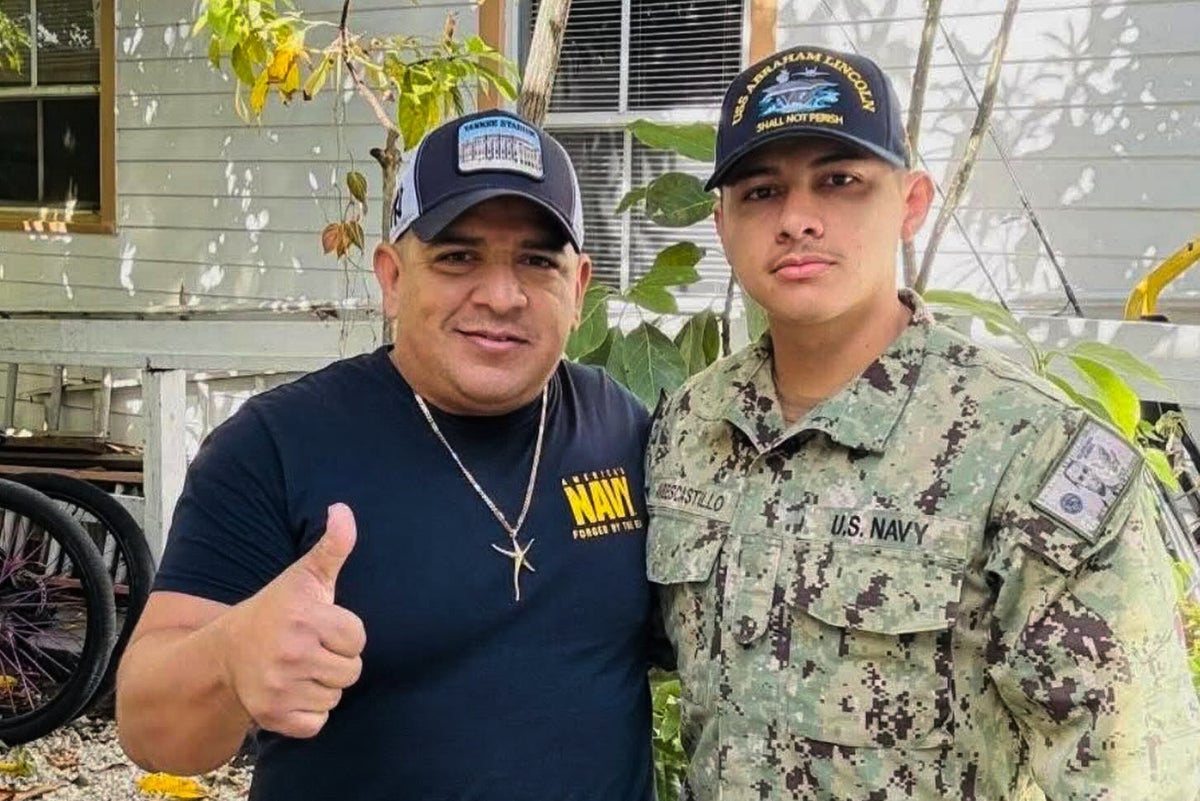
The collision between domestic immigration enforcement and active-duty military service reached a jarring inflection point when Luis Manuel Aviles was taken into federal custody in Key West, Florida. His son, Joshua Aviles, was nearly ten months deep into an unprecedented, grueling deployment aboard the aircraft carrier USS Abraham Lincoln, maintaining flight decks and sweating through twelve-hour shifts under the shadow of the regional conflict with Iran.
When the news reached the carrier, the psychological fracture was immediate. A sailor already stretched to the absolute breaking point by record-breaking sea rotations, supply strain, and plummeting morale was suddenly forced to fight a bureaucracy on the home front. Though an immigration judge swiftly dismissed the case and released Aviles back to his family within days, the episode exposes a glaring structural contradiction within the machinery of the American state.
The Anatomy of a Bureaucratic Blind Spot
For nearly two decades, Luis Manuel Aviles built a quiet life in the Florida Keys. He worked as a handyman, paid taxes, secured a state-issued driver license, maintained a legal work permit, and held a valid Social Security card while navigating the glacial and notoriously punitive labyrinth of permanent residency applications. To his neighbors, he was a fixture of domestic stability. To Immigration and Customs Enforcement, he remained an enforcement target because his initial arrival decades prior bypassed formal authorization.
The Department of Homeland Security maintained a rigid stance throughout the ordeal, issuing a boilerplate defense that family ties to the armed forces do not grant immunity from federal statute. Technically, this statement holds water. Legally, the United States immigration code contains very few automatic waivers for the undocumented parents of adult military personnel.
Yet this narrow legalism ignores the operational reality of how the military sustains its workforce. Modern recruitment relies heavily on immigrant communities, promising pathways to integration, stability, and patriotism. When the state accepts the absolute loyalty and physical labor of a sailor enduring a brutal maritime campaign in the Middle East, it enters an unwritten social contract with that sailor's household. Tearing that household apart while the service member is thousands of miles away at sea breaks that trust in ways no tactical victory can repair.
The Crucible at Sea
To understand why the arrest of Luis Aviles triggered a national uproar, one must examine the precise conditions aboard the USS Abraham Lincoln at the exact moment the cuffs went on. The carrier group had shattered modern records for uninterrupted time at sea, remaining locked in a high-threat theater without standard port calls.
Reports from the fleet painted a grim picture of chronic exhaustion. Sailors managed sleep deprivation, depleted fresh provisions, and mounting mental health strains. To drop the news of an ICE detention into an environment already simmering with anxiety is a masterclass in institutional negligence. Joshua Aviles captured the visceral despair in a public appeal, noting the sheer impossibility of focusing on heavy aircraft ordnance and shipboard safety when his father was locked behind a federal detention center door.
The swift reversal of the case—marked by an immigration judge dismissing the proceedings almost as quickly as the media spotlight illuminated them—points to a reactive administrative apparatus. It suggests a system operating on autopilot, where automated enforcement algorithms and localized task forces execute sweeps without cross-referencing the broader geopolitical and human collateral damage being inflicted on active service members.
The Cost of Rigid Enforcement
The rapid liberation of Luis Aviles resolved one specific human tragedy, but it left the underlying policy framework entirely intact. Thousands of military families live in a state of chronic legal precarity. Spouses, parents, and siblings of enlisted personnel often find themselves caught between military incentive structures that encourage service and domestic policies that treat their communities as priority targets for removal.
When military readiness becomes secondary to absolute enforcement quotas, the Department of Defense and the Department of Homeland Security are working at direct cross-purposes. One agency demands total sacrifice in a hostile overseas environment, while the other destabilizes the domestic foundation that makes that sacrifice possible.
A nation cannot indefinitely demand extraordinary devotion from sailors on broken ships while simultaneously treating their aging parents as administrative threats to be processed and discarded. The system dodged a catastrophe this time only because public exposure forced a judicial correction. Next time, the ship may not be within reach of shore before the breaking point is crossed.