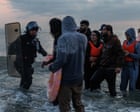
The looming expiration of the UK-France security agreement marks a dangerous pivot point for border policy that has long relied on expensive, temporary fixes rather than structural reform. As the current funding cycle winds down, the immediate threat is not just a seasonal uptick in small boat departures but a fundamental collapse in the deterrence logic that has cost British taxpayers billions. Without a renewed commitment or a radical shift in strategy, the English Channel is set to become even more congested, as smuggling gangs exploit the bureaucratic vacuum left by shifting political priorities in both London and Paris.
The reality on the ground in northern France is far grimmer than the official press releases suggest. Despite the heavy deployment of thermal imaging, drones, and increased beach patrols, the sheer volume of attempted crossings remains resilient. This is a game of cat and mouse where the mouse has infinite lives and the cat is running out of breath. The sunsetting of the current deal creates a "clearance sale" mentality among human traffickers, who are already messaging prospective clients that the window of opportunity is closing.
The Financial Sinkhole of Offshore Enforcement
For years, the British government has funneled hundreds of millions of pounds into French law enforcement coffers. The objective was simple. Pay the French to be the primary wall. This "checkbook diplomacy" has resulted in the purchase of high-tech surveillance equipment and the funding of thousands of man-hours for French officers patrolling the dunes of Dunkirk and Calais.
However, the efficacy of this spending is increasingly under fire. Critics point out that while interceptions on the beaches have technically increased, the smugglers have simply adapted by moving their launch points further north or south, stretching French resources thin. When a single deal nears its end, it exposes the fragility of a system built on annual transfers rather than a permanent, shared infrastructure. The money buys cooperation, but it does not buy a solution.
The problem is deeper than just headcount. It is about geography. The coastline of northern France is vast, porous, and rugged. You cannot put a gendarme every ten meters for a hundred miles. The smugglers know this. They use spotters to track patrol rotations, timing their launches to the minute when they know a shift change is occurring or when a particular unit is tied up processing a previous group.
Why the Smuggling Networks are Winning
Human trafficking is a business. It responds to market forces like any other industry. Right now, the market is screaming for volume. Because the UK has tightened the requirements for traditional asylum routes, the "black market" of small boats has become the only viable path for thousands. This has created a gold rush for organized crime groups based in the Balkans, Iraq, and Kurdistan.
These groups do not care about the sea state. They do not care about the temperature of the water. They view the migrants as freight. When a boat is seized, it is merely a line item in their overhead. They have already sourced the next inflatable from factories in China or Turkey, shipped them through Europe in pieces, and assembled them in the woods hours before a launch.
The sheer profitability of these crossings makes them nearly impossible to stop through traditional policing alone. A single boat carrying 50 people at £3,000 per head generates £150,000 in revenue. If three boats out of five get through, the profit margins remain astronomical. The risk of arrest for a low-level "handler" on a French beach is a minor cost of doing business, often offset by the rapid recruitment of desperate people willing to take the fall for a small fee.
The Diplomatic Friction Point
The relationship between Westminster and the Élysée Palace is the invisible engine of Channel security. When relations are good, intelligence sharing is fluid. When they sour, the "blind eye" becomes a political tool. As the deal reaches its final months, the leverage shifts toward France. Paris is well aware that the UK needs French cooperation more than France needs British cash.
There is a growing resentment among French local authorities who feel they are being turned into the UK’s border guards against their will. This tension manifests in slower response times and a reluctance to engage in the more aggressive maritime interventions that some British hardliners demand. The French legal system also places strict limits on what police can do once a boat is actually in the water; once the vessel is launched, the mission shifts from "interception" to "search and rescue," at which point the goal is simply to ensure no one drowns.
This shift in mission is the smugglers' greatest ally. They have learned that if they can just get the boat ten yards off the sand, they are effectively safe from being turned back by force. It turns the crossing into a waiting game.
The Technological Arms Race
We are seeing a massive investment in "smart borders," featuring AI-driven sensors and long-range acoustic devices. These tools are designed to detect movement in the dead of night, even through heavy fog. But for every new sensor, the smugglers find a low-tech workaround. They have moved to using larger, more flimsy boats that are harder to detect on radar because they sit lower in the water and contain less metal.
They are also increasingly using "slave starts," where the engine is only started once the boat is well away from the shore to avoid acoustic detection. The sophistication of the logistical chain is staggering. It involves encrypted communication apps, hawala banking systems for untraceable money transfers, and a distributed network of safe houses that span across the European continent.
The Humanitarian Bottleneck
While the political debate focuses on numbers and costs, the human reality remains the primary driver. The backlog in the UK asylum system creates a "pull factor" that is often misunderstood. It is not necessarily the promise of benefits that draws people, but the promise of a legal limbo. When processing times stretch into years, the reality is that once someone reaches British soil, they are unlikely to be removed quickly.
This systemic delay is a gift to the traffickers. They use it as a selling point. "Once you are there, you are there," is the refrain heard in the camps of Grande-Synthe. Until the UK can demonstrate a functioning, rapid processing and removal system for those with no right to stay, the incentive to cross will remain.
The Fragility of the Status Quo
The end of the current UK-French deal is not just a date on a calendar; it is a stress test for the entire concept of externalized borders. If the two nations cannot agree on a more sustainable, long-term framework that moves beyond "more boots on the ground," the Channel will continue to see record-breaking numbers.
The current strategy is reactive. It waits for the crisis to reach the shoreline before acting. A definitive shift would require moving the intervention further up the supply chain—targeting the inflatable boat manufacturers in Eastern Europe and the money launderers in Dubai and Istanbul. It requires a level of international policing cooperation that far exceeds the scope of the current bilateral agreement.
Without this, the English Channel remains a high-stakes theater of the absurd, where millions are spent to monitor a problem that everyone agrees is getting worse. The smugglers are not afraid of the deal ending. They are counting on it.
Demand a policy that targets the financial infrastructure of the smuggling rings rather than just the physical boats on the beach.