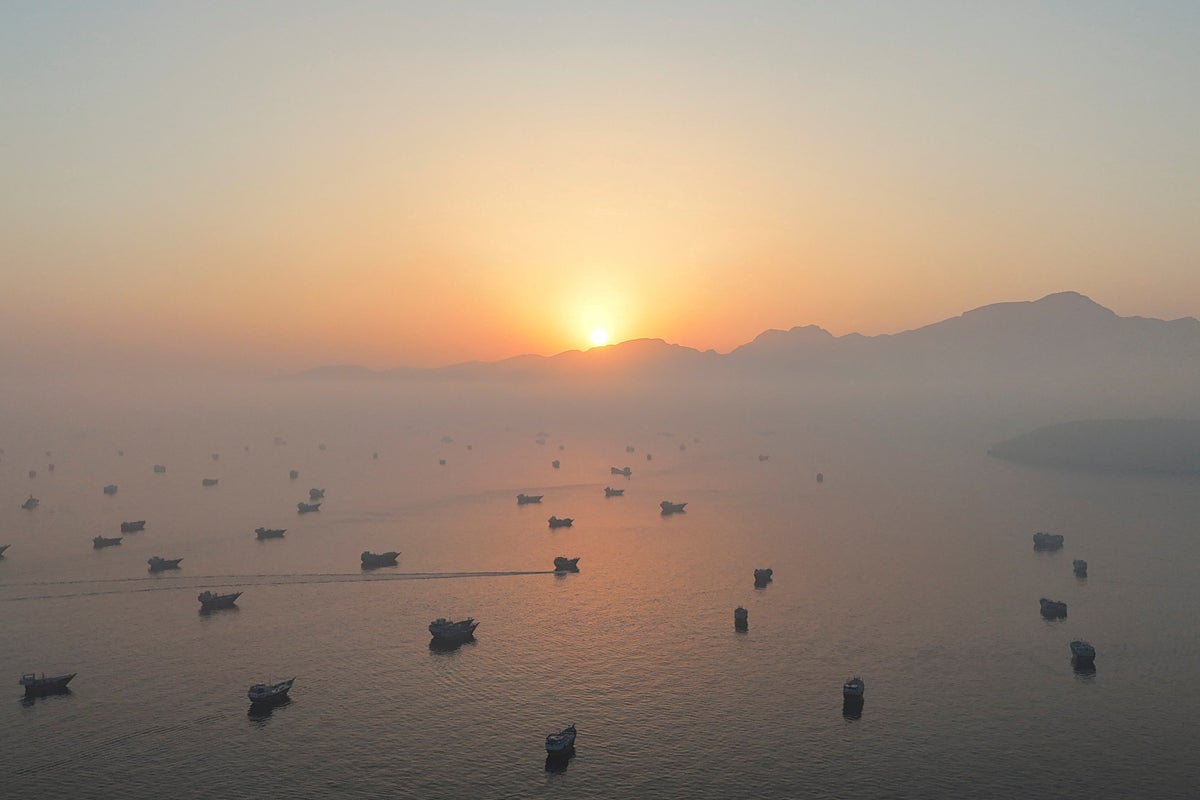
The air in the Dubai port district usually smells of cardamom, heavy diesel, and the sharp, salt-kissed bite of the Gulf. It is an industrious scent, born of a billion-dollar machine that never sleeps. Cranes dip like giant metal herons against the bruised violet of dawn. Ships the size of city blocks slide into berths with mechanical precision. But on a Tuesday that felt heavier than most, a strange stillness settled over the docks.
Dockworkers stood in loose knots near container stacks, staring at phones that chimed with alerts from the capital.
Across the water, the calculus of survival had just shifted.
When the United Arab Emirates formally suspended trade with Iran, the decision did not arrive as a dry bureaucratic decree whispered in an air-conditioned boardroom. It arrived with the concussive roar of missile fire slicing through a tense Middle Eastern sky. For years, the Gulf had walked a precarious tightrope. It was a geography built on paradox, where ancient rivalries ran deep, yet pragmatic commerce hummed louder than the drums of war. Dhows had crossed these waters for centuries, carrying spices, textiles, and electronics in a quiet dance of economic survival.
That dance is over.
To understand why this break matters, you have to look past the macroeconomics and step into the shoes of someone like Tariq, a fictional but composite customs logistics manager whose family has cleared cargo through Sharjah ports for three generations. (Note: Tariq represents the countless operational voices caught in the gears of statecraft.) For Tariq, trade isn't a line on a quarterly spreadsheet. It is a container ship full of Iranian pistachios, carpets, and industrial minerals sitting idle in a maritime queue. It is the sudden, terrifying realization that the cost of doing business has just been priced in blood and shrapnel.
The Anatomy of a Severed Lifeline
Geopolitics is often taught as a game of chess played by men in suits who view countries as static blocks on a map. In reality, it is a living, breathing nervous system. When a nation comes under direct missile fire, that nervous system experiences a violent shock.
The UAE and Iran share a complicated, interwoven history. Billions of dollars in non-oil trade flowed between them, serving as an economic valve for Tehran and a profitable transit hub for Emirati merchants. For decades, pragmatism won. Officials on both sides understood that commerce could soften the edges of hostility.
Then the sky lit up.
When incoming projectiles test the air defense batteries of the Emirates, the luxury of business-as-usual evaporates instantly. No sovereign nation can maintain open, lucrative trade corridors with a neighbor actively launching or enabling threats against its airspace. The suspension is not merely punitive; it is an instinctual defensive crouch.
Consider the sudden silence in the financial corridors of Abu Dhabi. Insurance rates for regional shipping spiked overnight. Maritime underwriters, whose entire job is to calculate catastrophe, looked at the burning horizon and simply drew a red line across the Gulf. Cargo vessels cannot sail into a war zone, and no port authority will risk civilian infrastructure to clear a suspicious hull when air raid sirens are wailing.
The Human Ripple Effect
Down on the waterfront, the abstract concept of severed supply chains translates into immediate, visceral reality.
Small-to-medium enterprise owners who built niche import businesses find their warehouses half-full and their bank accounts frozen in uncertainty. They are not politicians. They are entrepreneurs who woke up to find that the bridge they built their livelihoods on had been dynamited overnight.
(Hypothetical scenario to illustrate market panic: Imagine a merchant holding millions in perishable goods destined for re-export, watching the customs portal lock indefinitely. The panic is immediate, silent, and crushing.)
Yet, beneath the anxiety lies a grim resilience. The Gulf has weathered storms for millennia. Its people know how to pivot, how to reroute, how to find new doors when old ones are slammed shut. But the psychological toll remains. The illusion that economic integration could completely insulate the region from kinetic warfare has been shattered.
The Cost of Silence
When trade stops, silence fills the void. And silence in geopolitics is rarely peaceful. It is the sound of supply lines snapping. It is the sound of diplomats packing their briefcases. It is the sound of a region holding its breath, waiting to see if the missile strikes were an isolated escalation or the opening salvo of a much darker chapter.
The dhows sit docked, their wooden hulls rocking gently against the pier. The cranes are still. For now, the historic ties binding the opposite shores of the Gulf have frayed down to a single, trembling thread.
As the sun dips below the horizon, painting the oil-slicked harbor in shades of copper and ash, the docks are entirely quiet. The cargo isn't moving. But the world outside is watching, acutely aware that what happens next will echo far beyond the waters of the Middle East.