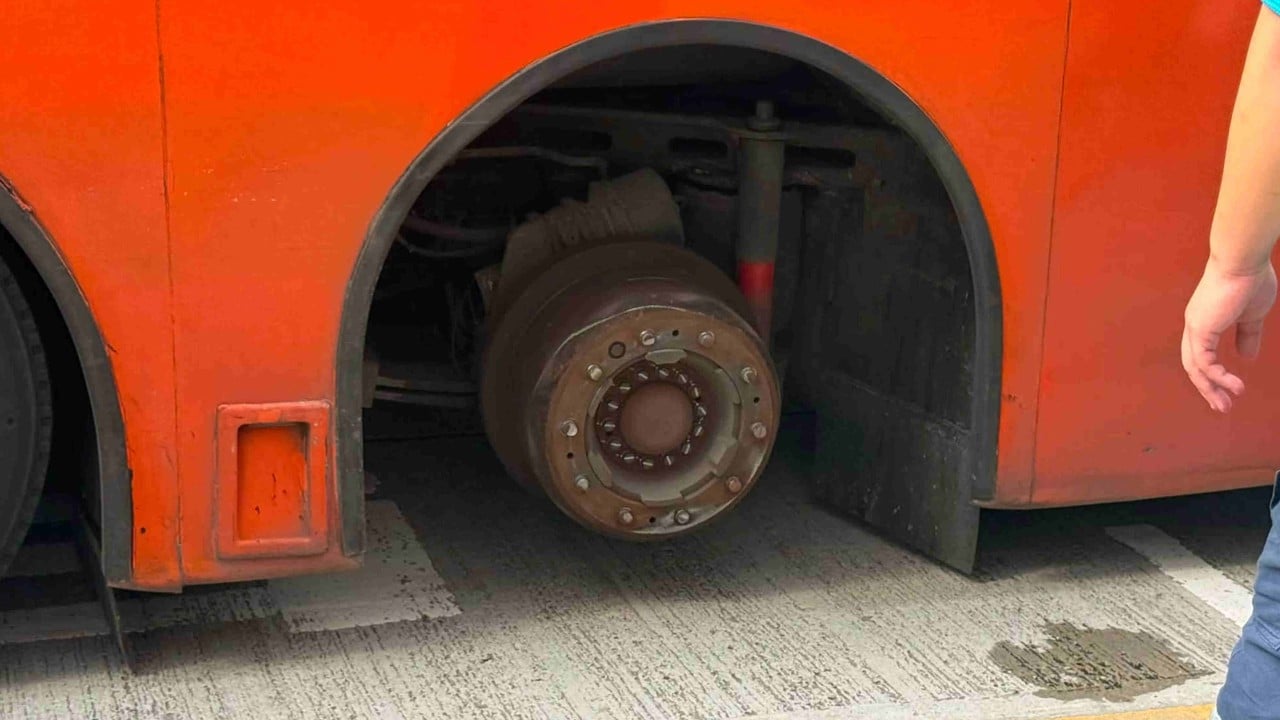
A seven-year-old boy narrowly escaped serious injury when a wheel detached from a moving Kowloon Motor Bus double-decker in Hong Kong, triggering urgent safety questions across the dense urban transit network. This terrifying incident on a busy thoroughfare is not an isolated fluke. It is a glaring symptom of a heavily strained transport system operating under relentless pressure.
Every single day, millions of commuters place absolute trust in massive, multi-tonne passenger vehicles that navigate some of the most congested streets on earth. When a wheel assembly catastrophically fails on a double-decker bus, that trust fractures instantly. Investigators must look far beyond simple mechanical failure or individual human error. They must interrogate the structural realities of maintenance schedules, workforce shortages, and corporate accountability in a hyper-efficient public transit ecosystem.
Anatomy of a Transit Failure
Transit infrastructure relies on redundancy and rigorous oversight. A wheel does not simply roll off a heavy-duty commercial vehicle because of a single bad moment. It happens when multiple layers of safety checks fail sequentially.
Commercial fleet operators like KMB manage thousands of vehicles across sprawling depots. The operational cadence is punishing. Buses complete multiple high-frequency routes daily, enduring stop-and-go traffic, severe vibrations, and fluctuating load weights. Under these conditions, wheel retention mechanisms face immense shear stress.
Wheel detachment incidents usually point toward specific mechanical breakdowns. These include incorrect torque application during routine maintenance, fatigued stud bolts, or undetected metal fatigue in the hub assembly. Yet, technical explanations only take us halfway. The deeper inquiry must focus on why a flawed assembly made it out of the depot and onto an open passenger route.
The Pressure Cooker of Maintenance Depots
Behind every sleek transit network lies a high-pressure maintenance environment. Mechanics and engineering staff operate under severe time constraints. Fleet turnaround times dictate financial viability and schedule adherence.
In recent years, the transportation sector has faced acute talent shortages. Experienced mechanics retire, and replacements often lack the deep institutional knowledge required to spot subtle anomalies during quick turnaround inspections. When an inspection checklist becomes a rushed bureaucratic routine rather than a rigorous technical evaluation, critical components get missed.
Fatigue is a safety hazard just as dangerous as worn brake pads. If a technician is forced to rush through wheel torque verifications at the end of a long shift, the margin for error shrinks to zero. Management models that prioritize maximum fleet availability over mandatory downtime create fertile ground for mechanical catastrophes.
Regulatory Blind Spots and Corporate Accountability
Hong Kong operates one of the most envied public transport systems globally, characterized by high frequency and low passenger fares. However, this model creates structural paradoxes. Operators face strict fare caps and immense public scrutiny over service disruptions, creating a powerful disincentive to pull vehicles off the road for prolonged, preventative overhauls.
Regulatory bodies like the Transport Department hold enforcement powers, yet they often rely on self-reporting and periodic audits rather than continuous independent oversight of workshop practices. When a wheel flies off a double-decker, the immediate public reaction focuses on punishing the driver or demanding a temporary fleet-wide inspection. This superficial response misses the mark. Punishing frontline workers does nothing to fix systemic maintenance bottlenecks.
True accountability requires transparent audits of supply chains, procurement standards for replacement parts, and verifiable proof that maintenance intervals are never compromised to meet daily mileage quotas. If replacement parts are sourced under aggressive cost-saving bids, material durability can suffer.
Engineering Realities on Crowded Corridors
The physics of a double-decker bus amplify any mechanical defect. With a high center of gravity and a passenger capacity exceeding one hundred people, these vehicles exert tremendous force on their suspension and wheel assemblies.
Consider the physical forces at play when a fully loaded bus takes a sharp urban corner at modest speeds. Lateral loads shift dramatically, testing the absolute limits of stud bolts and wheel nuts. If those fasteners are even fractionally under-torqued, or if micro-fractures have gone unnoticed in the metal, the dynamic stress of daily operation will find that weakness.
Modern telematics and predictive maintenance sensors offer a path forward, but adoption across legacy fleets remains uneven. Smart sensors can monitor bearing temperatures and vibrational anomalies in real-time, alerting engineers before a catastrophic separation occurs. Relying solely on human visual inspections in dimly lit depot bays is an outdated strategy for a modern metropolis.
Public confidence requires radical transparency from transport executives. When mechanical failures threaten the lives of children on our streets, the response cannot be corporate damage control. It demands an unsparing overhaul of how we build, maintain, and monitor the heavy machinery that keeps our cities moving.


