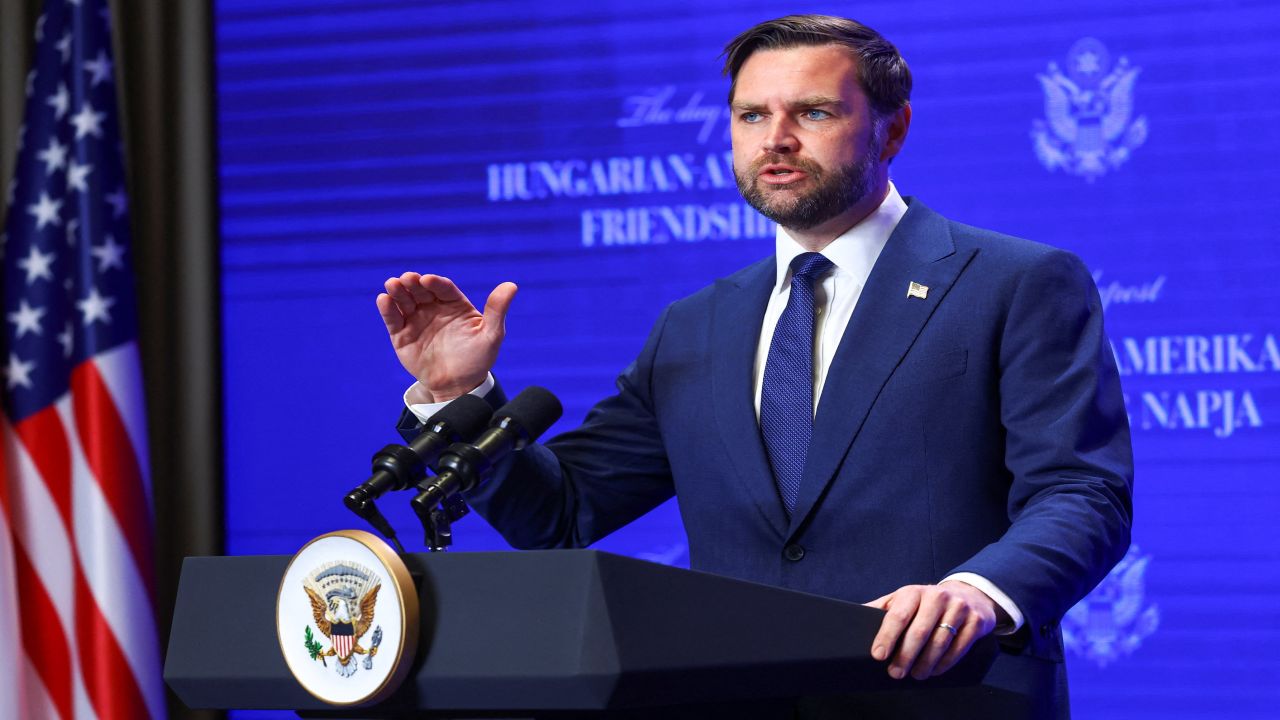
The United States is locked and loaded to resume its military campaign against Iran if a final negotiated nuclear settlement falls through. Vice President JD Vance confirmed the administration's stance following a high-stakes pause in planned airstrikes. The White House public position is unyielding: Iran will never be allowed to attain a nuclear weapon, a scenario Vance warned would act as a first domino to spark a global atomic arms race. While Washington claims negotiations are making progress, the underlying reality reveals a deeply fractured Iranian leadership, a shaky 43-day truce, and an administration holding its breath on a ticking clock.
The immediate crisis paused only because Arab mediators, specifically Qatar and the United Arab Emirates, intervened at the eleventh hour. They convinced President Donald Trump that Tehran was acting reasonably in behind-the-scenes talks, prompting Trump to delay a major strike sequence that was less than an hour from execution. Yet, this diplomatic window is remarkably narrow. Trump has already given Tehran a rolling deadline of just a few days to formalize a deal before the bombers are ordered back into the sky.
The current diplomatic impasse is not a standard geopolitical disagreement. It is the aftermath of an intense hot war. The joint U.S.-Israeli military campaign launched on February 28 decimated much of Iran's conventional command structure, killing longtime Supreme Leader Ali Khamenei and severely degrading the country's military framework. Tehran retaliated by mining the Strait of Hormuz, striking Gulf Arab energy infrastructure, and staging mass public displays of ideological defiance.
Now, the conflict hinges entirely on what happens to Iran's nuclear infrastructure. Washington wants a permanent, verifiable end to Iran's atomic ambitions. Tehran, conversely, has entered talks demanding billions of dollars in war reparations, a total withdrawal of American forces from the Middle East, and the preservation of its civilian nuclear program. These demands are viewed by American planners as foundational non-starters.
The Domino Effect of a Persian Bomb
The administration's strategic rationale relies on stopping global nuclear proliferation before it hits an irreversible tipping point. If Iran secures a functional warhead, the established geopolitical order in the Middle East dissolves overnight.
A nuclear-armed Tehran would trigger immediate, frantic scrambles by neighboring Sunni powers to achieve strategic parity. Saudi Arabia, possessing the capital and the political motivation, would likely move to acquire or build its own deterrent immediately, possibly utilizing its historical security understandings with Pakistan. Turkey and Egypt would not sit idly by as spectators. The result would be a highly volatile, multi-polar nuclear theater concentrated in the most volatile region on earth.
Vance framed this scenario as a generational threat, noting that a world where twenty additional regimes hold nuclear weapons is entirely unacceptable to American national security. The concern is not merely the catastrophic threat of an intentional launch. It is the compounding risk of miscalculation, accidental escalation, or the transfer of fissile material to non-state proxy networks. Furthermore, a nuclear deterrent would give Iran permanent economic leverage, allowing it to dictate terms in the energy markets of the Persian Gulf without fear of conventional military retribution.
Inside a Fractured Iranian Regime
The primary obstacle to a lasting diplomatic breakthrough is the current state of the Iranian government itself. Following the deaths of its top leadership in the initial weeks of the war, the power structure in Tehran has split into competing factions.
American intelligence indicates that negotiators in Geneva and Islamabad are struggling to present a unified front. It remains unclear whether the inconsistent communication from the Iranian delegation represents deliberate bad faith or simply a chaotic internal struggle for control. On one side are pragmatic diplomats recognizing that the country's economy cannot survive an extended maximum pressure campaign and continued infrastructure bombing. On the other side are hardline Islamic Revolutionary Guard Corps remnants determined to secure a nuclear deterrent at any cost, viewing it as the only guarantee of regime survival.
This internal fracturing explains the erratic nature of the ongoing talks. While the Trump administration insists it is negotiating in good faith, it is simultaneously preparing for the immediate collapse of diplomacy.
The Logistics of Option B
If diplomacy fails, the administration's Option B is already planned. The United States has spent months building up its military footprint across the Middle East, positioning carrier strike groups, strategic bombers, and missile defense batteries to resume operations at a moment's notice.
The next phase of the military campaign would not look like the initial infrastructure strikes. Pentagon planners are prepared to execute a deeper, sustained air campaign designed to completely erase Iran's remaining underground nuclear facilities, including deeply buried sites like Fordow and Natanz. This strategy carries massive operational risks. The Iranian military has warned that a resumption of American attacks will prompt them to open new fronts across the region, potentially targetting international shipping lanes and American installations via proxy cells in Iraq, Syria, and Yemen.
There is also the question of Iran's existing enriched uranium stockpiles. Reports recently circulated suggesting a potential compromise where Iran's highly enriched material would be transferred to Russia to prevent further weaponization. Vance explicitly rejected this scenario, stating that moving uranium to Moscow is not part of the American plan and has not been requested by Tehran. The United States is demanding total internal dismantlement, not a shell game of moving nuclear assets across borders.
The current truce is holding by a thread. The United States has made its terms clear, the military assets are in position, and the political will to resume the war is entirely manifest in the White House. The decision of war or peace now rests squarely on whether a fractured Iranian leadership can bring itself to sign away its nuclear ambitions before the clock expires.