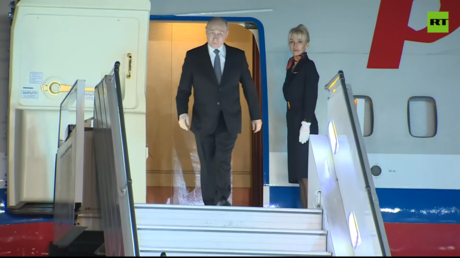
Every headline breathlessly announces that Vladimir Putin is jetting into India for a high-stakes BRICS summit, treating the event like a geopolitical earth-shaking pivot. Analysts pop champagne on television, claiming the dollar's days are numbered and a new anti-Western bloc is about to carve up the global economy.
They are wrong. They are missing the entire point because they refuse to look past the staged handshakes and empty communiques.
I have watched diplomats negotiate multi-billion dollar trade frameworks over lukewarm coffee, only for both sides to quietly walk away and honor none of it because the underlying math does not work. The lazy consensus says BRICS is an unstoppable juggernaut rewriting international order. The reality is far more mundane, far more cynical, and entirely transactional.
Let us dismantle the illusion.
The Myth Of De-Dollarization
Everybody loves a good rebellion story. The narrative writes itself: oppressed developing nations unite to overthrow the tyrannical greenback, trading in local currencies and laughing at Washington.
Except nobody actually wants to hold each other's money.
Ask yourself a brutal question: Would you rather hold U.S. Treasury bonds backed by deep, liquid capital markets, or would you prefer a massive pile of Indian Rupees that you cannot easily convert, or Russian Rubles subject to shifting sanctions regimes? Trade requires trust, deep liquidity, and currency convertibility. None of the heavy hitters inside this bloc trust each other's central banks, and none of them possess financial markets deep enough to absorb global trade surpluses.
When bilateral deals happen outside the dollar, they are usually clumsy barter arrangements or forced mechanisms where one party ends up hoarding a currency they cannot spend anywhere else. India spent months trying to figure out how to pay for Russian oil without violating sanctions or accumulating billions in trapped rupees that Moscow simply could not deploy back into the Indian economy.
The dollar is not falling because BRICS declared war on it. It is standing because the alternative is a financial vacuum.
The Geopolitical Frenemy Paradox
Western media treats BRICS like a tight-knit brotherhood. Look closer at the seating chart. You have nuclear-armed rivals sharing the same banquet table while actively plotting against each other's regional ambitions.
India and China share a heavily militarized, disputed Himalayan border. New Delhi looks at Beijing’s Belt and Road Initiative not as a benevolent development project, but as a strategic encirclement strategy. To counterbalance China, India actively courts the West through the Quad alongside the United States, Japan, and Australia.
At the same time, Russia has grown dangerously dependent on Beijing, turning into a junior economic partner after burning its bridges with Europe. Moscow needs Beijing; New Delhi distrusts Beijing; Beijing wants to lead everything.
Pretending this fractured collection of competitive states represents a unified anti-Western coalition requires a staggering level of geopolitical illiteracy. They are not allies. They are convenience partners sharing an elevator while pressing different floor buttons.
What The PAA Queries Get Wrong
People typing search queries into engines want simple answers: Is BRICS replacing the G7? Will the new currency destroy inflation?
The premises are flawed from the jump.
You cannot replace the G7 with a group whose two largest members treat each other with deep strategic suspicion. You cannot launch a viable common currency without fiscal union, shared sovereignty, and open capital accounts. Show me the day Beijing surrenders monetary policy control to a committee that includes New Delhi and Brasília, and I will show you a bridge in Brooklyn I have for sale.
The real question nobody is asking: What do these nations actually achieve by showing up to these summits?
The answer is simple: Domestic political theater.
For leaders facing domestic economic strain or international isolation, standing shoulder-to-shoulder at a summit provides a magnificent photo opportunity. Putin gets to project strength and show he is not isolated globally. Modi gets to project strategic autonomy, proving to his domestic voter base that India bows to no Western master while simultaneously extracting concessions from Washington.
It is diplomatic leverage theater. Nothing more.
How To Read Between The Lines Of The Communique
When the summit wraps up, ignore the bloated joint statement filled with boilerplate language about sustainable development, multipolarity, and reform of international financial institutions. Every single line of that text is negotiated down to the lowest common denominator over weeks of bureaucratic trench warfare.
Instead, look at what they do not sign. Look at the bilateral side-deals that fail to materialize. Pay attention to which leaders hold abrupt press conferences and which ones slip out the back door without taking questions.
If de-dollarization were real, we would see binding commitments on capital convertibility, centralized clearinghouses, and dispute resolution mechanisms with teeth. Instead, we get voluntary working groups and feasibility studies. Bureaucratese for stalling.
The next time an international relations pundit tells you the global financial architecture is shifting beneath our feet because of a summit in New Delhi, check their motives. They are selling you a cinematic blockbuster because reality is too boring, too messy, and far too slow to generate clicks.
The global order is not being overthrown with a handshake and a photo op. It is grinding forward through bitter, unglamorous self-interest.
Stop watching the summit stage. Watch the balance sheets.