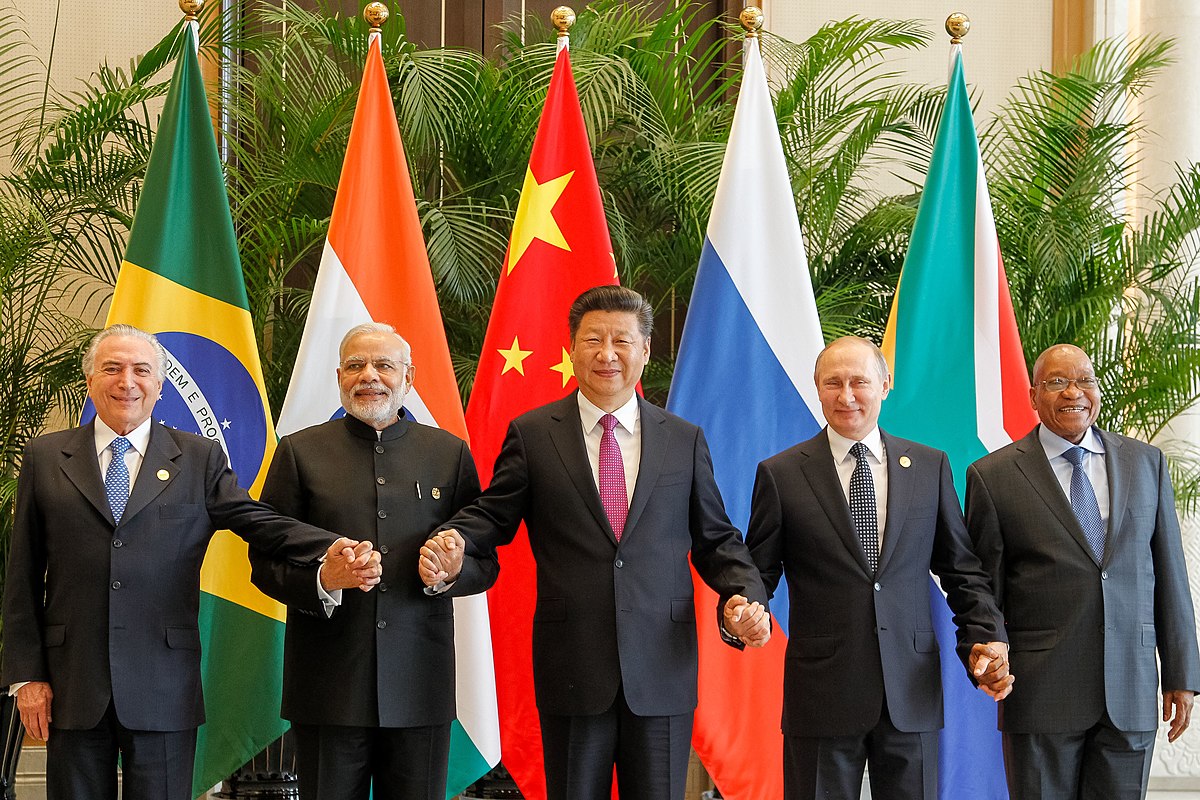
When South African President Cyril Ramaphosa stepped away from the podium after praising the success of the recent BRICS summit hosted by India, official communiques focused heavily on diplomatic handshakes and joint declarations. Beneath the polished veneer of multilateral cooperation, however, a much more consequential shift is underway. Major emerging economies are methodically constructing parallel economic architecture designed to insulate themselves from traditional Western financial dominance.
India's recent stewardship of the bloc highlights a growing ambition among non-Western states to steer global governance away from Washington and Brussels. While legacy media often dismisses these gatherings as mere talking shops, ignoring the structural changes taking place inside these economies is a grave analytical error. Meanwhile, you can find similar stories here: Escalation Dynamics and Strategic Deterrence After Infrastructure Strikes.
The Mechanics of De Dollarization
For decades, the global financial system operated on a singular assumption. The United States dollar functioned as the undisputed anchor of international trade, debt issuance, and central bank reserves. This dominance gave Washington a unique lever of geopolitical power, most clearly demonstrated through sweeping economic sanctions.
The BRICS coalition is systematically chipping away at that foundation. To explore the bigger picture, we recommend the excellent report by Al Jazeera.
During India's leadership tenure, discussions regarding alternative payment systems moved past abstract academic panels. Central banks across the bloc are actively testing bilateral trade settlement mechanisms denominated in local currencies. When India purchases commodities from fellow member states or partners, transactions increasingly bypass the Society for Worldwide Interbank Financial Telecommunication network and traditional correspondent banking channels.
This is not happening overnight. Inertia is a powerful force in international finance, and the greenback retains unmatched liquidity. Yet the directional momentum is unmistakable. Central banks in developing nations are accumulating gold at record rates while steadily reducing their holdings of United States Treasury bonds. They are purchasing insurance against a future where western financial infrastructure might be turned against them.
Expansion and Internal Friction
Growing a coalition of disparate regional powers is rarely a clean exercise. Bringing in new members alters the internal dynamics of the group significantly.
Skeptics often point to historical rivalries between heavyweights within the bloc as an insurmountable barrier to unity. Territorial disputes, diverging economic models, and competing regional ambitions create genuine friction. Yet framing BRICS exclusively through the lens of Western alliance politics misses the point entirely. These nations do not need to form a tightly integrated security pact like the North Atlantic Treaty Organization to achieve their primary objective.
Their unifying glue is pragmatic dissatisfaction.
Member states share a fundamental frustration with outmoded international institutions that fail to reflect contemporary economic realities. The International Monetary Fund and the World Bank still operate largely under governance structures established after the Second World War. Developing nations generate a massive share of global gross domestic product, yet their voting power in these legacy bodies remains restricted.
When New Delhi hosts a summit celebrating multilateral success, it signals to Washington and European capitals that an alternative center of gravity has stabilized. Nations in the Global South no longer view alignment with Western priorities as a mandatory prerequisite for economic development.
The Technological and Supply Chain Dimension
Financial plumbing represents only half the equation. The broader restructuring involves critical supply chains, technology standards, and energy corridors.
Industrial policy has returned to center stage globally. Protectionist measures, semiconductor manufacturing subsidies, and critical mineral restrictions are fragmenting the globalized trade regime that defined the post-Cold War era. Within this fragmented environment, BRICS members are carving out exclusive technological and logistical corridors.
Consider the energy sector. Long-term petroleum and natural gas contracts are increasingly being routed through non-Western financial channels. Logistics hubs are being modernized to facilitate trade flows that bypass traditional maritime choke points dominated by Western naval power.
This is not a temporary adjustment. It is a permanent recalibration of international commerce.
Reading the Signals
Analyzing the trajectory of global power requires looking past the diplomatic boilerplate. Communiques drafted at high-profile summits are heavily sanitized for public consumption. The real signal lies in the quiet technical agreements signed by central bankers, the long-term infrastructure investments funded by alternative development banks, and the persistent accumulation of non-dollar reserves.
India's handling of the bloc's recent diplomatic calendar demonstrated a growing diplomatic maturity. It proved that emerging economies can coordinate major policy positions without relying on Western imprimatur.
The old international order is not collapsing in a sudden, dramatic shock. It is eroding slowly, replaced piece by piece by nations determined to write their own rules of engagement.