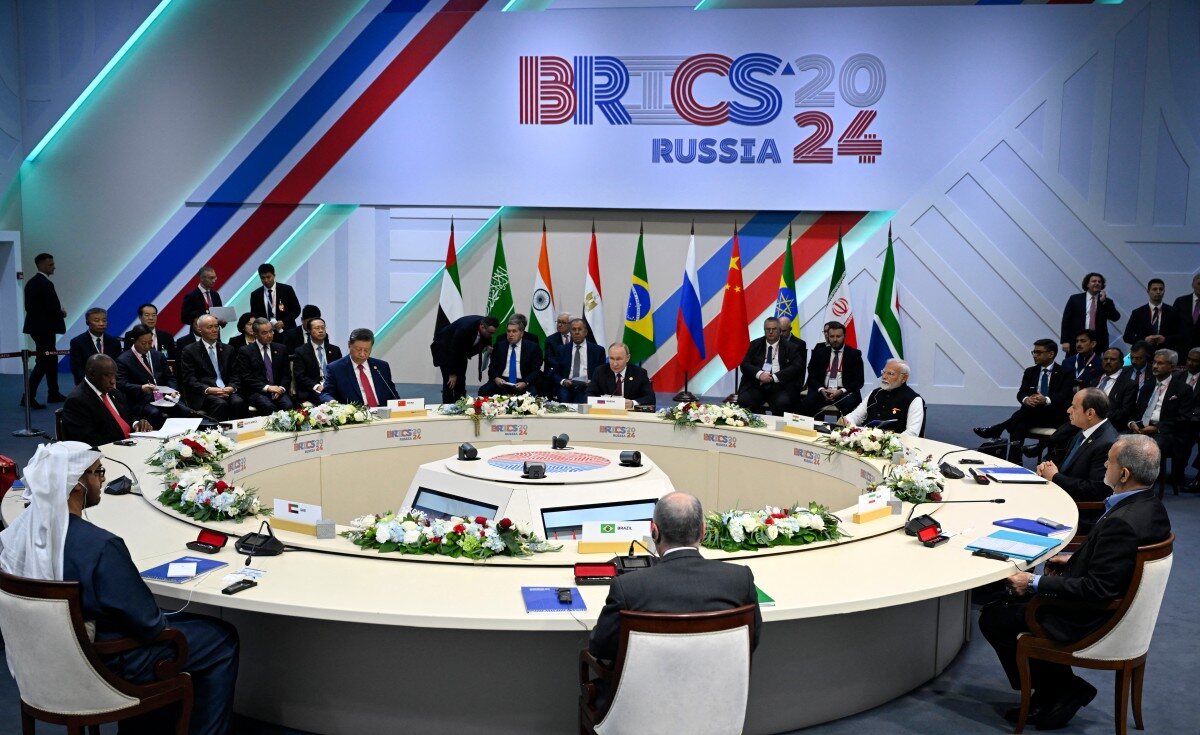
Russia is pushing to dismantle the century-old architecture of global food trade. By proposing a unified BRICS grain exchange and joint food reserves, Moscow aims to insulate the bloc from Middle Eastern supply shocks and Western financial sanctions. This move is not merely a hedge against regional instability; it is a direct assault on the pricing power of the Chicago Board of Trade. If successful, the initiative would shift the center of gravity for global food security away from the dollar-denominated West and toward a closed-loop system controlled by the world’s largest producers and consumers.
The Geopolitical Trigger
The immediate catalyst for this proposal is the volatile security situation in the Middle East. With the Red Sea becoming a high-risk transit zone and the Strait of Hormuz facing perennial threats, the traditional maritime arteries for grain are clogging. Russia, now the world’s top wheat exporter, views the current chaos as a moment of existential risk and tactical opportunity.
Current global trade relies on a handful of chokepoints. When a missile hits a bulk carrier in the Bab el-Mandeb, insurance premiums spike, and the price of bread in Cairo or Mumbai fluctuates based on a spreadsheet in Illinois. Russia’s argument to its BRICS partners—Brazil, India, China, and South Africa, along with new members like Iran and the UAE—is simple: why should the price of our vital resources be dictated by a financial system that we do not control?
The proposal involves creating a centralized digital platform for grain trading, backed by physical reserves situated in member nations. This isn't just about moving sacks of wheat. It is about creating a parallel financial infrastructure that bypasses the SWIFT payment system and the US dollar.
Breaking the Chicago Monopoly
For decades, the global price of grain has been set in the United States. The Chicago Board of Trade (CBOT) serves as the world's clearinghouse, where futures contracts determine what a farmer in Voronezh or Mato Grosso receives for their crop.
This system creates a fundamental disconnect. The BRICS nations account for roughly 40% of global grain production and consumption, yet they remain "price takers" rather than "price makers." They produce the sweat and the soil, but the financial margins are captured by Western intermediaries and speculators.
The Mechanism of Control
Russia wants to replace the CBOT benchmark with a BRICS-specific index. This would involve:
- Mutual Recognition of Standards: Eliminating the bureaucratic hurdles that often block trade between member states.
- Local Currency Settlement: Using the yuan, ruble, or rial to settle massive bulk contracts, further eroding the "petrodollar" and "agridollar" dominance.
- Insurance and Logistics: Building a bloc-wide maritime insurance framework to replace Western providers like Lloyd’s of London, which have restricted coverage for Russian vessels.
The math is brutal for the West. If the world’s largest buyer (China) and the world’s largest exporter (Russia) stop using Chicago as their price reference, the liquidity of Western grain markets will evaporate.
The Joint Reserve Strategy
The second pillar of the Russian plan is the creation of a joint food reserve. This is designed to function much like the Strategic Petroleum Reserve in the U.S., but on a multilateral scale.
In the event of a Middle Eastern war that shuts down the Suez Canal, or a climate-driven crop failure in South Asia, member states would have access to a pooled stock of essential grains. This prevents the "hunger riots" that have historically toppled governments in the Global South.
Why the Middle East Matters
The Middle East is the world’s most food-insecure region, relying heavily on imports from the Black Sea. When Russia calls for these reserves to "counter Middle East crisis risks," it is speaking directly to the anxieties of Egypt, Iran, and Saudi Arabia.
By positioning itself as the guarantor of food security, Moscow gains a level of diplomatic leverage that weapons sales alone cannot provide. It transforms grain into a tool of long-term soft power. If a nation knows its next six months of bread are sitting in a BRICS-managed silo, its loyalty to the Western-led "rules-based order" will inevitably waver.
Technical and Political Hurdles
Despite the ambitious rhetoric, the path to a unified grain exchange is riddled with friction. India, for instance, maintains a highly protectionist stance on its agricultural sector. New Delhi is often hesitant to join any trade framework that might allow cheap Russian or Brazilian imports to undercut its domestic farmers.
Furthermore, China’s participation is double-edged. While Beijing wants to reduce its dependence on U.S. corn and soy, it is also wary of becoming overly reliant on Russia. The Chinese leadership prefers a "plus-one" strategy, diversifying their sources rather than locking themselves into a single bloc’s infrastructure.
There is also the matter of transparency. A grain exchange is only as good as the data feeding it. For a BRICS exchange to work, members must be willing to share accurate data on their national yields and storage levels—information that is currently treated as a state secret in many of these capitals.
The Infrastructure of Displacement
While the diplomatic talks continue, the physical infrastructure is already being built. Russia is expanding its grain terminals in the Baltic Sea and the Far East, reducing its reliance on the vulnerable Black Sea routes.
Investments in the International North-South Transport Corridor (INSTC) are also picking up. This rail and ship network connects Russia to India via Iran. It is a direct "Middle East bypass" that allows grain to move from the heart of Eurasia to the Indian Ocean without ever entering the Mediterranean or the Suez Canal.
The Role of Digital Currencies
The proposed grain exchange is expected to be a primary testing ground for the "BRICS Bridge" digital payment system. Central Bank Digital Currencies (CBDCs) would allow for near-instant settlement of grain shipments.
In the current system, a wheat shipment from Russia to Egypt can be delayed for weeks if a Western intermediary bank flags the transaction for a sanctions review. A CBDC-based exchange removes this "off switch" from Washington's hands. It creates a "dark trade" environment—not in the sense of being illegal, but in the sense of being invisible to Western oversight.
The End of the Global Food Market
What we are witnessing is the fragmentation of the global market into regional silos. The era of a single, unified price for commodities is ending.
We are moving toward a world of "political pricing." In this new reality, the price of wheat is no longer just a reflection of supply and demand. It is a reflection of which side of the geopolitical fence you sit on. If you are within the BRICS orbit, you get access to the reserve and the exchange. If you are not, you are left to deal with the volatility of a shrinking Western market.
The West has long used financial sanctions as a "surgical" tool. Russia’s move into food reserves and grain exchanges shows that the target of that surgery is now building its own immune system. The weaponization of finance has led, inevitably, to the fortification of the food supply.
The Chicago Board of Trade should be worried. The grain is there. The buyers are there. The only thing missing is the infrastructure, and Russia just handed the world a blueprint for building it.
Move your capital accordingly. The silos are being locked.