The standard media script writes itself. A federal administration rolls heavy machinery onto indigenous land. A sovereign tribe protests the desecration of sacred sites and environmental destruction. Cameras capture the clashes, pundits clutch their pearls over sovereignty, and everyone retreats to their partisan trenches.
It is a clean, comforting narrative. It is also entirely detached from the mechanical reality of how infrastructure and geography actually function in the Sonoran Desert.
I have walked those arid stretches. I have watched billions of dollars in steel get erected, bypassed, cut through, and rendered obsolete by the sheer, unyielding physics of the terrain. The Lazy Consensus insists this is a simple battle between federal overreach and tribal preservation. That framing misses the point so completely it borders on malpractice.
The Geography Fallacy That Drives Both Sides Crazy
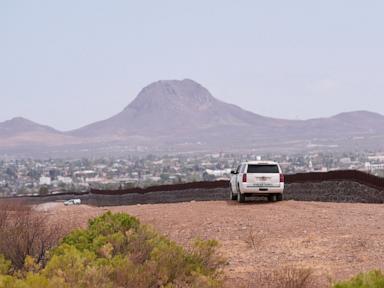
Let us dispense with the emotional theater and look at the engineering data. The Tohono O'odham Nation shares roughly 62 miles of contiguous international border. For decades, activists and politicians have treated this boundary as a static line on a map that can be secured with a linear barrier.
That is not how deserts work.
When you drop physical walls across washes, arroyos, and flash-flood zones, you are not stopping movement. You are building an expensive debris dam. During the monsoon season, millions of gallons of water slam down these dry riverbeds, carrying tons of brush, silt, and rock. A solid barrier acts as a catch-net. Within two years, the water scours underneath the foundations or piles debris high enough to create a natural ramp over the top.
I watched engineering teams spend millions shoring up foundations in areas where the soil composition shifts constantly. It is an exercise in geological arrogance. The federal government wanted a monument of steel to project political will. The tribe wanted their ancestral sovereignty respected. Both sides focused entirely on the politics of the barrier while ignoring the undeniable fact that geography was already winning.
Sovereignty Meets the Reality of Transnational Logistics
The tribal government faces an impossible bind, and the mainstream media completely misdiagnoses it. The standard line is that the tribe universally opposes any federal infrastructure. Talk to local tribal members away from the press microphones, and you find a much more fractured, pragmatic reality.
Parts of the reservation experience relentless cross-border transit that strains local emergency services and overwhelms remote communities. Drug cartels do not care about tribal sovereignty; they exploit the remote, unpatrolled stretches of reservation land precisely because federal enforcement jurisdiction is complex and fragmented.
When Washington dictates a wall project without genuine, ground-up operational integration with tribal law enforcement, it creates a security vacuum disguised as a security measure. The federal approach treats the reservation as a speedbump rather than an equal sovereign partner with localized intelligence.
Imagine a scenario where the Department of Homeland Security actually handed the logistics budget and operational control directly to the Tohono O'odham legislative council. You would see targeted surveillance, localized access roads, and high-tech sensors deployed where they actually work, rather than miles of rusted steel slicing through sacred saguaro forests where nobody crosses anyway.
Why Bureaucracy Loves Ineffective Steel
Why do administrations keep building walls that fail basic environmental and structural stress tests? Because visibility equals political currency.
A senator cannot campaign on a digital network of seismic sensors and thermal drones hidden in the brush. Voters cannot take a selfie next to an AI-driven radar tower. They want a physical object. They want something tall, imposing, and photogenic.
The defense contractors love it. The political consultants love it. The outrage machine on cable news loves it.
Meanwhile, the actual mechanics of cross-border movement adapt instantly. When a barrier goes up in one remote sector, traffic shifts five miles east into more dangerous, lethal mountain passes where migrants face dehydration and exposure. The wall does not stop the flow; it merely edits the geography of the tragedy.
The Hard Truth About Tribal Land and Federal Power
Let us be brutally honest about where the power actually lies. Under current federal statutory frameworks, the executive branch can waive dozens of environmental, historical, and cultural protection laws with the stroke of a pen. The Real ID Act gave DHS sweeping authority to bypass federal laws to erect border infrastructure.
When tribes fight this in federal court, they are playing a rigged game of chess where the opponent owns the board and changes the rules mid-match. Relying on injunctions and moral appeals to stop heavy machinery is a losing strategy because the federal apparatus views national security mandates as absolute override keys.
The real power move for indigenous sovereignty was never trying to stop the concrete trucks with lawsuits. It was demanding total operational veto power and infrastructure funding on tribal terms from day one.
Stop pretending this is a simple civil rights dispute. It is a masterclass in bureaucratic theater overriding ecological and logistical reality. The next time you see a headline about a wall rising across sacred desert lands, look past the political posturing. Look at the washouts. Look at the bypassed miles. Look at the contracts.
The desert reclaims everything we build, usually before the ribbon-cutting ceremony even begins.