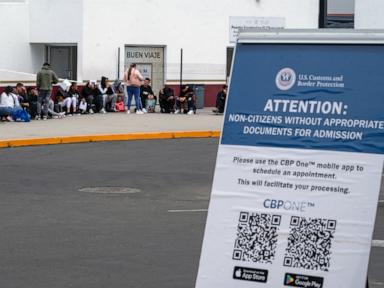
The mainstream media loves a clean, binary narrative. When the Supreme Court allowed the enforcement of restrictions on asylum seekers at the southern border, the headlines wrote themselves. Critics screamed about a humanitarian catastrophe. Supporters cheered a hardline victory. Both sides missed the point entirely.
They are arguing about the plumbing while the foundation of the house is washing away.
The lazy consensus insists that a single judicial nod or a stroke of a presidential pen can fix or break a broken immigration system. It assumes the presidency holds a magic wand over global migration patterns. This view treats a massive, macroeconomic reality as a simple game of political willpower.
It is bad law, worse economics, and a total misreading of how global supply chains and labor markets actually function.
The Illusion of Administrative Control
Every time the executive branch tweaks a border policy, the media reacts as if a new law has been chiseled into stone. It has not.
Under Title 8 of the United States Code, specifically Section 1182(f), the executive branch possesses broad authority to suspend the entry of aliens if their entry would be "detrimental to the interests of the United States." This is the legal mechanism that administrations use to justify rapid turnarounds and entry restrictions.
But relying on Section 1182(f) is a desperate band-aid, not a structural overhaul.
When a court "lets" an administration enforce a restriction, it is not validating the efficacy of the policy. It is merely acknowledging the statutory boundaries of executive power. The fundamental flaw in the mainstream commentary is confusing legal authority with operational capability.
I have spent years analyzing how regulatory frameworks interact with real-world logistics. Here is the reality: you can pass any directive you want from a mahogany desk in Washington, D.g., but if the infrastructure on the ground is designed for 1980s realities, the policy will fail.
The current infrastructure is built around a processing framework, not a deterrence framework. The immigration courts are backed up by millions of cases. Forcing border patrol agents to act as ad-hoc administrative law judges under expedited removal authorities does not solve the backlog. It shifts the bottleneck from a courtroom to a chain-link fence.
The Economic Ghost in the Machine
The political debate treats migration as a purely legal or humanitarian issue. It is neither. It is an unregulated market responding to intense labor demands.
American businesses are starved for low-wage labor. Agriculture, construction, hospitality, and eldercare are running on fumes. The structural demographic shift in the domestic workforce—aging Baby Boomers and declining birth rates—creates a vacuum that must be filled.
- The Pull Factor: US wage premiums. A worker can earn more in one hour in Texas than in an entire day in parts of Central America.
- The Push Factor: Economic instability, inflation, and violence in home countries.
When you block the front door without fixing the employment verification system, you do not stop the flow. You just drive it underground. This creates a massive, shadow economy that suppresses wages for legal workers, starves the state of tax revenue, and enriches criminal syndicates who manage the smuggling routes.
If the goal is truly to manage immigration, the focus must shift from the physical border to the workplace. But politicians will not touch internal enforcement with a ten-foot pole. Why? Because their donors in agriculture and construction would throw a fit. It is much easier to stage a photo-op in front of a wall than it is to audit a meatpacking plant.
Dismantling the Flawed Premises
Let’s tackle the standard questions that dominate cable news panels, using a dose of brutal honesty.
Does closing the border protect domestic jobs?
No. This premise is based on the lump of labor fallacy—the idea that there is a fixed amount of work to go around. In reality, an expanding workforce creates more demand, which creates more jobs. Furthermore, undocumented labor largely complements domestic labor rather than competing with it. When a construction company can hire affordable drywallers, it can build more houses, which creates high-paying jobs for licensed American electricians, plumbers, and project managers.
Why can't migrants just wait in line and enter legally?
Because for the vast majority of people fleeing destabilized nations, there is no line. The US immigration system is set up for high-skilled tech workers (H-1B), wealthy investors (EB-5), or immediate relatives of citizens. For a low-skilled worker from Guatemala or Venezuela, there is no viable visa category. The asylum system became the default channel because it was the only channel left open. Shutting down the asylum channel without creating a functional low-skilled guest worker program is like blocking the pressure valve on a boiling pot and wondering why the lid blows off.
The Uncomfortable Truth About Deterrence
Let’s be clear about the downsides of a pure enforcement strategy.
Increased border enforcement over the last three decades has not stopped migration; it has merely changed the geography of entry. It pushes routes into more dangerous terrain, increasing migrant mortalities and driving up the prices charged by cartels.
When the cost of crossing illegally goes from $2,000 to $10,000 due to increased security, it changes the behavior of the migrant. Previously, migration was circular. Workers came for the harvest and went home to their families for the winter. Now, because crossing is so dangerous and expensive, once a worker makes it across, they stay. The policy of deterrence accidentally converted a temporary workforce into a permanent, unauthorized population.
Imagine a logistics company that responds to a supply chain bottleneck by simply locking the warehouse doors and refusing to accept shipments. The trucks do not disappear. They park on the highway, block traffic, and create a systemic crisis for the entire city. That is what executive-led border crackdowns achieve.
Stop Trying to Secure the Border
The phrase "secure the border" is a rhetorical trap designed to win elections, not solve problems. You cannot secure a 2,000-mile border through physical or legal barriers alone when the economic incentives to cross are overwhelming.
If a government wants to regain control, it must replace the black market with a regulated market.
- Establish regional processing centers in partner nations to handle claims before individuals ever reach the Rio Grande.
- Create a high-volume, flexible guest worker visa that scales up or down based on real-time US labor data.
- Implement mandatory, federally managed electronic employment verification with severe, non-waivable financial penalties for corporate violators.
As long as the political class prefers the theater of executive orders and Supreme Court battles over the hard work of statutory reform, the border will remain a chaotic mess. The recent judicial ruling did not solve the crisis. It just cleared the stage for the next act of the same tired play.