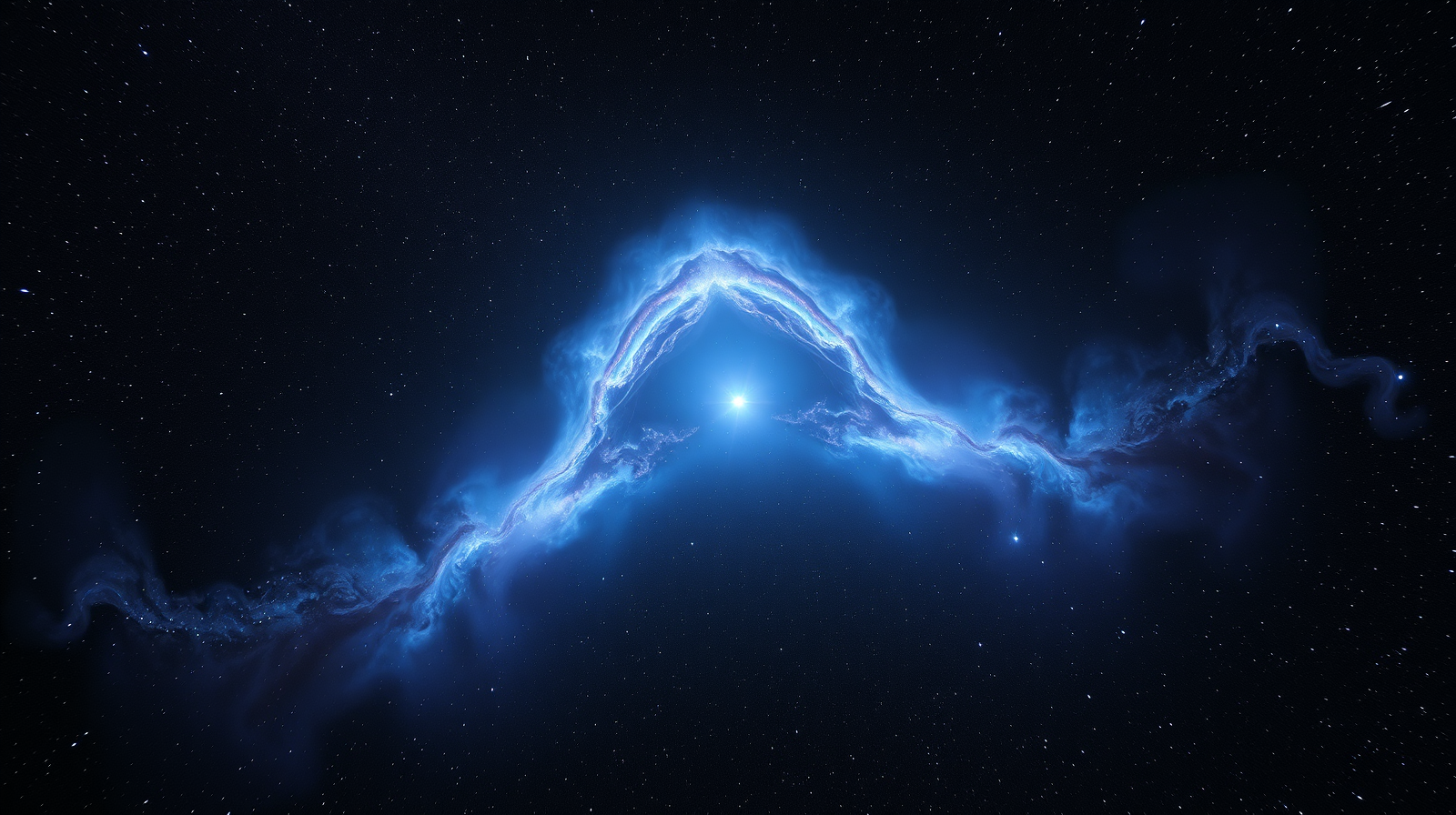
Deep in the constellation Centaurus, five thousand light-years away, lies a cosmic object that breaks the fundamental rules of thermodynamics as we usually see them play out across the cosmos. It's the Boomerang Nebula.
Most people assume the void of deep space represents the absolute limit of coldness. That assumption is wrong. At roughly -459.67 degrees Fahrenheit, or minus 272.15 degrees Celsius, the Boomerang Nebula is colder than the background radiation left over from the Big Bang. It sits just one single Kelvin above absolute zero. That makes it three times colder than the lowest recorded temperature in Antarctica and cooler than the empty space surrounding it.
How does an object floating in space manage to drop below the temperature of space itself? The physics behind this phenomenon isn't just a quirky space trivia fact. It reveals how dying stars drastically reshape their surrounding environments.
How a Dying Star Built a Cosmic Refrigerator
To understand why the Boomerang Nebula is so absurdly cold, you have to look at adiabatic expansion. It's the exact same physics principle that makes a can of compressed air feel freezing in your hand when you spray it for too long.
When a gas expands rapidly without any external heat being added, its temperature plummets.
Rapid Gas Expansion --> Pressure Drops --> Temperature Plummets
The dying red giant at the core of the Boomerang Nebula is shedding its outer layers at a terrifying speed. We're talking about gas blasting outward at nearly 360,000 miles per hour (about 160 kilometers per second). That massive volume of gas has been blowing out into space for roughly 1,500 years. As the gas shoots outward, it expands into the surrounding vacuum at a rate far faster than normal planetary nebulae.
That rapid expansion cools the gas down drastically. Nature created a giant, self-powered refrigerator in deep space.
Astronomers using the Atacama Large Millimeter/submillimeter Array (ALMA) in Chile managed to map this expansion in high resolution. What they discovered changed our understanding of the nebula's structure entirely.
The Mystery of the Bowtie Shape
For decades, ground-based optical telescopes imaged the nebula as a double-lobed structure. It looked like a bow tie or a boomerang, which is how it got its name back in the late 1970s.
When Hubble imaged it in the late 1990s, scientists saw a classic hourglass shape created by a high-speed wind blowing through a denser belt of dusty gas around the central star. But ALMA's submillimeter radio observations revealed something else.
The bowtie shape is mostly an optical illusion caused by light scattering off large dust grains. ALMA showed that the cold gas is actually blowing out in a much wider, nearly spherical shape. The ultra-cold zone—the region chilled below cosmic background radiation—is a massive, expanding cloud of gas that envelopes the central star entirely.
Why is this star losing mass so much faster than other dying stars of similar mass?
The leading theory points to a hidden companion star. A single red giant usually sheds its gas over a much longer period, resulting in a warmer, slower expansion. If a smaller companion star plunged into the outer envelope of the dying giant, it would dramatically accelerate the ejection of gas. That gravitational interaction would throw the star's outer layers into space like a cosmic blender, triggering the extreme adiabatic cooling we observe today.
Colder Than Deep Space Itself
The cosmic microwave background (CMB) is the ambient heat radiation left over from the birth of the universe. It sits at roughly 2.7 Kelvin (-454.81 degrees Fahrenheit).
Under normal circumstances, any object sitting in the vacuum of space will eventually absorb enough of this background radiation to match its temperature. It sets a baseline floor. Nothing out in the open universe should naturally fall below 2.7 Kelvin because the CMB constantly warms it up.
The Boomerang Nebula breaks this baseline.
Because the nebula's gas expands so aggressively, it cools down faster than the cosmic microwave background radiation can warm it up. At 1 Kelvin (-457.87 degrees Fahrenheit), the nebula is literally absorbing the CMB's radiation rather than emitting heat into space. It's a localized thermal sink.
+------------------------------------+--------------------------+
| Location                           | Temperature (Kelvin)     |
+------------------------------------+--------------------------+
| Lowest Antarctica Record           | ~184 K                   |
| Cosmic Microwave Background (Space)| ~2.7 K                   |
| Boomerang Nebula                   | ~1.0 K                   |
| Absolute Zero (Theoretical Limit)  | 0.0 K                    |
+------------------------------------+--------------------------+
Human laboratories on Earth have actually created temperatures far colder than 1 Kelvin—reaching mere fractions of a degree above absolute zero using laser cooling and magnetic traps. But as far as naturally occurring phenomena in the observable universe go, the Boomerang Nebula holds the record.
A Fleeting Snapshot in Cosmic Time
This ultra-cold phase won't last. In astronomical terms, it's a flash in the pan.
The violent gas ejection phase of a pre-planetary nebula lasts only a few thousand years. Once the central star sheds its outer envelope completely, the remaining core will expose its ultra-hot surface. That hot white dwarf core will flood the surrounding gas with intense ultraviolet radiation.
When that happens, the radiation will ionize the gas, heating it up to thousands of degrees and turning it into a brightly glowing planetary nebula like the Ring Nebula or the Helix Nebula.
The cold snap is temporary. We just happen to be looking at the Boomerang Nebula during a very specific, short-lived window in its lifecycle.
Tracking Deep Space Phenomena Yourself
If you want to track discoveries like the Boomerang Nebula or keep tabs on radio astronomy research, skip the popular science aggregators and go straight to the primary sources.
Set up direct alerts on the European Southern Observatory (ESO) news portal or monitor the National Radio Astronomy Observatory (NRAO) press feed. They publish raw observation logs, ALMA image releases, and peer-reviewed paper preprints long before mainstream outlets write summary pieces. Tracking those data releases directly gives you an unvarnished look at how modern astrophysics measures extreme environments across our galaxy.