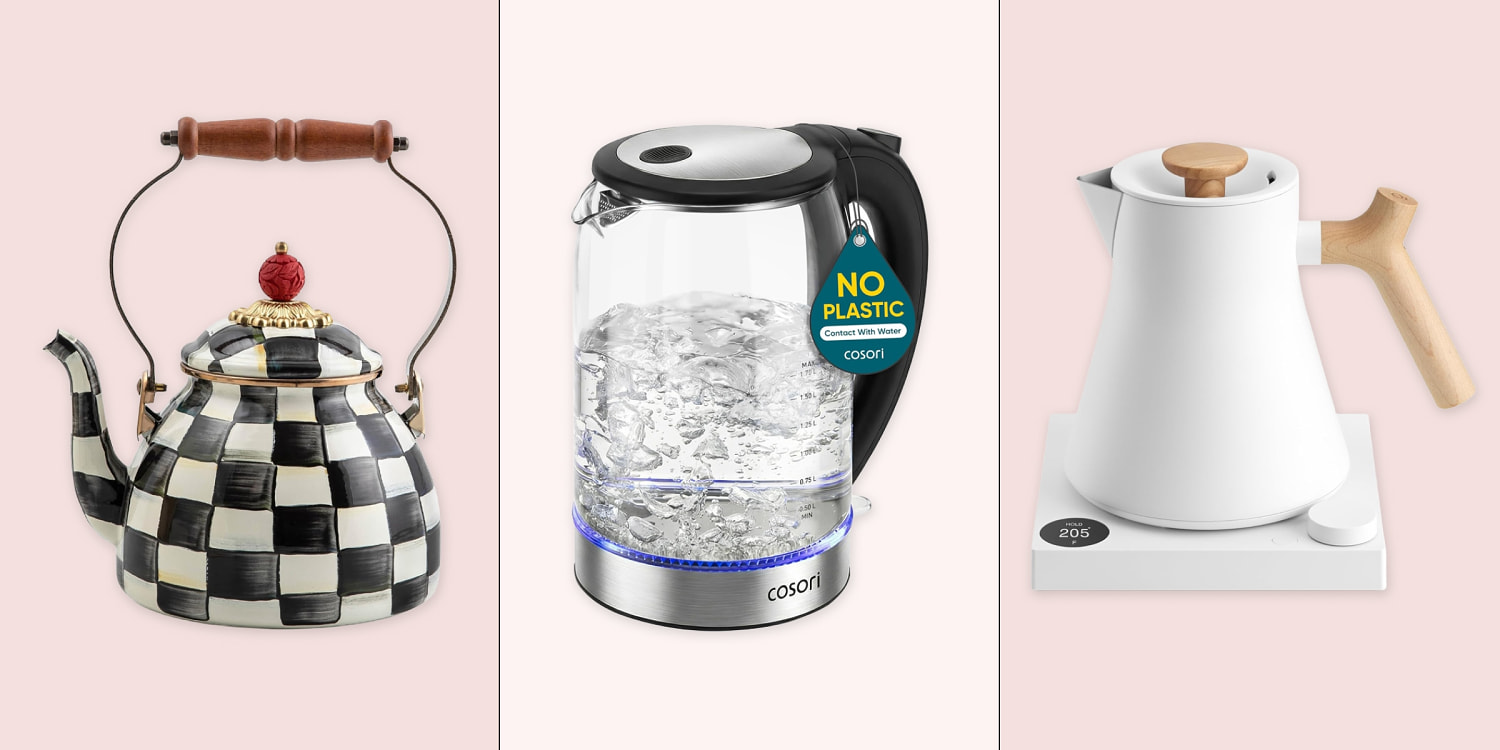
Every autumn, lifestyle publications run the exact same piece of service journalism. They promise that the right appliance will transform you into a mindful creature who drinks loose-leaf infusions while reading poetry by a window. The premise relies on a basic consumer fallacy. It suggests that a heating element wrapped in brushed stainless steel can cure a fundamental lack of interest in hot water beverages.
The market is flooded with devices engineered to separate earnest buyers from their capital under the guise of lifestyle enhancement. Walk into any big-box retailer or scroll through design-focused e-commerce platforms, and you will find dozens of variations on a simple cylinder. Most of them fail at basic physics while succeeding at aesthetic marketing. If you liked this article, you should look at: this related article.
To understand why so many appliances miss the mark, we must look at what actually happens inside the vessel. Water is a stubborn medium. Bringing a liter of liquid from room temperature to a rolling boil requires a precise calculation of wattage, thermal mass, and heating element placement. When manufacturers prioritize minimalist silhouettes over thermodynamic efficiency, the consumer ends up with a beautiful object that takes six minutes to heat water and starts leaking at the seam within eighteen months.
Variable temperature control remains the primary battleground for high-end appliances. Cheap models blast everything to a roiling hundred degrees Celsius, which scorches delicate green leaves and leaves black teas under-extracted if you try to compensate by guessing. The better units use PID controllers to manage current delivery, holding water at exact thresholds for oolong or white tea. Yet even here, manufacturers often hide cheap plastic components inside the steam path, undermining the entire rationale for spending upwards of two hundred dollars on a metal container. For another perspective on this development, see the latest update from Refinery29.
The obsession with aesthetic minimalism has also created ergonomic nightmares. Handles positioned directly above steam vents, spouts that dribble water across the kitchen counter instead of pouring in a clean stream, and touch-capacitive panels that fail when exposed to kitchen condensation are standard features on products praised for their visual restraint. Form has entirely eclipsed function, leaving users frustrated by basic daily interactions.
Material integrity tells an equally bleak story. Aluminum boilers lined with proprietary non-stick coatings degrade under repeated thermal shock. Glass carafes crack when subjected to sudden temperature differentials or minor countertop impacts. Even stainless steel grades vary wildly, with low-grade alloys picking up mineral scaling and metallic tastes that ruin the flavor profile of delicate single-origin harvests.
The marketing apparatus around these goods relies heavily on emotional manipulation. Brands do not sell appliances; they sell a version of domestic tranquility that does not exist in a modern kitchen. They frame the act of boiling water as a ritualistic pause from the chaos of daily existence.
This brings us to the core issue of consumer retention. Someone who does not naturally enjoy warm infusions will not develop the habit simply because their kitchen counter features a matte-black gooseneck apparatus with a digital display. The novelty wears off by November, and the appliance joins the bread maker and the citrus juicer in the back of the pantry.
Evaluating these devices requires stripping away the lifestyle veneer and examining raw engineering metrics. Heating speed matters. Pour precision matters. Scale management and ease of internal cleaning matter far more than whether the housing matches your toaster.
If you are serious about upgrading your morning routine, stop looking at style guides that treat kitchen tools as decor accessories. Look for exposed heating elements made of heavy-gauge marine-grade steel, mechanical switches that do not rely on circuit boards susceptible to moisture damage, and warranties that last longer than twenty-four months.
The industry thrives on cyclical consumption, pushing new colorways and smartphone integrations every autumn while ignoring basic durability. Do not fall for the seasonal reset. Buy a functional tool built to withstand the rigors of thermodynamics, or accept that you were never a tea person in the first place.