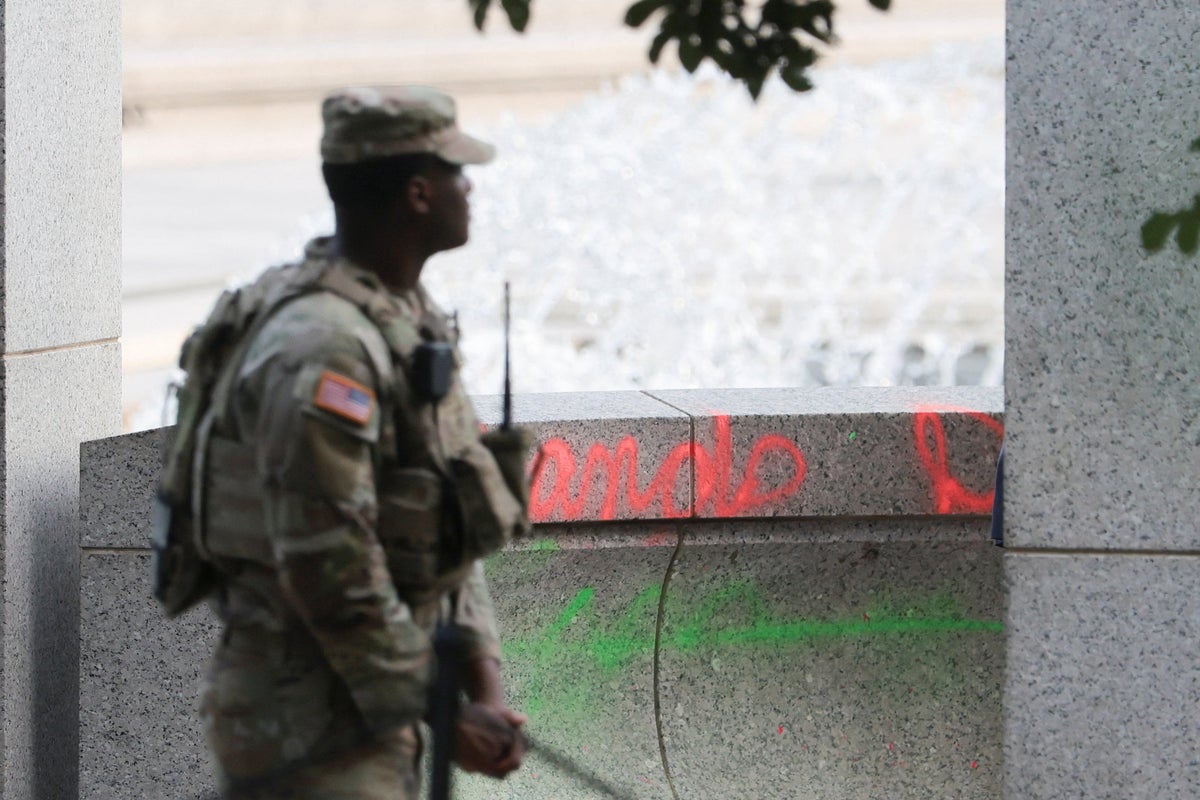
Washington is having another public freakout. Following the recent spray-painting and soap-bubbling incident at the National World War II Memorial, the political establishment immediately reverted to its favorite comfort zone: pearl-clutching, finger-pointing, and screaming about moral decay. Donald Trump took to social media to wail, "Where do these animals come from?" tying the incident directly to the ongoing embarrassment of the botched Lincoln Memorial Reflecting Pool renovation.
The media narrative is predictably lazy. Outlets frame these events as a sudden culture-war battleground where sacred American architecture is besieged by unhinged domestic bad actors.
It is a completely flawed premise.
When you strip away the partisan theatre and examine the actual logistics of managing monumental infrastructure in the District of Columbia, a very different reality emerges. The vandalism narrative isn't just an oversimplification; it is a convenient smoke screen used by incompetent contractors and tone-deaf federal bureaucracy to deflect blame away from structural failure.
The Convenient Myth Of The Omnipresent Vandal
Let us look at the facts surrounding how public spaces are maintained and secured in the capital. The National Mall is one of the most heavily monitored acreage parcels on planet Earth. Between the United States Park Police, closed-circuit television grids, private security contractors, and federal intelligence details, the idea that lone-wolf miscreants can freely wander up to high-profile national monuments with industrial quantities of pink paint and soap without immediate logistical failure is absurd.
Yet every time a multi-million-dollar renovation project goes sideways—such as the structural gash and drainage disaster at the Reflecting Pool—officials scramble to find a scapegoat. When incompetent oversight, rushed timelines, and shoddy handpicked contracting groups leave a public landmark looking like an abandoned municipal swimming pool, declaring it a "vandalism crisis" is a predictable face-saving maneuver.
I have watched public infrastructure projects implode from bad management for years. When a project goes billions or millions over budget and fails basic structural QA, the last thing the people in charge want to admit is that their own procurement process was broken. It is far easier to blame an anonymous "animal" in the night than to admit that government agencies cannot manage a basic concrete pour.
The Real Threat Is Bureaucratic Competence, Not Culture Wars
The lazy consensus dictates that these monuments are falling victim to political polarization. Thinkers on both sides want you to believe that America is tearing itself apart stone by stone.
Imagine a scenario where the government simply admitted the truth: our public works apparatus is bloated, chronically mismanaged, and incapable of executing basic maintenance without tripping over its own feet.
The World War II Memorial vandalism, while real, acts as a useful distraction from the multi-million-dollar operational failures happening behind the construction tarps. The real enemy of American heritage isn't a spray-can-wielding misfit; it is the systemic refusal to hold federal project managers accountable for structural incompetence. Until Washington stops weaponizing every splashed bucket of paint for political points and starts auditing its own contracting pipeline, these monuments will continue to rot from the inside out.
Stop looking for monsters under the national monuments. Look at the balance sheets instead.
Vandals target DC's World War II Memorial with paint and soap
This news footage from WJLA provides an on-the-ground look at the physical aftermath and police response at the World War II Memorial following the incident.