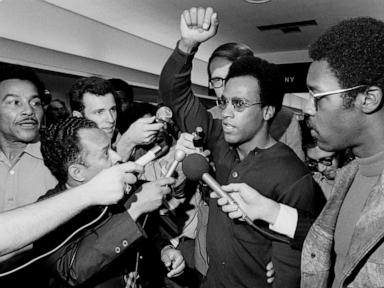
History loves a sanitized poster. It prefers its radicals frozen in amber, stripped of operational grit, and reduced to nostalgic museum pieces that pose no threat to the status quo sixty years later. Every time October rolls around, the mainstream narrative dusts off the leather jackets, the berets, and the sepia-toned snapshots of 1966. We get the standard-issue commemorative articles about free breakfast programs and community defense patrols, framed as harmless historical footnotes or moral victories of a bygone era.
This framing is a comfortable sedative. It treats the Black Panther Party as a soup kitchen charity or a militant folklore club, completely erasing the structural mechanics, the relentless logistical organization, and the terrifyingly effective threat they posed to municipal power structures. The lazy consensus says the Panthers were noble reformers who handed out milk and cereal. That view misses the entire engine of what happened in Oakland sixty years ago. They were not social workers with a militant aesthetic. They were radical community organizers who built a dual-power apparatus because the state abdicated its basic obligations to Black neighborhoods, and that distinction matters profoundly today. For another view, read: this related article.
Let us look past the romanticism and examine the architecture.
When Huey P. Newton and Bobby Seale drafted the Ten-Point Program in October 1966, they did not ask for incremental reform. They did not lobby city hall for better zoning laws or petition for permission to form a neighborhood watch. They bypassed the municipal machinery entirely. They observed that police brutality was a colonial occupation force dynamic, and they met that observation with armed observation patrols. They noticed that children could not learn on empty stomachs, so they fed them before school. They recognized that institutional medicine was predatory and inaccessible, so they established free health clinics staffed by volunteer doctors and revolutionary medical workers. Similar analysis on this matter has been published by Reuters.
This was not charity. Charity relies on the benevolence of the oppressor. Dual power relies on the self-determination of the oppressed. By building parallel institutions that met the material needs of the community, the Panthers exposed the illegitimacy of the existing power structure. If a breakfast program run by twenty-year-old revolutionaries can feed thousands of children while a multi-billion-dollar federal government claims it is too expensive or logistically impossible, the moral bankruptcy of the state becomes impossible to ignore.
That is why the reaction from the apparatus was so swift and merciless.
We forget that J. Edgar Hoover did not label the party a threat because of free breakfast. The FBI launched COINTELPRO—a domestic counterintelligence war involving surveillance, infiltration, frame-ups, and targeted assassinations—because the breakfast programs were a gateway to radical political education. The state understood a fundamental truth that modern historical retrospectives conveniently gloss over: when you feed people, protect people, and heal people outside the sanctioned channels of state authority, you render the state obsolete in their eyes.
The sanitized narrative portrays the downfall of the organization as an inevitable tragedy born of external repression alone. That is intellectually lazy. The decline of the Panthers was a complex collapse accelerated by external terror, yes, but also by internal ideological fracturing, rapid expansion without sustainable administrative infrastructure, and the immense psychological toll of living under a state-sponsored war. Pretending the party had no internal contradictions or strategic miscalculations does a disservice to the actual human beings who built it. Hero-worship is the enemy of genuine historical analysis.
What does this mean for the present?
Every time a modern activist group sets up a mutual aid fund, a community fridge, or a decentralized defense network, they are operating on blueprints drafted in Oakland in 1966. Yet, modern political discourse constantly tries to defang these tactics. Corporations co-opt the imagery while gutting the politics. Non-profit industrial complexes professionalize grassroots survival programs into bureaucratic grant-writing exercises that answer to foundation boards rather than the streets.
The original architects understood that power does not concede anything without a demand backed by leverage. They did not wait for permission to govern their own neighborhoods.
Stop treating history like a nostalgic postcard. The Black Panther Party did not survive because they wore berets; they shook the foundations of American governance because they mastered the unglamorous, exhausting mechanics of material survival and political education. Until we understand the difference between asking for a seat at a broken table and building your own kitchen, we will keep repeating the same superficial history while the underlying crises remain entirely unsolved.