There is a specific kind of quiet that settles over a boardroom when a gamble fails. It is not the silence of peace, but the heavy stillness of a room full of tired people calculating losses in millions. For years, the story of cannabis legalization was told in neon lights and booming market caps. Wall Street analysts wore fleece vests and spoke of green rushes, exponential curves, and infinite horizons. They looked at a plant that had spent a century in the shadows and saw only gold.
They forgot about the soil.
Plants demand roots. They demand patience. Corporations, by design, are built for neither.
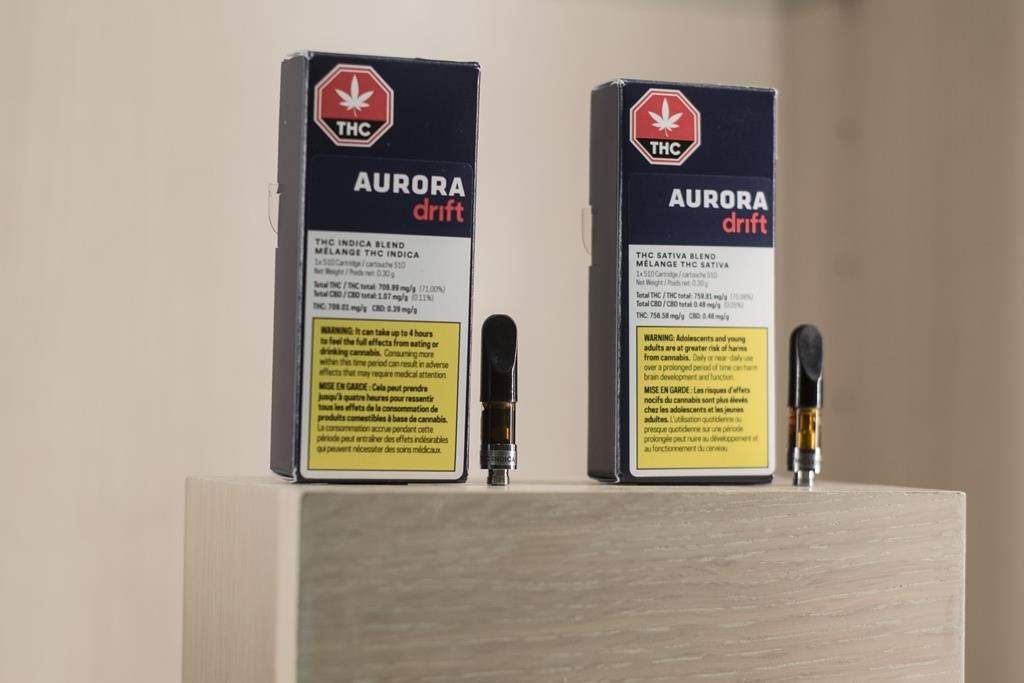
Consider the anatomy of a corporate pursuit. When Curaleaf sweetened its takeover offer for Aurora Cannabis after a stinging rejection, the headline scrolled across financial tickers as mere numbers. A few more cents per share. A sweeter pot to entice a hesitant board. But behind those sterile digits lay a desperate dance of survival in an industry that expanded faster than its own gravity could sustain.
I remember walking through a cultivation facility in the damp chill of an autumn morning years ago, long before the public frenzy reached its fever pitch. The air smelled of chlorophyll and damp earth, thick enough to taste. The grower, a man with dirt permanently wedged beneath his fingernails, pointed to a row of sagging stalks.
"They want me to double output by next quarter," he told me, wiping sweat from his forehead with the back of a scarred wrist. "They talk about yields like we are stamping out widgets in a Detroit warehouse. But this is biology. You cannot rush a flower without breaking its back."
He was right. And the entire cannabis market spent half a decade trying to break the plant's back.
When Canada legalized recreational cannabis in 2018, the floodgates blew wide open. Capital poured in like water through a breached dam. Companies like Aurora Cannabis scaled up with terrifying speed, building massive, state-of-the-art greenhouses that stretched across the landscape like futuristic cathedrals. They borrowed heavily. They bought competitors at the peak of inflated valuations. They promised investors a revolution.
Gravity cares little for promises.
Overproduction choked the supply chains. Prices plummeted. Regulatory bottlenecks choked international exports, and the promised federal legalization in the United States remained a mirage shimmering on the horizon. The grand cathedrals of cultivation turned into expensive monuments of overconfidence. Debt piled high. Layoffs swept through the valleys. The green rush curdled into a red inkbath.
This is the context that breathes life into the cold mechanics of a takeover bid. When a giant like Curaleaf knocks louder on Aurora's door with a richer proposal, it is not merely a transaction. It is a desperate consolidation. It is the sound of an industry realizing that the wild frontier is closing, and only the leanest survivors will make it to the other side.
Mergers in a dying growth market are rarely born of strength. They are born of shared exhaustion.
Picture the executives on both sides of the negotiating table. They are looking at balance sheets burdened by past hubris. They are answering to institutional investors whose patience has worn as thin as cheap paper. Every iteration of a raised offer represents a gamble that swallowing a rival will buy enough market share, enough operational efficiency, enough breathing room to outlast the regulatory winter.
Yet, numbers on a spreadsheet hide the human cost of these corporate marriages. When headquarters merge, duplicate facilities shutter. The grower with dirt under his fingernails finds himself locked out of the gleaming greenhouse. The trimmers, the packagers, the logistics coordinators—people who believed they were building a brand-new economic ecosystem from scratch—receive pink slips delivered with corporate polish.
The irony is sharp. The plant itself teaches resilience. It survives harsh weather, poor soils, and erratic seasons through deep roots and slow adaptation. The corporate entities built around it did the exact opposite. They grew shallow roots, stretched too high, too fast, and buckled at the first real gust of market reality.
When the dust settles on this latest corporate maneuver, and the financial press moves on to the next quarterly report, the underlying truth remains unchanged. You cannot engineer your way out of basic economic laws. You cannot corporate-speak your way past oversupply and regulatory stagnation.
The green rush is dead. What remains is a sobering dawn.
In the quiet corners of those massive, half-empty greenhouses, the lights hum a steady, monotonous tune. The plants grow, indifferent to the boardrooms arguing over their value miles away. They need water, light, and time. Nothing more. Someday soon, the executives might finally learn to listen.