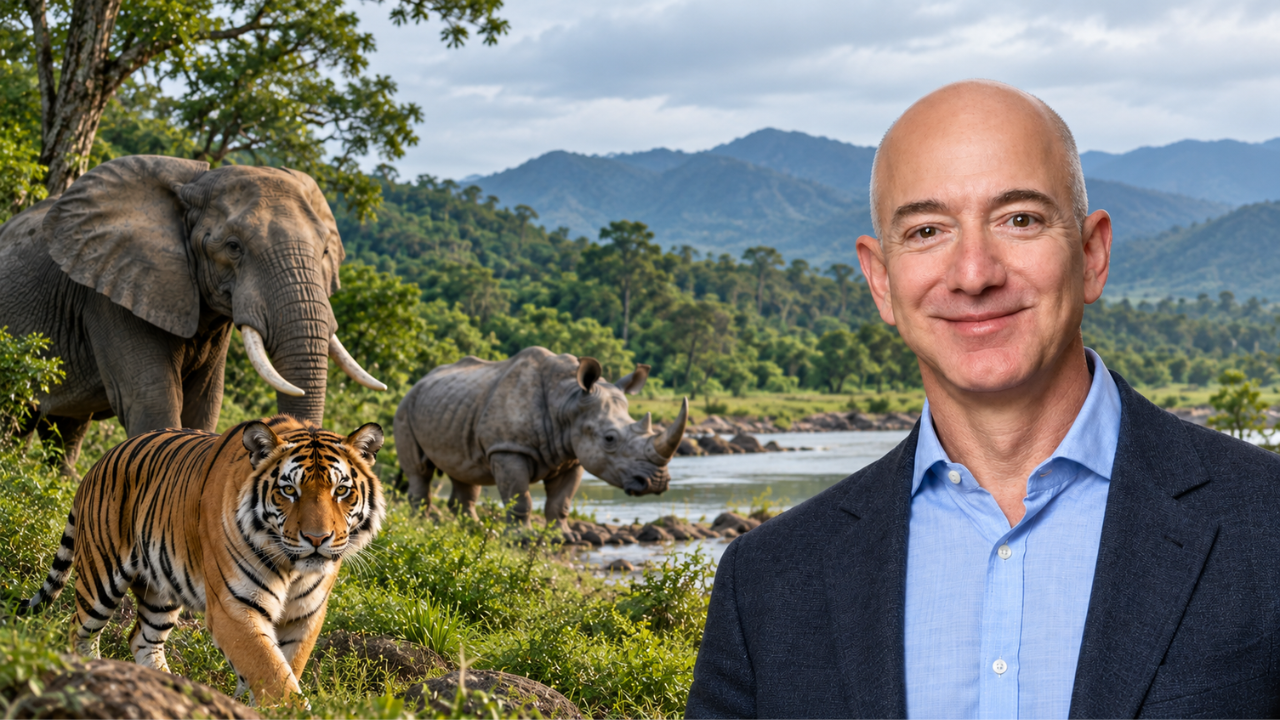
Throwing money at conservation often looks like a quick headline win. Real species recovery takes years of grinding field work.
In mid-October 2026, at the UN Biodiversity Conference (COP17) in Yerevan, Armenia, the Bezos Earth Fund teamed up with eight other organizations to launch the Species Recovery Alliance, committing more than $500 million over five years to save threatened plants and animals. Out of that total, the Bezos Earth Fund is putting up $100 million—roughly a fifth of the five-year commitment—building on its $200 million Phoenix Species Project rolled out in August 2026. In related news, we also covered: Why Millions in Long Beach Cannot Hold Back Rising Sea Levels.
The headline alone tells you there's big money moving. What matters more is how the alliance plans to spend it. Instead of dumping every dollar into one giant shared pot, the nine funders are aligning their grantmaking, sharing data, and backing local conservation teams across existing grant channels. That distinction sounds bureaucratic until you've watched conservation projects stall because short grant cycles dried up mid-recovery.
Why Protected Parks Alone Aren't Enough
For years, big biodiversity pledges have leaned heavily on expanding protected land and ocean boundaries. Drawing lines on a map helps. It's also not enough by itself. The Washington Post has analyzed this critical topic in great detail.
Cristián Samper, managing director and leader of nature solutions at the Bezos Earth Fund, put the problem bluntly at COP17: setting up protected areas and tackling broader pressures won't rescue species already teetering on the edge without targeted action. Populations shrink inside parks when poachers slip through, invasive species take over, or habitats become too fragmented for animals to breed and rebound.
The numbers explain the urgency. According to the World Wildlife Fund's 2026 Living Planet Report, monitored vertebrate wildlife populations fell by an average of 73% between 1970 and 2022, including an 80% drop in Africa. Meanwhile, data cited by the alliance from the International Union for Conservation of Nature (IUCN) shows more than 31,000 species are listed as Extinct in the Wild, Critically Endangered, or Endangered—including over 10,000 that are Critically Endangered, and more than 10% of those with fewer than 50 individuals left.
"Not managing their decline. Recovering them. That's the whole difference." — Lauren Sánchez Bezos, Vice Chair of the Bezos Earth Fund
That shift in framing matters. Too much conservation funding goes toward slowing a slide rather than actively rebuilding populations. Target 4 of the Kunming-Montreal Global Biodiversity Framework calls for urgent steps to halt human-driven extinctions and recover threatened species, yet biodiversity targets across the board are falling behind.
Inside the Nine-Group Species Recovery Alliance
Let's be honest: philanthropy loves a shiny new coalition. Sometimes alliances are mostly press releases with a logo wall. Here, the lineup includes groups with very different strengths—and some real tension in their approaches.
Alongside the Bezos Earth Fund (led under Chairman Jeff Bezos, Vice Chair Lauren Sánchez Bezos, and President and CEO Tom Taylor), the founding members are:
- Re:wild, co-founded by Leonardo DiCaprio and CEO Wes Sechrest, which focuses heavily on restoring wild places, finding "lost" species, and co-leading initiatives like the Phoenix Species Project across 30 countries.
- Rainforest Trust, led by CEO James Deutsch, which partners with local groups to buy and protect threatened tropical and subtropical habitats.
- Critical Ecosystem Partnership Fund (CEPF), which has granted more than $350 million to over 2,800 organizations across 112 countries since 2001, channeling money through biodiversity hotspot implementation teams.
- Fondation Franklinia, which backs threatened tree species and global IUCN Red List tree assessments.
- Ayers Wild Cat Conservation Trust, dedicated to wild cats globally.
- Colossal Foundation, which pairs de-extinction technologies with field conservation support.
- WildLives Earth, focused on strategic grantmaking and habitat/species protection.
- Fondation Segré, another founding philanthropic backer.
In parallel with this private alliance, 17 governments—led by Colombia and Armenia—launched the Coalition of Action to Recover Endangered Species (CARES) at COP17. Private money alone can't fix national enforcement gaps or land-use policy, so having a separate government track is encouraging, even if coordination between private donors and governments will be tested over time.
What's Promising—and Where Skepticism Is Fair
I've seen plenty of multi-year pledges sound bold on launch day and get fuzzy on accountability later. Two details stand out here.
First, there is no single pooled fund or central application portal. Each organization keeps control of its own grants, rules, and timelines. The upside is speed and alignment: funders can avoid duplicating work on the same species while leaving fewer neglected species behind. The catch for local groups is that you still have to navigate each member's separate grant process.
Second, the alliance plans to measure outcomes using the IUCN Red List and its Green Status of Species, tracking whether populations actually rebound and threats drop over a five-year window. That's a smart yardstick. Still, critics and observers have noted that exact individual pledge breakdowns aren't all public, and the Bezos Earth Fund doesn't accept unsolicited grant proposals—meaning much of its share flows through selected partners and programs.
Including the Colossal Foundation alongside traditional habitat and species groups also highlights an ongoing debate in conservation. Should scarce conservation attention go toward high-tech genetic interventions and de-extinction tools, or stick strictly to on-the-ground threat reduction, habitat protection, and local stewardship? Different members bring different bets to the table, and time will show whether that variety adds strength or friction.
Trees, Amphibians, and the Overlooked Majority
People usually picture tigers, elephants, or rhinos when they hear about endangered wildlife. Most of the crisis lives somewhere quieter.
Franklinia Foundation director general Jean-Christophe Vié pointed out at the launch that threatened tree species outnumber threatened terrestrial vertebrate species by more than two to one. Think about how rarely a tree gets a fundraiser compared to a big cat. Yet forests anchor watersheds, store carbon, and keep entire ecosystems standing.
Amphibians, freshwater fish, and lesser-known reptiles face a similar blind spot. Conservationists working on cliff-dwelling salamanders or desert pupfish know how easy it is for a species with tiny local value in market terms to vanish before most people ever learn its name. Multi-year funding gives field biologists room to run breeding, reintroduction, and community partnerships without constantly scrambling for next year's bridge check.
Practical Next Steps for Conservationists, Donors, and Watchers
Whether you run a local conservation group, manage philanthropic giving, or just follow global nature news closely, you don't have to wait for another summit to act:
- Map your work to specific members, not a central portal. If you're on a conservation team, check which alliance member fits your model. Groups in active biodiversity hotspots can look into CEPF regional calls, tree-focused projects can review Franklinia Foundation priorities, and tropical land-protection partners can connect directly with Rainforest Trust.
- Design multi-year recovery metrics from day one. Funders increasingly want proof beyond activity counts. Track population trends, threat reductions, and Green Status indicators—and pair biological goals with local community benefits like clean water or sustainable livelihoods.
- Don't stop at the announcement headline. Watch what happens over the next 12 to 24 months: which species receive multi-year commitments, how local and Indigenous partners are resourced, and whether CARES governments back up their pledges with real policy and enforcement.
Big pledges start conversations. Sustained, locally grounded recovery work is what keeps species from disappearing.