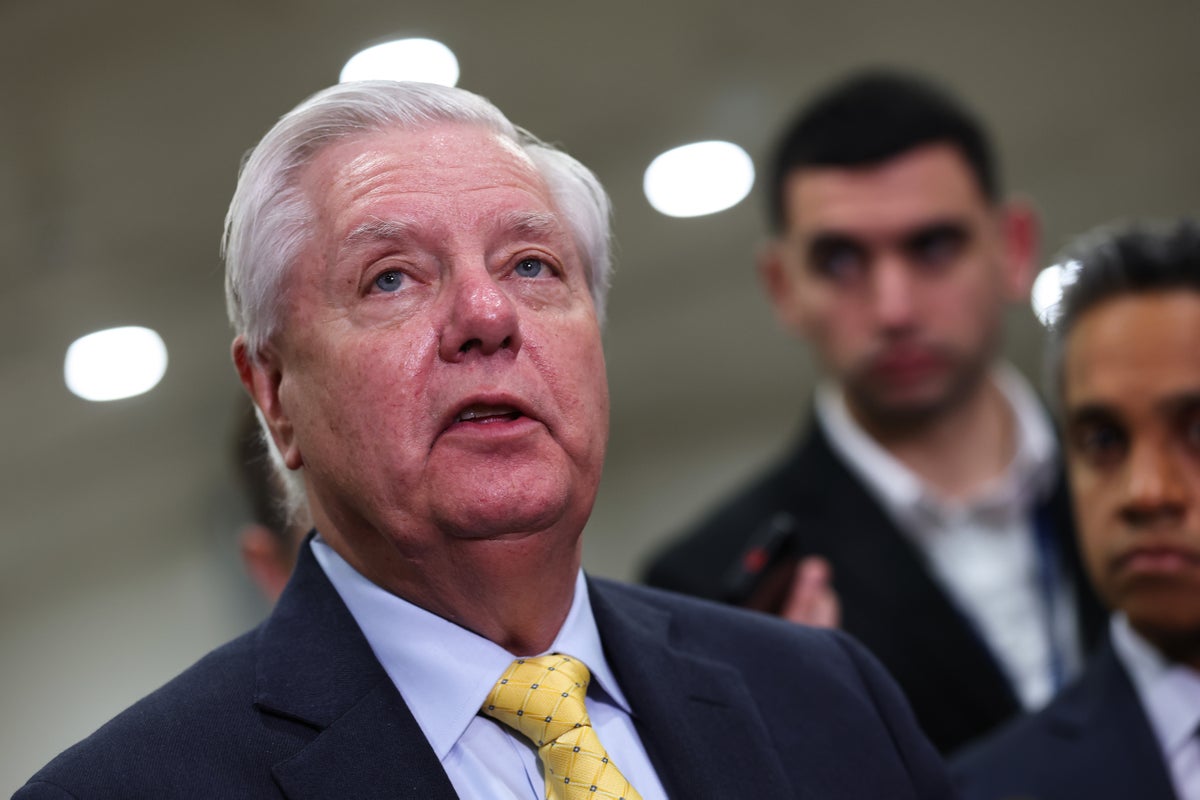
The cost of war is rarely measured in dollars until the bill arrives at the kitchen table. For Senator Lindsey Graham, that bill is currently $1 billion a day, a figure he recently dismissed on national television with the breezy confidence of a man who does not pay for his own gasoline. When Maria Bartiromo of Fox News pressed him on whether this staggering burn rate—and the resulting 27% spike in oil prices—would cost the Republican Party its majority in the 2026 midterms, Graham didn't just dodge the question. He redefined the math of political survival.
"Best money ever spent," Graham retorted. It is a line that will either be remembered as a masterstroke of conviction or the epitaph of the current GOP establishment. As the United States finds itself deeper in a hot conflict with Iran, the disconnect between the Senate’s hawkish wing and a restless, inflation-weary electorate has reached a breaking point.
The Architect of a New Middle East
Graham isn't just a supporter of this war; he is one of its primary engineers. For months, the Senator has been a frequent flyer to Tel Aviv, reportedly coordinating with Benjamin Netanyahu to "coach" the White House into a direct military confrontation. His logic is rooted in a 1930s-style moral clarity: he views the Iranian regime as "religious Nazis" and believes the only language they understand is the total destruction of their nuclear and economic infrastructure.
But the reality on the ground is messier than a cable news soundbite. While Graham speaks of "taking down" a regime, the Pentagon is reportedly stonewalling congressional requests for exact expenditure reports. Independent estimates suggests the first week of the campaign alone cost $6 billion. To Graham, these are "investments" that will eventually pay dividends when the Straits of Hormuz are secured and a "new Mideast" emerges. To a voter in the Midwest watching gas creep toward $120 a barrel, it feels like a forced donation to a global project they never voted for.
The Midterm Math Problem
The political risk is not merely about the dollar amount. It is about the optics of priority. Republicans have traditionally campaigned on fiscal responsibility and domestic stability. Now, the party finds itself defending a $1.5 trillion defense budget for 2027 while the White House seeks another $50 billion in emergency supplemental funding specifically for the Iran strikes.
The internal polling for the GOP has to be grim. While the party base generally supports a strong military, that support is not infinite. It becomes brittle when it competes with "affordability crises" at home. Graham’s strategy relies on a gamble: that the American public will tolerate economic pain if the victory is "decisive." However, modern history suggests "decisive" is a word rarely applicable to Middle Eastern conflicts. If the war drags into the summer of 2026 without a clear collapse of the Tehran government, the GOP may find itself defending a quagmire while Democrats run on a platform of "Bringing the Billions Home."
The Populist Fracture
Perhaps the most overlooked factor is the growing rift within the Republican party itself. The "America First" wing, which helped propel the current administration to power, is increasingly skeptical of Graham’s brand of interventionism. Figures like JD Vance have already labeled the current ceasefire as "fragile," and others in the House are beginning to question the endgame.
There is a deep irony in Graham’s position. He has spent years positioning himself as the ultimate Trump whisperer, yet his foreign policy is a throwback to the era of George W. Bush—an era many modern Republican voters thought they had left behind. By tying the party’s midterm hopes to the success of a $1 billion-a-day war, Graham is effectively holding the GOP majority hostage to the volatility of the global oil market.
Winning the War vs. Winning the Election
Graham’s recent rhetoric suggests he believes he can "make a ton of money" off this war in the long run. He envisions a post-war landscape where American influence is unchallenged and the Iranian threat is neutralized. This is the "why" behind his deflection. To Graham, the midterms are a secondary concern compared to the "once-in-a-lifetime" opportunity to redraw the map of the Middle East.
But voters don't live in the long run. They live in the pay-period. Every time a voter sees the price on a gas pump jump because of a new drone strike in the Persian Gulf, Graham’s "best money ever spent" sounds more like a taunt than a policy. The Senator may be right about the threat posed by Iran, but in politics, being right is often less important than being affordable.
As the April recess ends and Congress returns to face a $50 billion funding request, the true cost of Graham’s "investment" will start to show—not just in the federal ledger, but in the approval ratings of every Republican running for office. The GOP is no longer just fighting a war in the Middle East; they are fighting a war of perception at home, and the "best money" might just be the thing that bankrupts their political future.
The gamble is set. If Tehran falls by October, Graham is a visionary. If the war remains a "fragile" exchange of missiles and rising costs, the November results will likely be the most expensive lesson the party has ever bought.