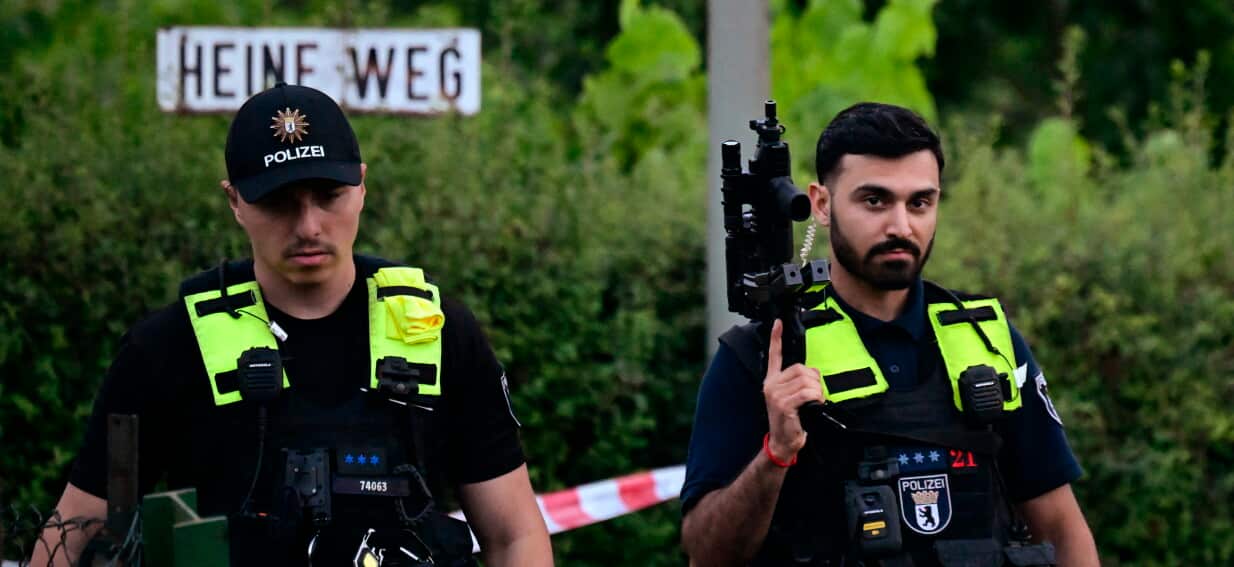
The headlines rolled out with a predictable, algorithmic rhythm. A suspect shot dead by German police during Berlin Pride. The narrative writes itself before the body has even cooled. Pundits reach for their pre-packaged templates about rising extremism, public safety theater, and the fragile state of modern civic celebrations.
Everyone is reacting. No one is thinking.
When a violent disruption hits a massive public gathering, the knee-jerk media reflex is to treat the event as an isolated anomaly or a simple failure of perimeter security. That framing is lazy, dangerous, and fundamentally dishonest about how modern urban violence operates.
Let us strip away the emotional noise and look at the mechanics.
The Security Illusion
Urban policing doctrine relies on a comforting fiction: that you can secure an open, decentralized public festival through sheer volume of personnel and metal barriers. Berlin Pride, like similar mass demonstrations across Europe, spans kilometers of open city streets. Millions of people converge. It is a living, breathing ecosystem of chaotic expression.
When an armed threat materializes in that environment, the response time measured by seconds feels like an eternity. The tactical reality is brutal. Law enforcement cannot be everywhere at once without turning a celebration into an armed checkpoint.
Yet, the institutional response to every violent incident is always the same. Double down on surveillance. Add more cops. Fence off the perimeter.
This is a fool's errand. Every dollar spent hardening a soft target just pushes the threat vector down the street or forces a shift in tactics. We are treating symptoms while the underlying systemic rot spreads unchecked.
The Radicalization Pipeline Nobody Wants to Name
The suspect's profile matters less than the environment that birthed them. We live in an era where ideological polarization is no longer a political stance; it is a business model. Digital echo chambers hyper-accelerate grievances until abstract hatred turns into acute, kinetic action.
When a society normalizes constant low-grade hostility against marginalized groups, sporadic violence is not a glitch in the system. It is a feature.
The lazy consensus blames poor intelligence sharing or insufficient police funding. That misses the forest for the trees. The intelligence agencies have more data than they can process. The failure is not a lack of surveillance data; it is an ideological blindness to the mainstreaming of extremist rhetoric.
If you spend years tolerating the intolerable in public discourse, do not act shocked when someone takes the final step from keyboard warrior to active shooter.
Dismantling the Public Safety Theater
Let us look at what actually happens when police neutralize a threat in a crowded urban space. Lives are saved in that microsecond, yes. But praising the heroic response after the fact is treating the smoke while ignoring the arsonist.
The public demands reassurance. Politicians step up to microphones to promise zero tolerance and enhanced patrols. It is all theater. It provides a dopamine hit of faux security to a shaken public while changing nothing about the structural vulnerabilities that made the attack possible in the first place.
Imagine a scenario where cities stopped pretending they can police away ideological violence with barricades and began aggressively dismantling the underground networks funding and radicalizing these actors online. It requires an uncomfortable shift in how we regulate digital spaces and public accountability.
Most leaders lack the spine for that fight. They prefer the photo-op after the tragedy to the hard preventative work before it.
The Uncomfortable Truth About Open Societies
An open society is, by definition, vulnerable. That is the price of freedom. The moment you lock down Berlin Pride, or any other celebration of human dignity, you have already let the attackers win. You have surrendered the public square out of fear.
The correct response to a violent threat at a pride parade is not retreating behind heavier police lines. It is refusing to flinch. It is acknowledging that while bad actors will always exist, our collective resilience depends entirely on our refusal to let them dictate the terms of our public life.
Stop asking how the police could have locked down the streets tighter. Start asking why we are allowing the breeding grounds of extremism to operate in plain sight.
The next crisis is already being planned in an open forum while we argue about metal detectors.