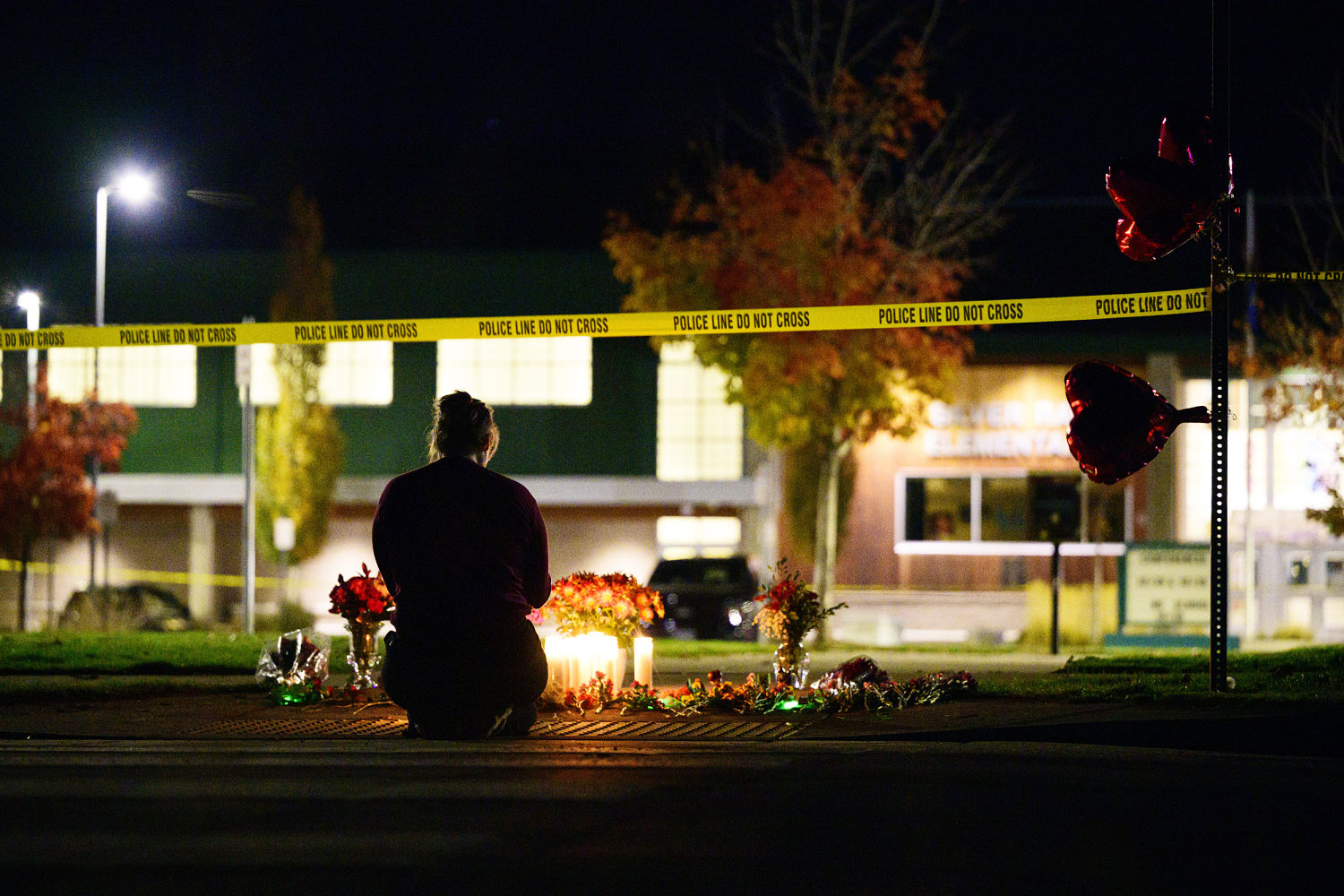
When a 16-year-old shooter walked onto the campus of Silver Rail Elementary School in Bend, Oregon on October 15, 2026, he didn't arrive as a stranger to the district. He was a former student. That single detail—that the gunman who killed three children and a teacher in a special education classroom once attended the school—cuts straight to the heart of why communities search for answers after mass violence.
People want to know how someone who sat in classrooms in Bend ended up armed with a 12-gauge pump-action shotgun and dozens of extra rounds. They also want to know what warning signs existed along the way. Early reporting focused on the immediate shock of a former student returning to an elementary school. Look closer at the timeline that emerged over the following weeks, though, and a harder story takes shape. Chronic absenteeism, dropping out, online extremism, and a fraying safety net all collided long before October 15.
How a Former Student Became the Gunman
Investigators identified the shooter as 16-year-old Griffin J. John II. He had previously attended Silver Rail Elementary School before moving on through the local system and later dropping out of Bend Tech Academy in November 2025. According to reporting by The Source, his attendance troubles started as early as fourth grade, when he was unenrolled for more than a month, with further extended absences appearing in seventh grade and later years.
Police records obtained after the shooting also indicated that John had allegedly been assaulted twice as a child and experienced bullying at school. Five days after the attack, the FBI stated that investigators had reason to believe he may have developed an obsession with Nazism and possibly interacted with extremist groups such as 764.
None of those pieces alone predicts a school shooting. Plenty of kids struggle with bullying, skip school, or drop out without ever hurting anyone. Still, when a former student carries out an attack on an elementary school—especially a special needs room where three children, ages 5, 8, and 11, and a teacher were killed, and another student and teacher were injured—it forces uncomfortable questions about what happens when a young person slips out of view.
What Happened Inside Silver Rail Elementary
The attack unfolded in just a few minutes on a Thursday afternoon, between roughly 12:59 p.m. and 1:02 p.m. Pacific time. John shot his way through locked doors to get inside, firing up to 15 rounds during the rampage while carrying 44 additional rounds concealed on his person or in a backpack.
Inside the classroom, teachers fought back with whatever they had. Teacher Becky Drury was shot at close range in her left hand and right arm as she tried to shut the door, and she later said she pretended to be dead so he wouldn't shoot her again. Teacher Cassidy Schutz threw her mobile phone at the gunman and tackled him.
Kaylub Giamanco, a father whose two daughters attended Silver Rail Elementary, was passing by on his lunch break when he saw a teenager with a shotgun firing toward another driver near the school. After telling a 911 operator he had to go in because people were going to die, Giamanco grabbed a .40-caliber handgun from his truck, entered the building through shattered glass panels, and fatally shot John as the teen reached for his shotgun.
In the days and weeks that followed, Giamanco spoke publicly about his grief for the children he couldn't save and called for stronger school security, school resource officers at every site, and better access to mental health care. Across Bend, neighbors raised more than $2 million through community efforts—including major drives by local businesses and a November tattoo fundraiser—while attorneys announced reviews into potential systemic failures involving school security, firearm access, and how the attack occurred.
Why Chronic Absence Is More Than a Truancy Metric
One of the sharpest takeaways from the Bend investigation isn't about campus locks or metal detectors. It's about what happens before a student ever walks back onto school grounds with a weapon.
Oregon has struggled for years with high rates of chronic absenteeism, and local leaders didn't dodge that reality after the shooting. Bend-La Pine School Board chair Amy Tatom said plainly that the safety net failed and wasn't strong enough to support vulnerable students and families, noting that dips in attendance are a warning sign. Oregon Governor Tina Kotek, who had visited Silver Rail about a year earlier—roughly a month before John left school for good—said officials were awaiting full investigative findings before drawing policy conclusions.
Here's what I've seen in communities grappling with youth violence and school disengagement: people often treat attendance like a bureaucratic checkbox until something terrible forces them to look at the human story behind the spreadsheet. When a child disappears from school rolls for weeks at a time in middle school or drops out in high school, schools lose daily eyes and ears.
At the same time, privacy laws restrict what districts can share publicly about an individual student's records, and state and federal researchers have long noted that no single risk factor explains targeted violence. A sharp drop in attendance can signal family instability, untreated trauma, mental health crises, or isolation online—but it can also happen for reasons that have nothing to do with violence. Honest analysis means holding both truths at once: chronic absence is a real red flag for disconnection, yet it isn't a crystal ball.
The Blind Spot Between School Doors and Online Extremism
Another layer that deserves straight talk is how offline isolation and online networks feed each other. Investigators pointed to possible ties with extremist spaces like 764 alongside an obsession with Nazism. Law enforcement and extremism researchers have increasingly tracked how online nihilistic and extremist groups target lonely, troubled, or alienated youth—sometimes encouraging self-harm or real-world violence.
When a teenager isn't tethered to teachers, coaches, counselors, or peers in the physical world, their digital world can become an echo chamber with zero friction. Parents and educators often feel outmatched here, and honestly, it's easy to see why. Teens move across encrypted chats, gaming platforms, and shifting subcultures faster than most adults can keep up.
Still, waiting for a tip or a crisis intervention after a kid has already spiraled is a losing strategy. Early support works best when schools, families, and mental health providers stay connected during those messy middle years—not just when a student hits a breaking point.
Practical Steps for Parents, Schools, and Communities
You can't fix a tragedy with slogans, and pretending there's a single silver bullet won't keep kids safe. What you can do is tighten the everyday habits and community systems that catch struggling young people earlier.
- Treat sudden attendance drops as a conversation starter, not just a rule violation. If a student misses repeated days or weeks, reach out with curiosity and support rather than only punitive notices, and ask what's getting in the way at home or with peers.
- Ask direct, calm questions about online spaces and isolation. Instead of scanning phones in secret and sparking a blowup, talk regularly about who your teen talks to online, what content makes them angry or numb, and whether they feel respected at school.
- Secure firearms completely and verify safe storage. Whenever a teen or young adult with emotional struggles, anger, or past trauma lives in or visits a home, locked, separate storage for guns and ammunition isn't optional—it's basic prevention.
- Push for real mental health capacity alongside physical security. Locking doors and stationing officers matter to many families and leaders, yet pairing physical safeguards with accessible counselors and family outreach addresses the root distress before a crisis starts.
- Follow official investigative releases carefully and resist rumor cycles. In the aftermath of a shocking attack, early claims about motives, backgrounds, or security gaps often shift as police and federal investigators review records—stick to verified updates from agencies like the FBI and reputable local outlets.