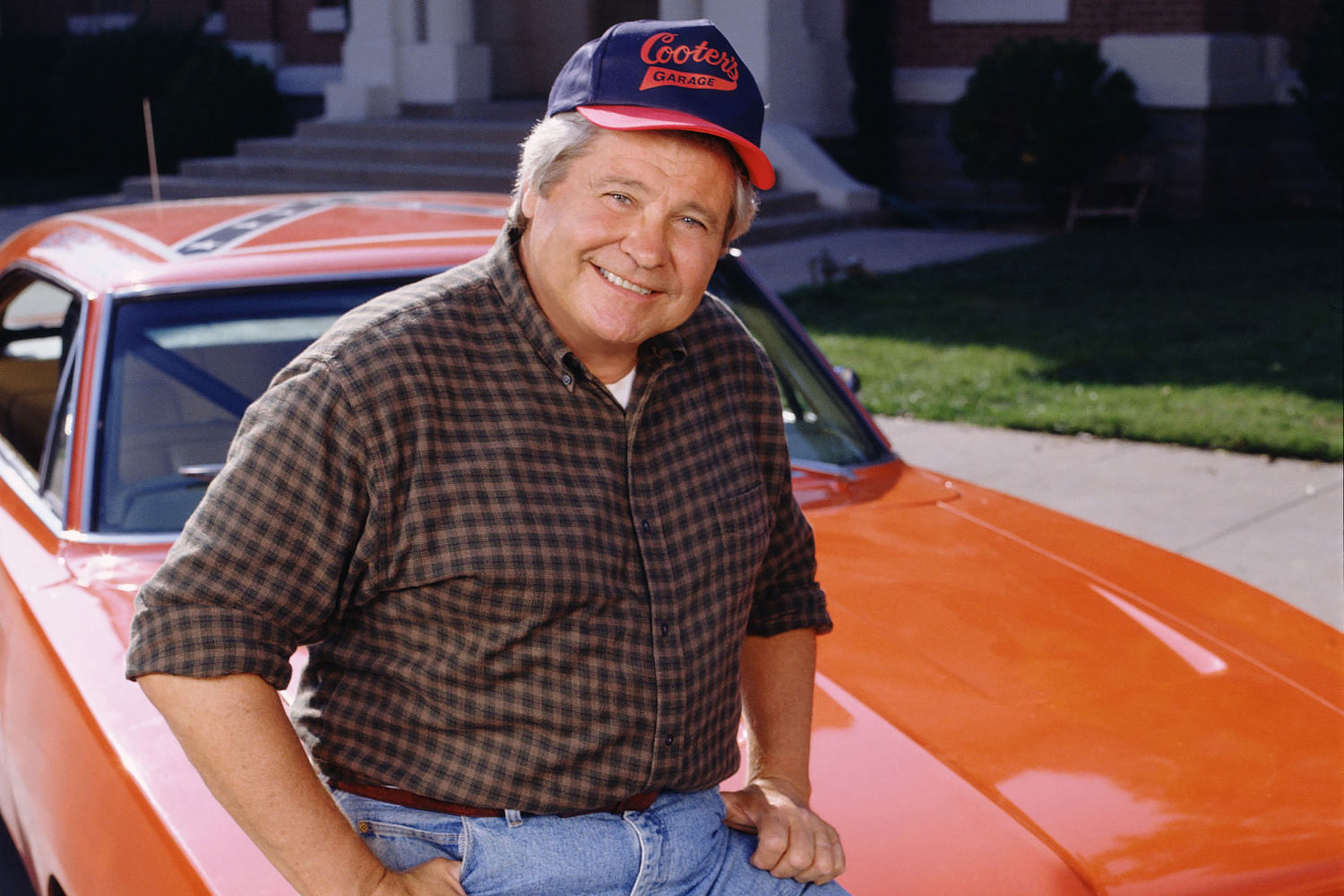
Ben Jones didn't just play a country mechanic on television. He lived a life that took him from a railroad shack without indoor plumbing straight to the floor of the United States Congress.
When news broke that Jones died at age 84 from a massive heart attack at his home in Virginia, tributes poured in for the man who brought Cooter Davenport to life on The Dukes of Hazzard. But reducing Jones to a fictional auto mechanic who fixed up the General Lee misses the entire point of his remarkable existence. He was a civil rights activist, a two-term U.S. congressman, a fierce political brawler, and a preservationist who kept a pop-culture phenomenon alive for decades.
Let's look at the real story behind a man who defied every single box people tried to put him in.
From Poverty to the Carolina Playmakers
Long before he was tangling with Boss Hogg on television, Ben Jones faced a hardscrabble childhood. Born in Edgecombe County, North Carolina, in 1941, he grew up in a railroad section house in Portsmouth, Virginia. His family home lacked electricity and indoor plumbing.
He worked odd jobs as a kid just to sock away enough money for college. That grind paid off when he entered East Carolina College and later transferred to the University of North Carolina at Chapel Hill. It was at UNC that he caught the acting bug, joining the historic Carolina Playmakers.
Those formative years weren't just about theater. During the turbulent 1960s, Jones dove headfirst into the civil rights movement. He participated in dangerous lunch counter sit-ins and survived multiple attacks by the Ku Klux Klan. That early courage shaped his worldview long before he ever stepped foot inside a TV studio or a government office.
Becoming Cooter Davenport
By the late 1960s and 1970s, Jones was grinding it out in regional theater and scoring small film roles, including appearances in hits like Smokey and the Bandit and The Bingo Long Traveling All-Stars & Motor Kings.
Then came the role that defined his pop-culture legacy. In 1979, casting directors brought him on as Cooter Davenport for a new CBS action-comedy about two Georgia cousins outrunning the law. The Dukes of Hazzard became an absolute juggernaut. At its peak, the show pulled in roughly 40 million weekly viewers, trailing only Dallas in the ratings.
As Cooter, the lovable grease-monkey and honorary Duke cousin, Jones appeared in 141 episodes across seven seasons. While other actors might have grown tired of being typecast, Jones leaned into the identity. He loved the fans, and he loved the community the show created.
Trading Hollywood for Capitol Hill
Most actors stay in Hollywood once they hit it big. Jones took a sharp left turn.
Capitalizing on his massive public profile, he jumped into politics as a Democrat. After an initial narrow defeat in 1986 against incumbent Pat Swindall in Georgia's Fourth Congressional District, Jones returned in 1988 and won in a landslide. Swindall had been indicted on perjury charges involving an undercover sting, and Jones captured the public's desire for a shakeup.
He served two terms in the U.S. House of Representatives. He sat on the Committee on Veterans' Affairs and the Public Works and Transportation Committee, working behind the scenes as a Democratic whip. He wasn't just a celebrity novelty act playing politician; he took the job seriously and threw himself into constituent work.
When redistricting altered his district ahead of the 1994 election, Jones faced off against Newt Gingrich. He lost that race, but his political impact didn't end there. Jones filed meticulous ethics charges against Gingrich. That battle dragged on, eventually leading to Gingrich being reprimanded by the House and ordered to pay heavy reimbursement costs—a feud that played a major role in reshaping modern American political history.
Keeping Hazzard County Alive
After his time in Washington, Jones didn't disappear. He returned to acting occasionally, showing up in films like Primary Colors and Meet Joe Black, but his primary mission became preserving the legacy of the show that made him famous.
Alongside his wife, Alma Viator, he opened "Cooter's Place," a collection of museums and shops dedicated to The Dukes of Hazzard located in locations like Luray, Virginia, and Nashville, Tennessee. For decades, these spots served as meccas for die-hard fans, complete with replica cars, memorabilia, and live music performances from Jones and Cooter's Garage Band.
He also remained fiercely protective of the show's cultural footprint. When networks and merchandising companies began distancing themselves from the Confederate battle flag displayed on the roof of the General Lee, Jones pushed back publicly. He argued that the show was fundamentally about anti-authoritarian populist rebellion and love for rural family values, not malice. Whether people agreed with his stance or not, nobody could ever accuse Ben Jones of backing down from a fight.
A Quiet Exit
According to his wife Alma, Jones spent his final moments the way a lot of us hope to—relaxing at home in his favorite chair, waiting for a baseball game to start. He was waiting for the Atlanta Braves to take on the Yankees.
Tom Wopat, who played Luke Duke, remembered him as a fierce advocate and a loyal friend. Millions of viewers remember him as the guy who could fix any engine in Hazzard County. But the real legacy of Ben Jones is much larger than television syndication or campaign buttons. He lived a loud, authentic, completely unvarnished American life.
Take a cue from his playbook. Stop boxing people into single categories, and live your own story on your own terms.