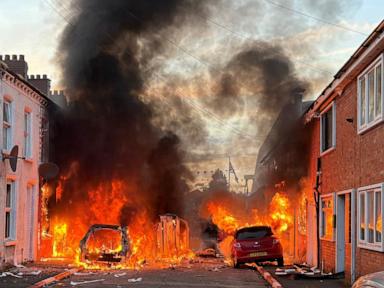
A graphic video clips through social media feeds, and within hours, streets are on fire. It's a pattern we've seen play out across the UK before, but when it happens in Belfast, the undercurrents are vastly different, older, and much more volatile. The brutal knife attack in North Belfast on Monday night has quickly evolved from a horrific localized crime into a full-blown security crisis, exposing raw tensions over immigration, border controls, and community safety.
When 30-year-old Sudanese national Hadi Alodid appeared via video link at Belfast Magistrates' Court on Wednesday morning, he faced charges of attempted murder, possession of a weapon, and threatening to kill a hospital worker. But outside the courtroom, the narrative had already been hijacked. A night of intense anti-immigrant rioting left burned-out buses, targeted homes, and terrified families in its wake. It's a stark reminder of how fast online outrage translates into physical violence in a city that knows street disorder all too well.
The Courtroom Reality Behind the Outrage
The details that emerged during Alodid’s brief court appearance paint a chilling picture of the assault on Kinnaird Avenue. The victim, Stephen Ogilvie, a man in his 40s, suffered life-altering injuries. Detective testimony revealed that the attack was so severe it blinded Ogilvie in his left eye, leaving him with deep slash wounds across his face, head, and back.
When the Police Service of Northern Ireland (PSNI) arrived at the scene, they found Alodid still on top of the victim, armed with a kitchen knife. Later, while receiving treatment for a hand injury at a local hospital, Alodid reportedly told NHS staff, "I've killed someone, I don't know if they are dead," before threatening to kill a radiographer. Accompaniad by an Arabic interpreter, Alodid refused legal representation, entered no plea, and was denied bail by Judge Steven Keown, who remanded him in custody until July 8.
The court hearing also shed light on a crucial detail fueling the political firestorm: the suspect's immigration status. Chief Constable Jon Boutcher confirmed that Alodid is a Sudanese asylum seeker who arrived in Belfast by bus from Dublin in February 2023, having previously flown to the Irish capital from Paris. He was granted a five-year permit to remain in the UK in September 2023. Boutcher emphasized that Alodid had no prior record on national security databases and wasn't known to local police.
How a Street Attack Ignited a City
The speed of the escalation tells you everything you need to know about the current volatility in Northern Ireland. Almost immediately after the attack, graphic footage showing a man straddling and repeatedly slashing another person hit social media. High-profile far-right figures, including Stephen Yaxley-Lennon (who goes by Tommy Robinson), seized on the clip to call for mass demonstrations.
The response on Belfast's streets was immediate and destructive. Groups of masked youths and men in dark hoodies blocked roads, hurled objects at police armored vehicles, and set fire to trash bins, cars, and a public bus in East Belfast.
More alarmingly, the violence turned directly against immigrant communities. Riots targeted homes believed to belong to foreign nationals, forcing firefighters to rescue terrified residents from burning buildings. Chief Constable Boutcher noted that families—including one with a baby—had to be evacuated to police stations for their own safety. The violence wasn't just isolated to minority neighborhoods; it bled into mixed areas, disrupting ordinary citizens who had nothing to do with the political gridlock.
For long-term residents of foreign descent, the night was pure terror. Anselme Shima, a resident originally from the Democratic Republic of Congo who has lived in Belfast for nearly a decade, described watching smoke rise near his home, wondering if his family would be targeted next. Local community leaders and church projects spent the night urging congregations to stay indoors, secure their homes, and ignore unverified online rumors.
The Broader Context of Discontent
You can't look at the Belfast riots in a vacuum. They come on the heels of intense racial friction across the Irish Sea. Just last week, Southampton, England, saw violent clashes following the murder of university student Henry Nowak. In that case, a British Sikh man, Vickrum Digwa, used a traditional dagger to kill Nowak and then falsely claimed to police that he was the victim of a racist assault. The subsequent sentencing sparked massive protests outside hotels housing asylum seekers in England, with demonstrators carrying signs reading "Illegal Migration Is Destroying Our Civilisation."
In Northern Ireland, this unrest hooks into pre-existing anxieties. It has been a year since racially motivated riots shook the region following a separate high-profile sexual assault case. The recurring nature of these flashpoints suggests that the underlying anger isn't fading; it's simply waiting for a spark.
Political Fallout and the Border Question
The incident has triggered a fierce political debate that cuts right to the heart of the UK's complex relationship with the Republic of Ireland. Because Alodid traveled from Paris to Dublin, and then took a routine bus across the open border into Belfast, unionist politicians are demanding answers.
Gavin Robinson, leader of the Democratic Unionist Party (DUP), wasted no time calling for stricter measures to curb what he termed "uncontrolled immigration." The open border between Northern Ireland and the Republic of Ireland—a fundamental pillar of the Good Friday Agreement—is once again under intense scrutiny. Critics argue that the lack of hard checkpoints makes the region a soft entry point for asylum seekers looking to move from the EU into the UK.
On the other side of the political spectrum, leaders from Northern Ireland's power-sharing government, including First Minister Michelle O'Neill of Sinn Féin, strongly condemned the rioting. O'Neill branded the actions of the masked mobs as "disgusting cowardice," arguing that burning families out of their homes has absolutely nothing to do with legitimate community concern. Justice Minister Naomi Long took aim at social media agitators, stating that external actors who couldn't find Belfast on a map are actively weaponizing the genuine fears of local people to sow chaos.
British Prime Minister Keir Starmer also weighed in, calling the original knife attack "sickening" and labeling the subsequent street violence completely unacceptable. The government's stance is clear: the police need space to investigate without the interference of lawless disorder. Meanwhile, Reform UK’s home affairs spokesperson, Zia Yusuf, used the incident to attack both Tory and Labour immigration policies, reiterating calls for a total visa ban on individuals traveling from Sudan.
De-escalation and Practical Steps for Communities
While politicians trade blame, the immediate priority on the ground is preventing another night of escalating violence. Judge Keown took the unusual step during Wednesday's court proceedings to issue a direct warning to anyone planning to attend upcoming masked protests, stating clearly that anyone participating in violence can expect to go straight to prison.
For residents and community groups navigating this tense environment, relying on clear, actionable steps is vital for personal safety and neighborhood stability:
- Verify Information Before Sharing: The Belfast riots were supercharged by the rapid dissemination of graphic video and unverified claims online. Avoid sharing unconfirmed reports of incidents or protests on WhatsApp, X, or Facebook, as this directly contributes to panic and mob mobilization.
- Engage with Local Support Networks: Minority communities and residents in affected areas should maintain direct contact with local community support groups, multi-cultural centers, and the PSNI's neighborhood policing teams to receive accurate safety updates.
- Report Intimidation Immediately: Any signs of targeted harassment, unusual gatherings, or criminal damage should be logged immediately with emergency services rather than handled through community confrontation, which can inadvertently escalate a situation.
The coming days will test the resilience of Belfast's community relations. While the court processes Hadi Alodid’s case, the city itself faces the harder task of cooling down an environment where old divisions and new anxieties have dangerously collided.
The video below offers an on-the-ground report from Belfast during the height of the unrest, detailing the physical destruction and the immediate response from local authorities.


