Ballistic evidence rarely offers tidy resolutions. When forensic technicians confirmed that the firearm recovered from a teenage shooter in Seattle did not match the fatal rounds extracted from two festival victims, the public experienced a jarring dissonance. How can a suspect be caught with a weapon at a chaotic crime scene, yet science separates that specific firearm from the fatal injuries?
The reality of urban gun violence investigation is rarely cinematic. Firearms recovery, ballistic fingerprinting, and trajectory reconstruction involve a messy overlap of panic, shifting crowds, and physical evidence that gets easily compromised. Police departments manage these high-pressure cases under a microscope, forced to balance public transparency with the agonizingly slow pace of laboratory analysis. When initial reports suggest a neat package, the subsequent unraveling of those assumptions leaves communities grasping for accountability.
Understanding this forensic disconnect requires looking closely at how municipal law enforcement handles mass panic events, what ballistic matching can and cannot prove, and the persistent gaps that emerge when multiple shooters or chaotic crossfire enter the equation.
The Anatomy Of A Festival Chaos Scene
Public spaces present a worst-case scenario for criminal investigators. A crowded street festival brings together thousands of moving targets, dense sound reflections, and immediate mass exodus. When shots ring out, the immediate human reaction is survival, not scene preservation.
First responders face an impossible calculus. They must triage the wounded, secure the perimeter, and locate potential threats while hundreds of witnesses move away from the danger zone. By the time investigators begin mapping the ground, footprints have trampled crucial evidence, brass casings have been kicked across pavement, and discarded items have been picked up or displaced by panicked bystanders.
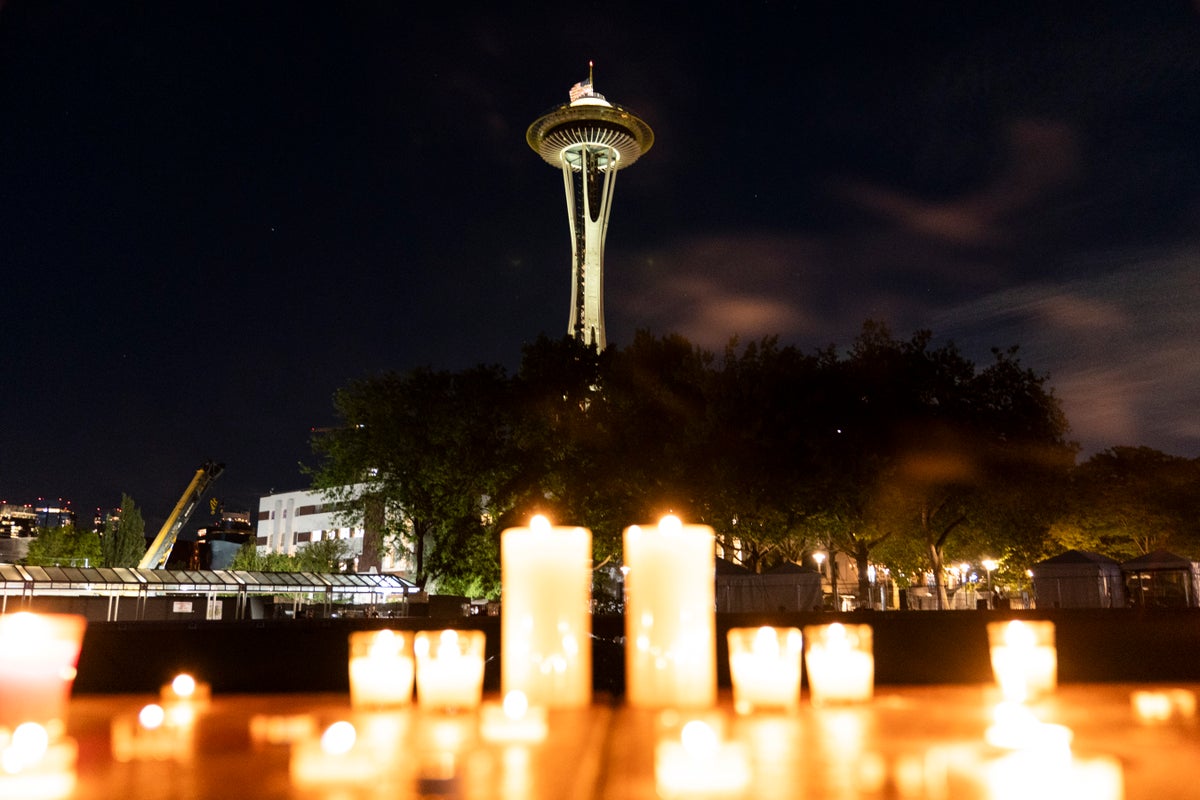
In the Seattle festival incident, a teenage suspect was apprehended with a firearm. In the heat of an active threat response, the physical recovery of a gun from an individual near the scene creates an immediate presumption of guilt regarding the total carnage. Yet, criminal procedure demands a separation of proximity from causality.
Physical proximity to a crime does not equal the discharge of the fatal weapon. In dense urban disturbances, secondary actors, accomplices, or completely separate armed individuals often exploit the confusion. When ballistic testing comes back negative—meaning the microscopic striations on the recovered bullets do not match the rifling characteristics of the suspect's gun—the investigation instantly shifts from a straightforward prosecution to a complex multi-variable puzzle.
The Science And Limits Of Ballistic Fingerprinting
Popular media has conditioned the public to view ballistics as an infallible science akin to a genetic fingerprint. Television dramas suggest a firearms examiner can look at a bullet under a microscope and instantly name the exact gun it came from with zero margin for error.
The physical reality is far more nuanced.
When a firearm discharges, the internal components leave unique marks on the softer metal of the bullet and cartridge casing. Investigators look at two primary categories of evidence.
- Class characteristics: The general layout of the barrel, including caliber, number of lands and grooves, and the twist direction. These features narrow down the make and model of the weapon, but thousands of manufactured guns share identical class characteristics.
- Individual characteristics: Microscopic imperfections, wear patterns, and tool marks left inside the barrel during the manufacturing process or through subsequent use. These are what forensic experts attempt to match to a specific weapon.
However, several factors can compromise this matching process. Deformed or fragmented bullets recovered from human tissue often lack sufficient pristine surface area for a definitive comparison. Furthermore, if a weapon's barrel is swapped, modified, or subjected to extreme wear, those microscopic signatures change.
When Seattle police announced that the teenager's gun was not linked to the bullets that killed the two victims, it meant the laboratory analysis found insufficient or contradictory microscopic alignment between the recovered rounds and the test fires from the suspect's recovered firearm. This technical distinction leaves open several uncomfortable possibilities.
Did the teenager fire a weapon that missed entirely? Did they fire a different caliber? Or was there a second shooter operating in the vicinity whose weapon discharged the fatal rounds and has yet to be recovered?
Multiple Shooters And The Shadow Of Crossfire
The specter of multiple shooters in urban public violence haunts modern law enforcement. When crowds panic, distinguishing the crack of a primary suspect's weapon from return fire, defensive discharge, or independent crossfire becomes nearly impossible for human witnesses.
Investigators rely on acoustic gunshot detection technology, private security cameras, dashcams, and cell phone footage uploaded to social media. Piecing these digital fragments together takes weeks of painstaking frame-by-frame analysis.
If multiple individuals discharged firearms during the Seattle festival, the timeline fractures. A suspect might be guilty of reckless endangerment, unlawful possession of a firearm, or assault, even if their specific bullets did not cause the fatalities. Prosecutors face a formidable challenge in these scenarios. They must construct a narrative that accounts for missing weapons, conflicting ballistic reports, and the collective terror of a mass event without relying on a single, clean forensic smoking gun.
The public often conflates charges. An arrest for a shooting does not automatically equate to a murder conviction for every casualty incurred during the incident. When the state's forensic evidence complicates the narrative, public trust wobbles. Communities demand swift justice, while the justice system is built to operate with methodical, sometimes frustrating slowness to ensure accuracy.
The Accountability Gap In Modern Policing
Transparency during high-profile violent crimes creates a delicate tightrope for police public information officers. Release too little information, and rumors fill the vacuum, breeding distrust and speculation. Release details too early, and preliminary findings—such as initial assumptions about a recovered weapon—must later be walked back or heavily qualified as laboratory results trickle in.
The Seattle festival case highlights this friction. The public hears about an arrest and a recovered firearm, locking that image into their collective memory. When subsequent forensic analysis reveals that the gun did not fire the fatal rounds, laypeople often misinterpret this as incompetence or a failing case, rather than standard scientific rigor at work.
In truth, discovering that a suspect's gun doesn't match the fatal bullets is a routine development in complex criminal investigations. It forces detectives to widen their net, re-interview witnesses with specific timeline queries, comb through digital evidence for discarded secondary firearms, and examine whether accomplices managed to flee the scene undetected.
The investigation does not end with a negative ballistic match; it pivots. It demands a deeper excavation of the minutes leading up to the tragedy, mapping the exact physical positions of individuals within the crowd, and determining the precise sequence of events that turned a public gathering into a site of loss.
As the legal process grinds forward, the focus shifts from the initial shock of the arrest to the structural integrity of the evidence. The missing link between the teenager's gun and the fatal wounds is not a dead end, but a glaring indicator of how much remains hidden beneath the surface of urban gun violence.