A 15-hour hostage crisis in downtown Bakersfield ended with a flash of tactical intervention. Early Wednesday morning, FBI agents moved into a four-story office building on Chester Avenue, fatally shooting 41-year-old Anthony Scott Searles-Harris. He had barricaded himself inside the second floor, claiming to have explosives strapped to his chest. He didn't just hold the room; he tied up several of his ten victims.
The standoff disrupted a quiet afternoon just a block away from Bakersfield Police headquarters and City Hall. What looked initially like a standard bank robbery response quickly morphed into a highly volatile, politically charged siege. Local police, federal tactical teams, and bomb squads converged on the scene.
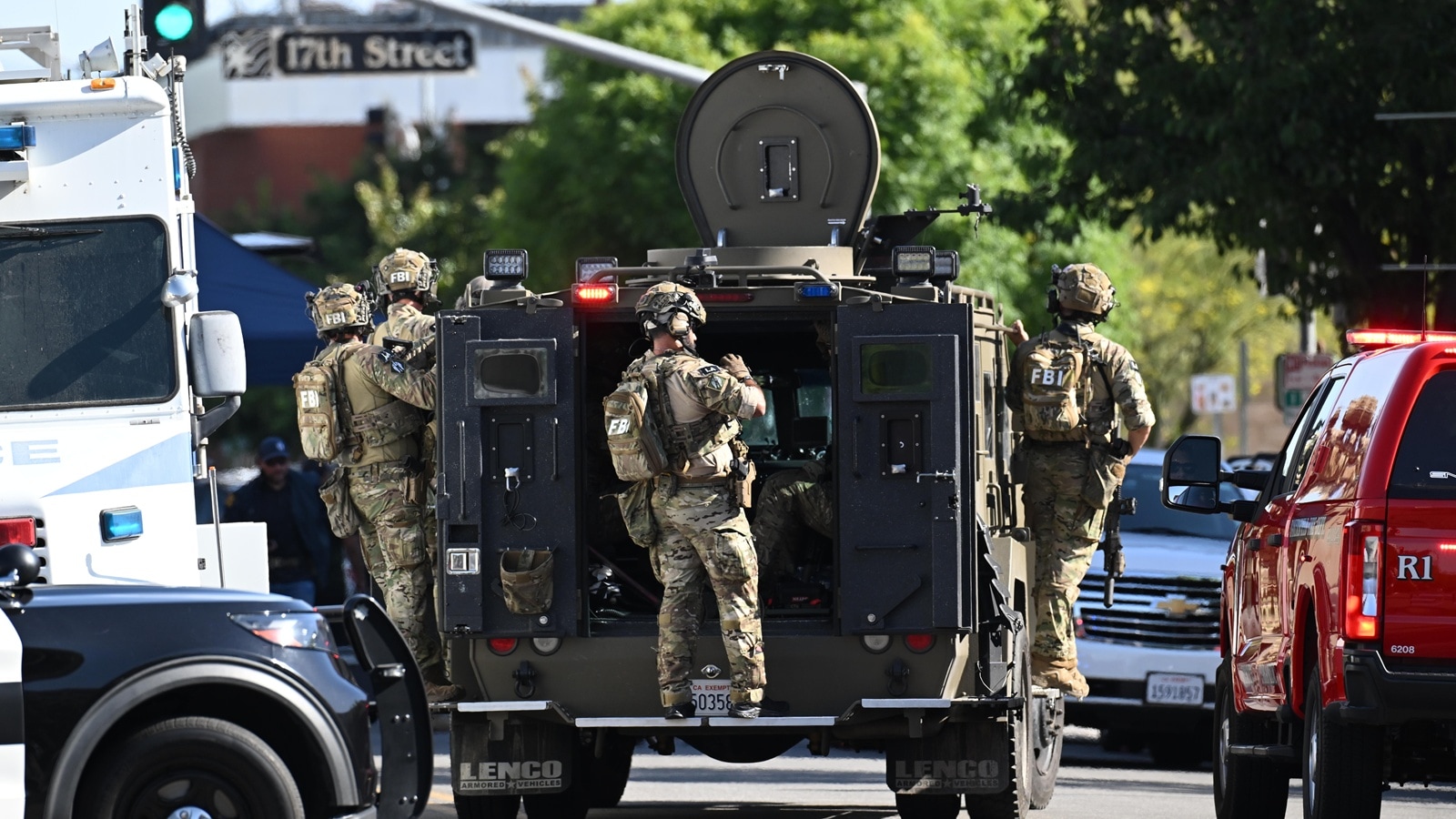
By 4:20 a.m., negotiations had broken down. The FBI's Hostage Rescue Team made the call to breach the building. While the suspect is dead, all ten hostages walked out physically unharmed. Here is exactly how the situation unfolded, the background of the gunman that law enforcement had to navigate, and why this specific operation required federal intervention.
Anatomy of the 15-Hour Standoff
The initial call came in to the Bakersfield Police Department around 12:59 p.m. on Tuesday. It was flagged as a bomb threat at the Chase Bank building at the corner of Chester Avenue and 17th Street. The building features dark-tinted windows, making visibility from the street incredibly difficult for tactical teams.
While the property bears prominent Chase Bank branding, the ground-floor bank branch was actually empty. The real target was upstairs. Searles-Harris had entered the offices of the Kern County Superintendent of Schools on the second floor. He took ten employees hostage, catching them completely off guard.
Bakersfield Police Sergeant Eric Celedon initially downplayed the term "hostage" during early afternoon media updates to manage public panic. He told local reporters he wouldn't use the "H-word" yet, though he acknowledged an unidentified male was inside with community members who were refusing to leave. Behind the scenes, the department deployed its entire operational toolkit. The SWAT team, a drone unit, a bomb squad, and gang units completely cordoned off the downtown grid.
Local authorities quickly realized they were dealing with someone claiming to have improvised explosive devices. They called in the FBI's Sacramento field office to take the lead on tactical entry. The surrounding blocks were completely evacuated, including key municipal buildings and local businesses. Dr. Jasmeet Bains, a candidate for California's 22nd congressional district, even canceled her election night watch party scheduled nearby to keep crowds away from the active perimeter.
The Suspect and the Motive Behind the Siege
As negotiators established phone contact with Searles-Harris, his true motives surfaced. This wasn't a financial heist. Assistant Police Chief Jeremy Blakemore later confirmed that the suspect's demands centered heavily around his past criminal record and grievances with the legal system.
Searles-Harris had a highly troubled history that made him an extreme risk to negotiators.
- He was an Army veteran who served roughly one year before receiving a dishonorable discharge for going absent without leave (AWOL).
- California Department of Justice records show he was a registered sex offender, following 2014 convictions for sexual crimes involving a child under 14. He served time and was released from prison in 2018.
- Local court records in Kern County show a trail of personal volatility, including recent divorce proceedings, a domestic violence petition, and a bitter legal battle over child guardianship.
During the phone negotiations, Searles-Harris expressed deep anger over how his previous cases were handled, explicitly criticizing his prior sentencing. He used his ten hostages as leverage to demand files and materials related to his old convictions.
He claimed that not only did he have explosives strapped to his body, but that he had also wired some of the hostages. This claim dramatically raised the stakes for the FBI team outside.
How the Standoff Ended
Throughout Tuesday evening, crisis negotiators managed to keep Searles-Harris talking. Their initial efforts yielded some success. He agreed to release one hostage in the late afternoon and a second person later that evening.
Outside, the tension was palpable. Local livestreamer Jacob Davidson, running a feed called Dad's Gone Live from a block away, captured chilling footage through the tinted second-story windows. His camera caught images of a female hostage rocking back and forth in distress before crouching low beneath a window frame. Later, two hands could be seen waving frantically for help.
As the hours dragged past midnight and into the early morning, the tone inside the room shifted. Searles-Harris grew increasingly volatile. Recognizing that the suspect had physically tied up multiple school district employees and believing the bomb threat to be an immediate danger, the FBI tactical unit decided to breach the room.
At 4:20 a.m., agents entered the second-floor office and shot Searles-Harris dead.
Special Agent in Charge Sid Patel later confirmed that the explosive devices Searles-Harris claimed to possess were being swept by bomb technicians, but early assessments indicated they were not a viable threat. An attorney who previously represented the suspect in a 2019 matter arrived at the scene during the standoff to offer assistance but was denied entry by law enforcement. The attorney later stated to independent news outlets that the device was likely a harmless prop, though tactical teams could not take that risk in real-time.
The Realities of Modern Hostage Resolution
This operation highlights a critical reality in modern law enforcement. When a suspect claims to possess explosives and begins physically binding captives, the timeline for peaceful negotiation shrinks rapidly. Command structures must balance the psychological manipulation of keeping a suspect talking against the physical threat of an immediate detonation.
The Bakersfield Police Department and the FBI successfully avoided casualties among the innocent. All ten school district employees were rescued, evaluated by medical personnel at the scene, and reunited with their families by Wednesday morning.
If you find yourself in a downtown area during an active law enforcement operation of this scale, your immediate steps matter.
- Avoid the perimeter entirely to give tactical vehicles clear lanes of movement.
- Do not attempt to film close-up tactical deployments, as live streams can inadvertently tip off a suspect monitoring social media from inside a building.
- Follow municipal evacuation orders instantly without trying to retrieve vehicles from locked-down parking structures.
The intersection of Chester Avenue and 17 Street will face significant road closures and a heavy police presence for the remainder of the week as federal investigators catalog the scene.