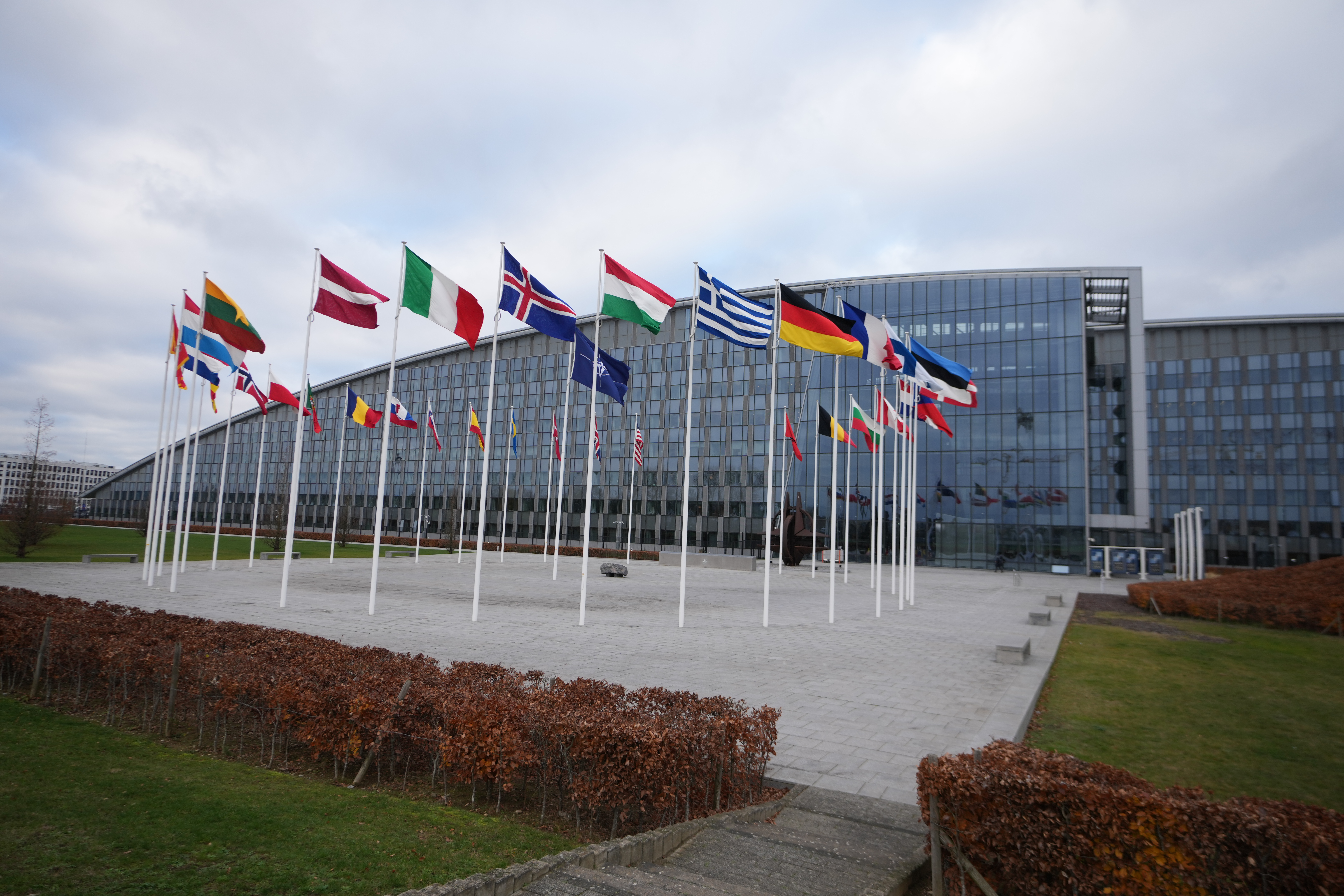
The security turnstile at NATO headquarters does not click. It hums. It is a soft, frictionless sound designed to blend into the background noise of bureaucracy, coffee cups, and quiet footsteps on polished stone. For thousands of analysts, translators, and military personnel entering the sprawling glass fortress in Brussels, that hum is simply the soundtrack of a Tuesday morning.
You swipe your badge. The light turns green. You walk forward.
Consider what happens next for a young person stepping into that world for the first time. The weight of the lanyard around your neck feels heavy, not because of its physical mass, but because of what it represents. You are inside the nerve center of the Western alliance. You are handling documents that map out the fragile architecture of global peace. To a twenty-something intern, fresh out of university and eager to prove their worth in a room full of generals and diplomats, that environment can be intoxicating.
It can also make you invisible.
That invisibility is precisely what the quiet mechanics of espionage rely upon.
Behind every grand headline about international intrigue lies a painfully human vulnerability. We imagine spies as cinematic figures exchanging briefcases in shadowy subway stations, but reality is far more mundane. Reality looks like a desk covered in paperwork, a flickering computer screen, and a young mind grappling with isolation, debt, or the desperate urge to belong.
Reports emerged that a Canadian intern working within the belly of NATO military headquarters had been arrested in Belgium on serious spying charges.
Stop for a moment and let that sink in. An intern. Not a hardened double agent with a lifetime of clandestine training, but someone who likely made coffee, formatted briefing packets, and stared blankly at spreadsheets while waiting for their shift to end.
How does a young life veer so sharply off course?
To understand, we have to look past the cold legal terminology of espionage statutes and examine the geography of modern loneliness. Brussels is a city of glass and corridors, filled with transient young professionals chasing prestigious credentials. They live in small apartments, navigate complex foreign bureaucracies, and often feel like impostors in rooms where history is being written. When someone is young, ambitious, and slightly unanchored, they are looking for a compass.
Sometimes, the wrong person offers to be that compass.
The mechanics of recruitment rarely begin with a demand for state secrets. They begin with attention. A friendly face at a local café. Someone who seems genuinely interested in the mundane frustrations of your daily workload. Someone who listens when you complain about the rigid hierarchy of military command. Modern intelligence operatives do not kick down doors; they slide quietly into the spaces where human beings feel unappreciated.
Gradually, the conversation shifts. A harmless question about office procedures turns into a request for a non-classified internal directory. A favor asked by a new friend becomes an obligation. Before the target realizes they are standing on thin ice, the ice has already cracked.
This is the hidden cost of our hyper-connected, high-stakes institutions. We build massive walls, deploy advanced encryption, and install state-of-the-art surveillance equipment at every doorway. Yet, we routinely overlook the human heart beating inside the perimeter.
Security clearance checks can comb through financial records, travel history, and criminal databases, but they cannot measure a person's resilience against manipulation. They cannot quantify how much pressure a twenty-something can endure before they break, or how easily their loyalty can be rented by someone offering validation.
When the Belgian authorities finally moved in to make the arrest, the operation was likely swift and clinical. A brief flash of realization in a quiet office. The sudden removal of a lanyard. The heavy click of a door closing from the outside.
For NATO, the breach triggers a frantic internal audit. Every document accessed, every meeting attended, every digital footprint evaluated to measure the extent of the damage. Security protocols will be tightened. Background checks will become even more intrusive. More rules will be written, printed, and filed away in cabinets.
Yet, rewriting a rulebook does not fix the underlying human equation.
As we watch the fallout from this investigation unfold across international news channels, the temptation is to view the accused through a lens of pure condemnation. It is easier to see villains than it is to see victims of circumstance who made catastrophic choices. But true understanding requires us to look closer at the conditions that allow these vulnerabilities to fester in the first place.
Institutions built on secrecy demand absolute discretion from people who are still figuring out who they are. They place immense power in the hands of the young and the impressionable, and then expect them to navigate a psychological minefield without a safety net.
The security turnstile at NATO headquarters continues to hum. New interns swipe their badges, step through the glass doors, and take their seats at desks that were empty just yesterday. They adjust their lanyards, open their laptops, and begin another day under the watchful gaze of history, unaware of the quiet shadows lengthening across the floor.