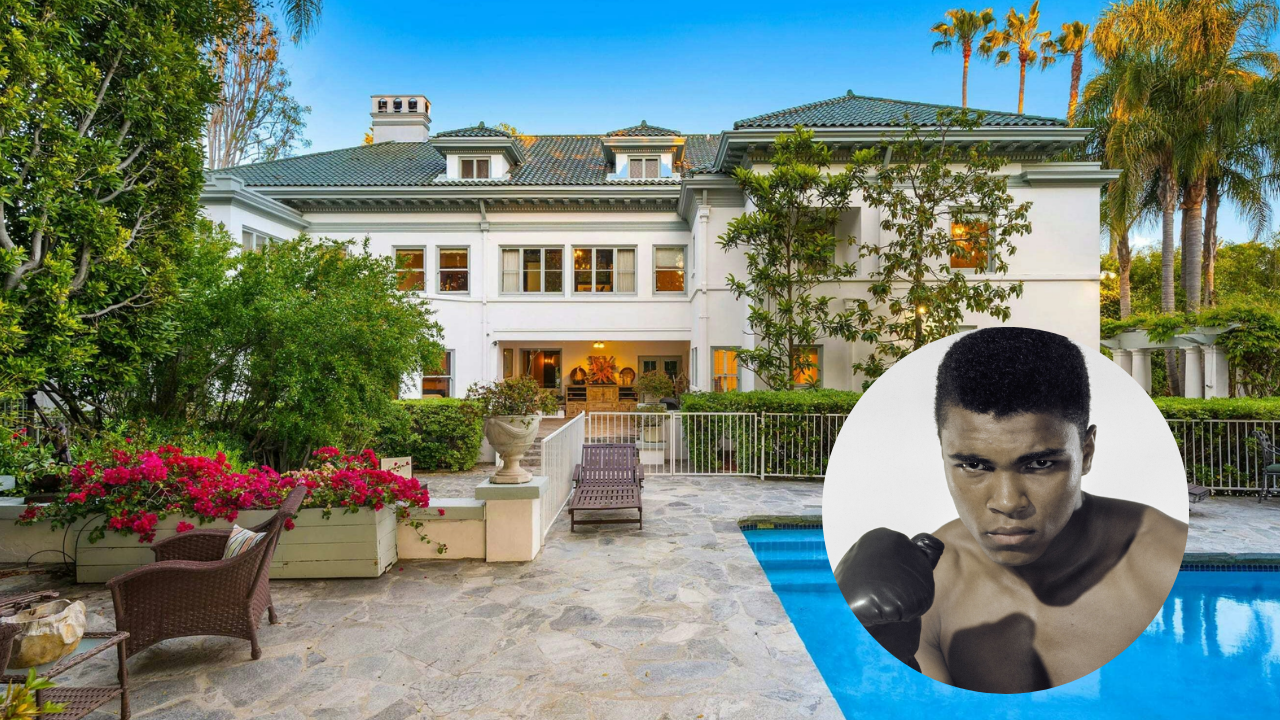
Real estate valuation in the celebrity domain is frequently distorted by emotional narratives, historical reverence, and media hyperbole. When a high-profile asset changes hands, market observers tend to focus exclusively on the nominal transaction price or the cultural identity of the former owner. This approach obscures the underlying economic mechanics that govern long-term asset appreciation, holding costs, and portfolio yield. Analyzing the 2001 acquisition of Muhammad Ali's former Los Angeles residence for 2.5 million dollars provides a case study in real estate capitalization, geographical arbitrage, and the hidden liabilities of architectural heritage.
Evaluating real estate transactions of this magnitude requires a shift away from biographical sentiment toward fundamental economic variables. Property appreciation is not a function of celebrity proximity; it is the mathematical result of land scarcity, municipal zoning constraints, capital expenditure efficiency, and macro-level interest rate environments. Deconstructing the economics of this specific transaction reveals the friction points between cultural capital and tangible asset performance.
The Economic Anatomy of Legacy Real Estate
Legacy properties carry a distinct valuation profile characterized by high sentimental premiums balanced against significant functional obsolescence. When an asset is tied to a historic figure, its initial market valuation often contains an intangible goodwill component. However, goodwill does not generate rental yield, nor does it offset maintenance expenditures.
The primary cost function of holding a legacy estate involves three distinct variables:
- Capital Expenditure (CapEx) Drag: Historic architectural styles and custom celebrity modifications rarely align with modern efficiency standards or contemporary buyer preferences. Upgrading electrical grids, HVAC infrastructure, and security frameworks requires capital injections that frequently outpace standard depreciation models.
- Opportunity Cost of Liquidity: High-value residential real estate ties up capital in a non-yielding or low-yielding asset class compared to equity markets or diversified fixed-income instruments. The nominal purchase price of 2.5 million dollars in 2001 represented a significant liquidity allocation that must be measured against alternative investment benchmarks over the identical holding period.
- Carrying Costs and Municipal Burdens: Property taxes, comprehensive insurance premiums for high-risk or high-profile structures, and specialized maintenance compound annually, creating a negative cash flow baseline that the asset must overcome through appreciation alone.
When these factors intersect, the true economic return of a celebrity estate diverges sharply from headline figures. The purchase price is merely the entry cost into a complex, capital-intensive holding structure.
Geographical Arbitrage and Micro-Market Dynamics
The Los Angeles residential market is not a monolith; it is a fragmented collection of micro-markets governed by localized supply constraints and zoning laws. The geographic positioning of the Ali residence places it within a high-demand urban matrix where land value consistently outpaces structural value.
In urban real estate economics, structural improvements depreciate over time due to physical wear and shifting design paradigms, while underlying land appreciates due to absolute scarcity. A 2.5 million dollar acquisition price in 2001 reflected a specific valuation of both components at a distinct point in the macroeconomic cycle.
Several structural forces drive micro-market appreciation in prime Los Angeles corridors:
- Zoning Elasticity: Municipal regulations that restrict new density artificially constrain supply, protecting existing asset values against broader economic corrections.
- Infrastructure Proximity: Access to primary commercial arteries, entertainment hubs, and executive nodes dictates the velocity of demand.
- Replacement Cost Margins: As construction labor and material costs inflate, the cost to replicate an existing structure from the ground up establishes a pricing floor for established properties.
The appreciation trajectory of a property purchased at the turn of the century cannot be attributed to the legacy of its former occupant. Instead, it is the direct outcome of monetary policy expansion, supply-side constraints in prime Los Angeles submarkets, and the general inflation of prime residential land values over a multi-decade horizon.
The Cost Function of Cultural Provenance
Market participants frequently miscalculate the liquidity profile of properties with strong cultural provenance. While a famous previous owner can generate initial press attention and widen the prospective buyer pool, it can simultaneously introduce friction during the disposition phase.
Celebrity custom builds often feature idiosyncratic layouts, hyper-personalized security fortifications, and non-standard architectural flourishes that appeal to a narrow demographic. When a subsequent buyer acquires the property, they must factor in the friction cost of remediation or complete structural reconfiguration to align the asset with current market demands.
The mechanics of this friction operate through a predictable sequence:
- Specialized Buyer Pool Reduction: The market of buyers willing to pay a premium for celebrity provenance is smaller than the market for structurally neutral, high-end real estate.
- Renovation Discounting: Prospective buyers discount their offers to account for the specialized demolition and remodeling required to neutralize the previous owner's design footprint.
- Carrying Cost Vulnerability: Because specialized properties take longer to clear the market, sellers face extended holding periods during which fixed carrying costs erode net realized returns.
Therefore, cultural provenance functions as a double-edged sword. It elevates initial public visibility but introduces idiosyncratic risk that can suppress liquidity and extend time-on-market metrics during exit cycles.
Capital Allocation Strategies for Legacy Assets
Optimizing returns in the high-end residential sector requires a disciplined approach to asset management that treats historical significance as a secondary factor to yield and structural integrity. Investors navigating properties with cultural footprints must implement structured operational frameworks to mitigate downside risk.
The first strategic imperative is decoupling emotional valuation from financial underwriting. Underwriting models must assume a zero-dollar premium for celebrity history, forcing the asset to justify its acquisition purely on land value, location metrics, and projected replacement costs. If the numbers fail without the narrative, the transaction is structurally flawed.
The second imperative involves establishing a strict CapEx budget that prioritizes infrastructure modernization over cosmetic preservation. Upgrading the mechanical, electrical, and plumbing systems protects the asset from accelerated functional obsolescence, ensuring that the property remains competitive within its local tier when the ownership lifecycle concludes.
Strategic capital deployment in prime real estate demands ruthless efficiency. The premium paid for a nameplate is a sunk cost; the long-term yield is determined entirely by how the asset is managed, maintained, and positioned within the broader macroeconomic landscape.