The asphalt on Williamson Street remembers what the city tried to wash away. For nearly two weeks, the intersection of South Baldwin and Williamson in Madison, Wisconsin, beat like a bruised heart. Tents pitched against the concrete, candles guttering in the wind, and a towering sculpture of a raised fist brought in solidarity from afar transformed a busy commercial thoroughfare into a sanctuary of grief.
It started with a gunshot. On July 22, Corey Ruiz, a 38-year-old unhoused man, died during a struggle with a Madison police officer just yards away from a popular neighborhood food co-op. Police stated that Ruiz produced a knife and injured an officer before a Taser failed and fatal shots were fired. Bystander video captured the violence, casting an immediate, harsh light on a progressive capital city that has long wrestled with deep racial and economic divisions.
What followed was not merely a protest. It was an occupation born of exhaustion.
The community gathered. They built a makeshift memorial that quickly metastasized into an encampment. Mattresses, grills, and supplies arrived. The intersection closed, freezing traffic and forcing local businesses to navigate an unprecedented standoff between municipal order and collective mourning. To the people standing watch, the tents were a physical manifestation of a demand that refuses to be ignored: accountability, systemic change, and a permanent space to honor a life extinguished.
To the city government, however, the blocked thoroughfare became an untenable disruption. Warnings escalated. Deadlines were drawn.
Then came the dawn.
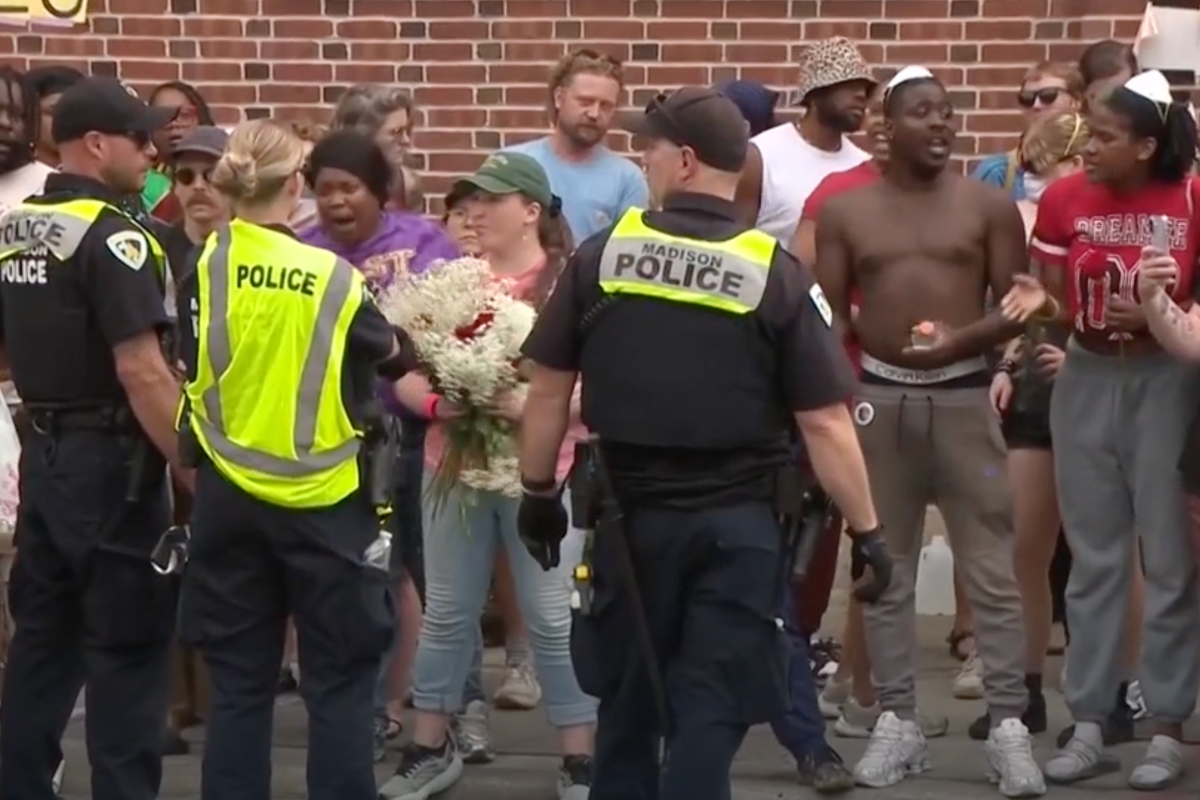
At five o'clock in the morning, under the cover of pre-dawn darkness, the confrontation materialized. City street sweepers and garbage trucks rolled in, backed by police officers in riot gear. Heavy machinery and utility vehicles cleared the asphalt. Activists reported that construction equipment plowed dangerously close to lingering residents as the makeshift village was dismantled.
Chaos followed. According to police accounts, objects and lit candles were thrown, and small fires were ignited. The atmosphere shattered. At least seven people were arrested, and more faced citations. Medical responders evaluated injuries, and city workers reported medical events amid the fray. By nine in the morning, the street sweepers had finished their work, traffic lanes reopened, and the physical remnants of the encampment were carted away or relocated to a nearby park.
Yet clearing a street does not clear the air.
When a community's pain is treated as an obstruction to be towed away, the underlying fracture only deepens. The tents are gone. The asphalt is clear. But the questions of how a society handles crisis, homelessness, and the ultimate use of force remain etched into the pavement, waiting for an answer that heavy machinery cannot sweep aside.
Watch coverage of the aftermath and community response on YouTube
This video provides an unfiltered look at the tensions between local officials and demonstrators following the fatal shooting of Corey Ruiz.