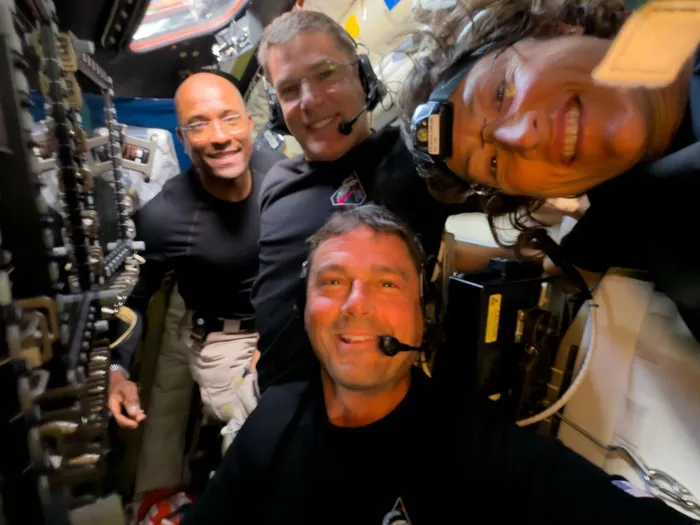
The success of the Artemis II mission is measured not by the splashdown itself, but by the physiological and mechanical integrity of the recovery system under high-velocity thermal stress. While public narratives focus on the relief of a safe return, the technical reality centers on the management of kinetic energy dissipation and the biological preservation of the crew during the transition from microgravity to a 1G environment. The recovery of the Orion spacecraft serves as a stress test for the Deep Space Transport Index, proving that the shielding and stabilization systems can protect human cargo during a lunar-return trajectory—a significantly more violent reentry profile than those originating from Low Earth Orbit (LEO).
The Reentry Energy Budget
The primary constraint of the Artemis II return was the dissipation of velocity. Returning from the Moon, Orion entered the atmosphere at speeds approaching 11,000 meters per second (approximately 25,000 mph). This is significantly higher than the 7,800 meters per second typical of a return from the International Space Station. The relationship between velocity and thermal load is not linear; it is exponential.
The "Skip Entry" maneuver utilized by Orion is a critical technical differentiator. By dipping into the upper atmosphere, "skipping" back out briefly, and then performing a final descent, the spacecraft spreads the thermal load over two distinct events. This reduces the peak heat flux and allows for a more precise landing target acquisition. The structural integrity of the Avcoat heat shield is the single point of failure in this calculation. As the resin-impregnated fiberglass ablated, it carried away the 2,760°C (5,000°F) heat, maintaining the internal cabin temperature at levels compatible with human life.
Physiological Re-adaptation and the Orthostatic Constraint
The "happy and healthy" status reported by recovery teams masks the complex biological recalibration occurring within the crew. After ten days in a microgravity environment, the human body undergoes rapid fluid shifts and vestibular decoupling.
The primary biological bottleneck upon splashdown is orthostatic intolerance. In microgravity, blood volume shifts toward the upper body. Upon reentry and the sudden reintroduction of gravity, this fluid pools in the lower extremities. Without immediate intervention—such as the use of G-suits or specific hydration protocols—crew members face a high risk of syncope (fainting).
- Vestibular Recalibration: The inner ear’s otolith organs, which sense gravity and linear acceleration, become hypersensitive or "miswired" during the mission. The transition to the rolling motion of a spacecraft in the Pacific Ocean often induces severe motion sickness, a factor that dictates the speed of egress.
- Muscular Deconditioning: While Artemis II was a short-duration mission compared to six-month stays on the ISS, the rapid onset of atrophy in postural muscles remains a variable. The recovery team's priority is the "cold soak" period, where the crew remains in the capsule until thermal and gas equilibrium is reached, followed by a highly choreographed extraction to minimize physical exertion.
The Recovery Logistics Chain
The retrieval of the Orion capsule in the Pacific Ocean is a multi-modal logistical operation led by the U.S. Navy and NASA’s Exploration Ground Systems. This process is categorized into three functional phases:
Phase I: Stabilization and Hazard Mitigation
Immediately following splashdown, the capsule is vulnerable to sea states. The uprighting system—a series of five airbags—must deploy to ensure the top-mounted antennas maintain communication and the crew remains in an optimal orientation. Recovery divers then install a "floatation collar" to provide a working platform and check for hydrazine or ammonia leaks. Toxic propellant residue represents the highest immediate risk to the recovery team and the crew during hatch opening.
Phase II: The Towed Recovery Method
Unlike the Apollo missions, which often used helicopter hoists for crew extraction, Artemis II prioritizes a "well deck" recovery. The USS San Diego (or a similar LPD-class ship) maneuvers near the capsule, and a winch system draws the spacecraft into the flooded rear deck of the ship. This method allows for a controlled environment where the crew can exit the capsule directly into a medical suite without exposure to the open ocean elements.
Phase III: Data Preservation and Post-Flight Analysis
The capsule is not merely a transport vehicle; it is a massive data recorder. The recovery team must secure the onboard solid-state recorders and verify the state of the radiation sensors. The Artemis II mission specifically tracked deep-space radiation exposure beyond the Van Allen belts, providing the first human-centric data set on solar particle events and galactic cosmic rays in over fifty years.
Kinetic Energy vs. Structural Margin
The success of the parachute sequence represents the final stage of the kinetic energy kill chain. The sequence follows a strict mechanical hierarchy:
- Forward Bay Cover Jettison: Occurs at approximately 7,600 meters (25,000 feet).
- Drogue Parachutes: Two small chutes stabilize and orient the capsule.
- Pilot Parachutes: Three pilots pull the main chutes from their bags.
- Main Parachutes: Three massive canopies (covering nearly 2.5 acres) slow the 12-ton capsule to a terminal velocity of about 32 kilometers per hour (20 mph).
A failure in the "reefing" process—where the parachutes open in stages to prevent the fabric from shredding under the initial load—would result in catastrophic structural failure. The fact that all three mains deployed symmetrically indicates that the reefing cutters and line-routing performed within nominal tolerances.
Strategic Implications for Artemis III
The recovery of the Artemis II crew validates the "End-to-End" architecture required for the upcoming lunar landing. However, the data reveals a looming bottleneck in the recovery timeline. As mission durations increase for Artemis III and IV, the physiological degradation will be more pronounced.
The current recovery model assumes a "passive" crew—individuals who are extracted by professionals. For future Mars missions or emergency land-based aborts, the crew must be "active" survivors. The Artemis II return proves that the Orion capsule is a viable lifeboat, but it also highlights that the human element remains the most fragile component of the system.
The next operational shift must move toward reducing the "Time-to-Clinical-Support." While the Navy's well-deck recovery is safe, it is slow. If a crew member suffers a medical emergency during reentry, the current 2-hour extraction window may be insufficient. Future mission profiles will likely require accelerated egress protocols or advanced on-board autonomous medical stabilization systems to bridge the gap between splashdown and ship-based care.
The engineering focus now shifts from "survivability" to "repeatability." Each charred tile on the Orion heat shield is a data point in a cost-function analysis: how much mass can be shaved from the thermal protection system without compromising the safety margin? The Artemis II data suggests the margin is healthy, allowing for potential payload increases in subsequent missions to the Lunar Gateway.